The habit of studying nature from a young age undoubtedly helps children spend more time outside and adds to what they know about their surrounding world.
Charlotte Mason, a strong encourager of including nature study in education, wrote: “We were all meant to be naturalists, each in his degree, and it is inexcusable to live in a world so full of the marvels of plant and animal life and to care for none of these things.”
Young children can quickly gain knowledge about the world through living story books, sweet hand rhymes, and simple scavenger hunts in nature, but how do you continue to encourage children in upper elementary and middle school to delight in nature as they grow older?
In this blog post, we share ideas for teaching natural science to upper elementary and middle school-aged children through a foundation in nature study. We share our favorite ideas for encouraging kids to engage with and enjoy time in nature as they learn, while deepening their knowledge and understanding of natural science.
In this blog post:
- What is natural science?
- How does natural science in upper elementary and middle school differ from a traditional science approach?
- How to study natural science for upper elementary and middle school
- Making connections between science and language arts as you learn
- 10 ideas for studying natural science in upper elementary and middle school
What is natural science?
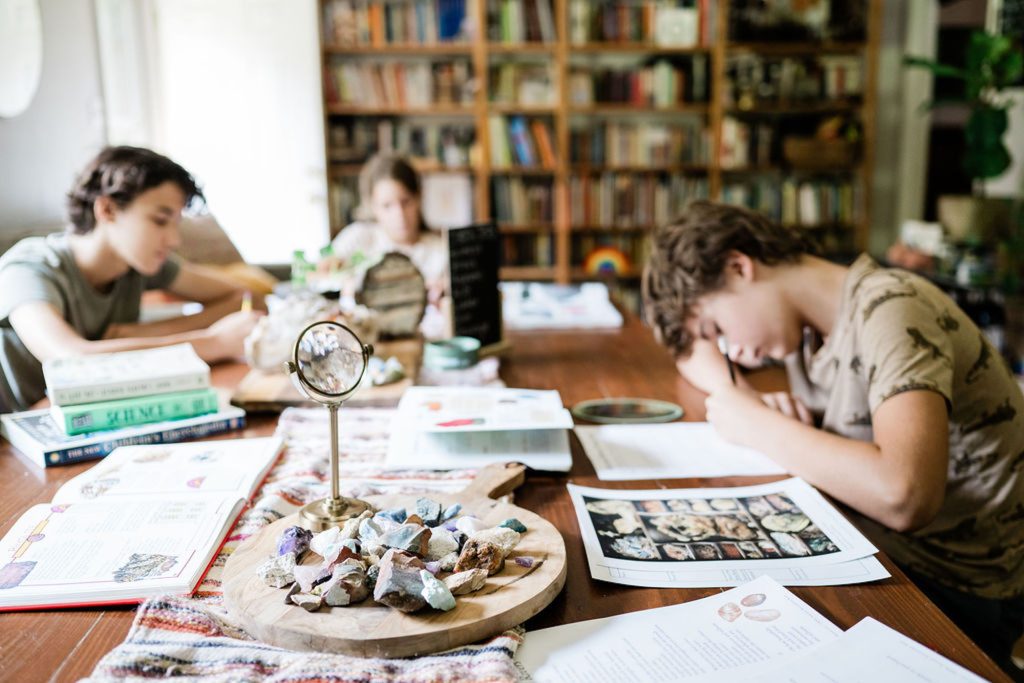
Natural science is the study of the physical and living world around us. It includes biology, earth science, chemistry, and physics, sciences that help us understand living things, matter, energy, weather, landforms, and how these things work together.
Natural science doesn’t have to start with a list of new vocabulary words or dry and complicated explanations. It doesn’t have to start with checking off a box of concepts to learn at a particular age level. Natural science can be just as rigorous while using our backyard as a starting point for learning. Children can learn about the layers of the Earth by digging through a bit of soil in the backyard, learn about pollination by observing bees hovering over flowers in bloom, or pay attention to the hours of daylight as it increases during summer and shrinks back in the winter.
This natural science approach begins with the real world. It doesn’t have to start with facts and complicated charts, or things far removed from everyday life. This approach begins with the real world, where children can observe, wonder, learn through research, build connections, and develop intimate, personal knowledge of what they study.
How does natural science in upper elementary and middle school differ from a traditional science approach?

The goal of a natural science approach is to introduce elementary and middle school-aged children to science in a way that encourages curiosity about the world around them, especially with the things they can see, touch, observe, and experience in nature.
Instead, a traditional science curriculum may begin with a textbook, a list of vocabulary words, or an explanation of a scientific concept. It might include worksheets, quizzes, and tests. Those things can certainly have a place, but this approach begins with something living and tangible whenever possible.
By using nature study to learn about the natural world, upper elementary and middle school children can learn about the world through beautifully illustrated picture books and selected reading materials, a small collection of reference books, and a list of multimedia resources. Students can make connections in poetry and classical artwork, then apply what they learn in science to language arts assignments and creative projects. All of these ideas can be integrated. Learning can be beautiful and filled with wonder, and the arts can draw from real phenomena in nature.
Finally, this method encourages children to get outside and explore their own world with their senses as much as possible, seeing how science is present in their surroundings. Facts, pictures, and videos can only get you so far. What we desire is for children to live in their own world and be a part of it, understanding how what they know and learn emerges in their own community.
How to study natural science for upper elementary and middle school
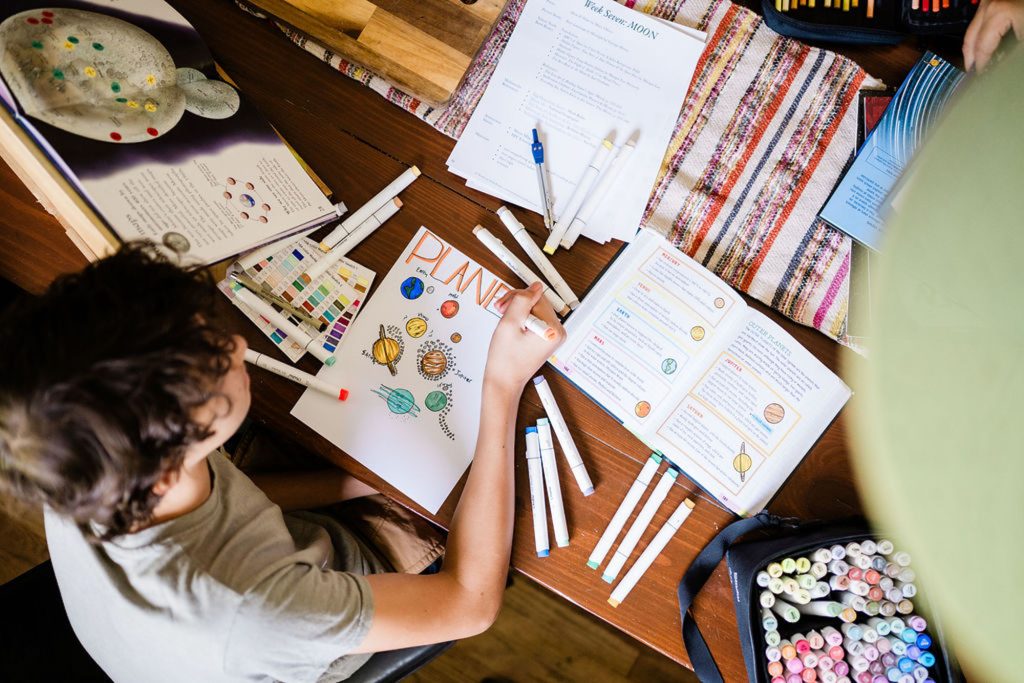
Here is the method we use when exploring natural science with older children in upper elementary and middle school who have advanced academic abilities and can participate in the sciences with more rigorous learning.
Deep learning by reading living books and doing independent research
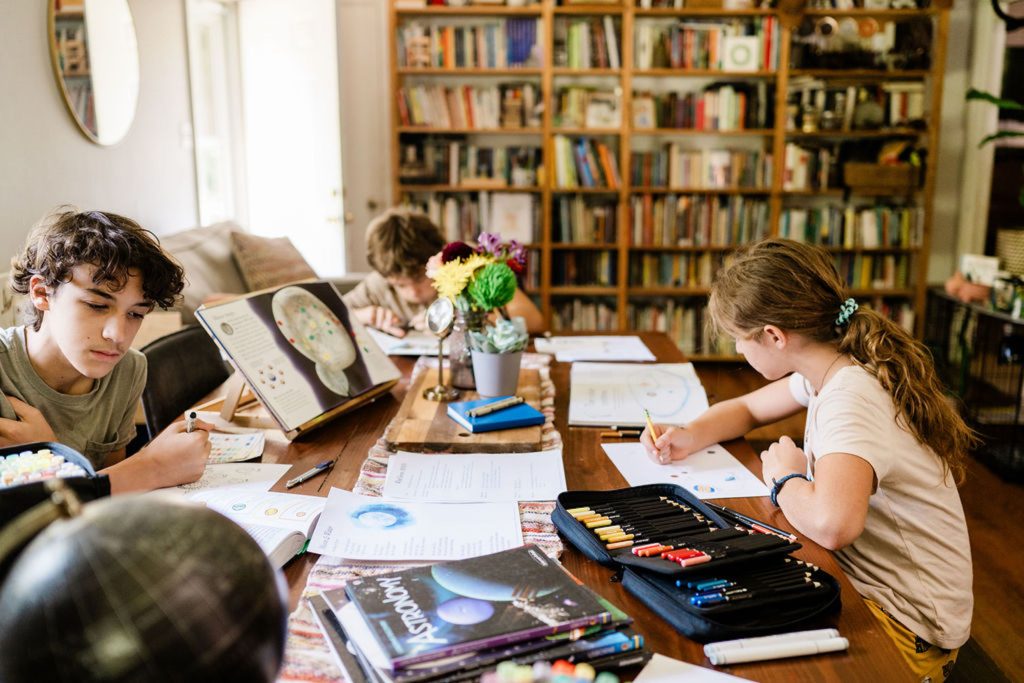
Natural science can still include picture books for older kids, even if their reading level is higher and they are more advanced. Living picture books lend themselves to beautiful explanations by authors who know the subjects deeply, or illustrate how science can be lovely and beautiful.
When learning about birds in winter, children can still enjoy clever and humorous books, like Chickadee: Criminal Mastermind or a heartwarming story like I Can Hear the Sun by Patricia Polacco. Then, they can turn to a field guide like What It’s Like to Be a Bird by David Sibley and explore dozens of birds who migrate to or from their local area. Learning can be personal and full of connection, but still be deep and full of detail.
Children can take what they know further by researching topics they want to know more about, by watching trusted multimedia videos and seeing ideas explained by experts in the field. A regular practice of research helps children gather and connect what they learn, while demonstrating the depth that natural science has to offer to students who are inquisitive and ask thoughtful questions.
Seeing natural science represented in fine art

You can never know what impression beauty and art will have on children. Charlotte Mason suggests in Home Education: “We cannot measure the influence that one or another artist has upon the child’s sense of beauty, upon his power of seeing, as in a picture, the common sights of life; he is enriched more than we know in having really looked at even a single picture.”
As children learn about natural science, integrating this with fine art is a powerful way to encourage children to notice and observe art through the practice of picture study. While learning about the science of rainbows, refracted light, and the color wheel, add to this learning by spending a few moments seeing how rainbows appear in fine art, like John Constable’s Landscape with a Double Rainbow. Encourage children to consider the artist’s style and depiction, naming as many details as they see, and see if what they learned in nature is represented in the artwork.
When learning about snakes and reptiles, gaze on John James Audubon’s Mocking Bird print and notice the Timber Rattlesnake coiled around a tree, ready to strike.
Science can be rich in learning while still employing the beautiful moments found in art over past centuries.
Exploring natural science in the outside world
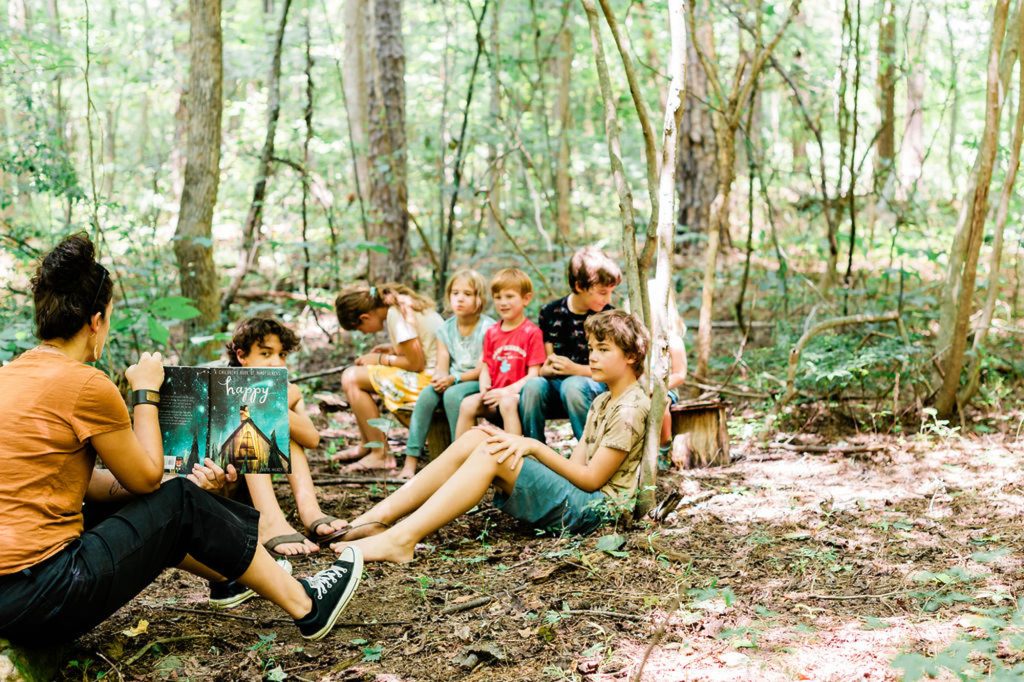
Getting outdoors regularly is one of the most pivotal ways to bring learning to life. This can be simple, like in your own backyard, or enjoyed through adventures in nature. Connect learning to nature by practicing observation, like watching birds in their natural habitat, or walking through a forest and quietly noticing all of the sounds you hear. You can identify the types of trees in your backyard, or plant a wildflower patch near your home to encourage butterfly activity.
It can take extra work and planning, but don’t skimp on making experiences with your natural surroundings, and don’t fall into the trap of thinking that it has to be a spectacular sight in order to enjoy nature. Just spending repeated time outdoors, making connections to what you know, builds a wealth of knowledge and connection.
Hands-on approach to natural science
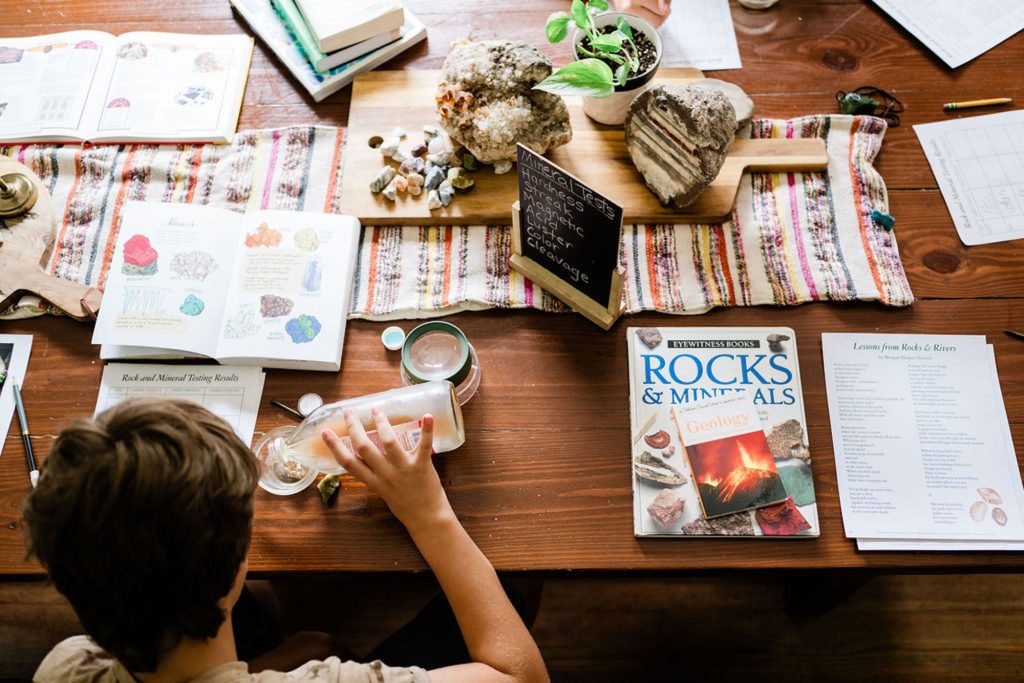
There is a lot of fun, learning, and skill to take advantage of when exploring natural sciences. Children can enjoy art tutorials and sketching to learn about insects, preparing food in the kitchen with seasonal ingredients, and detailed projects like building insect habitats or gathering pond water from a nearby and looking at the sample under a microscope. Children can perform science experiments that test the pH of different rocks and minerals, or experiment with apples and different levels of oxidation. Let children dive in and explore what they know to encourage them to apply their knowledge to the real world.
Nature study notebooking
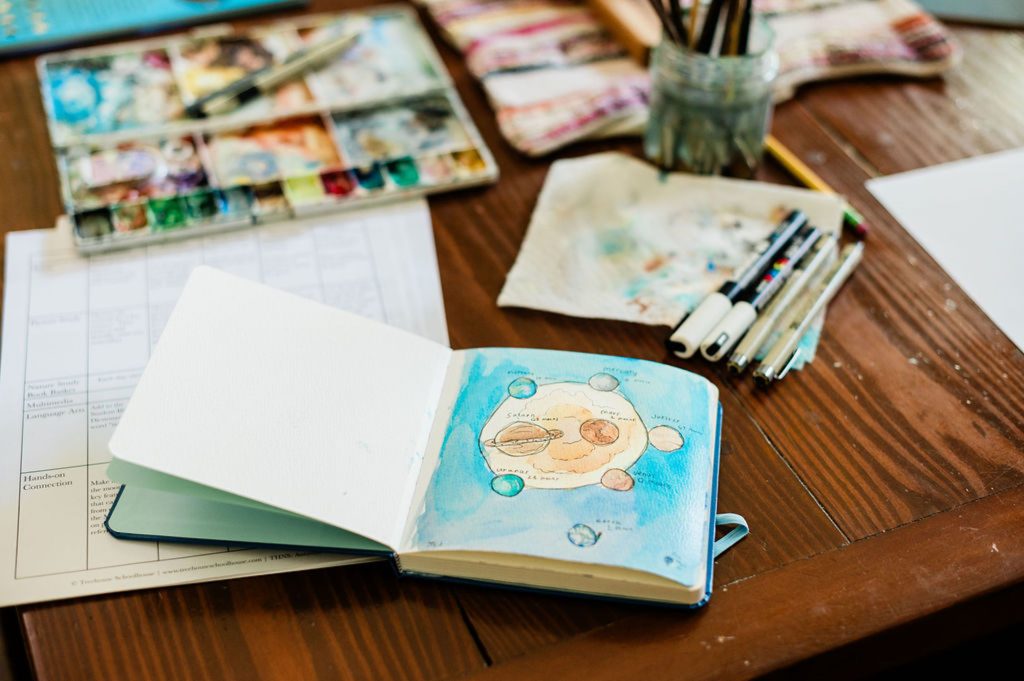
Nature study notebooking is a practice we love seeing older children take deeper. The purpose of a notebooking page is not to prove that a child remembers every detail from a lesson. The practice of notebooking gives children room to focus more deeply on one aspect of a lesson. It permits children to choose what stands out to them, put it into their own words, and make connections that might not appear on a worksheet. Notebooking is comprehension made visible, and it shows what a child noticed and what sparked their interest.
- 4th–5th grade: By fourth and fifth grade, children can write one or two paragraphs on separate paper before placing the final copy on the notebook page. After editing, the can write the final version in pencil and go over it with a felt-tip pen. The final page should show excellent handwriting, grammar, and spelling. They may create their own illustration or carefully reproduce one from a book or other reference.
- 6th grade and up: From sixth grade on, children can write three or four paragraphs. Children can write drafts, edit, and then rewrite or type the final version. Sometimes the work becomes multiple pages with enough room for beautiful illustrations. The final draft should feature excellent handwriting, grammar, and spelling, along with deeper thinking, not simply more words. An older student may compare ideas, explain why an event mattered, or connect the lesson to something studied earlier. Illustrations may be original or carefully based on a book or reference.
10 ideas for studying natural science for older children

- Learn about how spiders create webs, then use yarn or masking tape to build a life-size web. Discuss which methods and materials work best. (Treehouse Nature Study: Autumn, Intermediate Years)
- Research the world’s tallest mountains and collect data on a spreadsheet to compare and contrast what you learn. (Treehouse Nature Study: Winter, Intermediate Years)
- Learn how animals adapt in winter by going into nature to observe and record what you see. (Treehouse Nature Study: Winter, Intermediate Years)
- Spend time outside at night and watch for any nocturnal animal activity. (Treehouse Nature Study: Winter, Intermediate Years)
- Observe how temperatures affect blooming flowers. Bring branches indoors when buds appear to force them into bloom, such as a Crabapple branch or Dogwood blossom. (Treehouse Nature Study: Spring, Intermediate Years)
- Learn about ROYGBIV and how light is refracted through objects by making a Newton disc and spinning it. (Treehouse Nature Study: Spring, Intermediate Years)
- Build your own wormery/vermiculture set, a system of layered bins, and notice how worms break down kitchen waste into compost. (Treehouse Nature Study: Spring, Intermediate Years)
- Learn about the soil in your own backyard. Dig up a layer of topsoil and investigate what you find. Then, dig vertically to observe the layers of your soil. (Treehouse Nature Study: Summer, Intermediate Years)
- Replicate and study the sun’s heat-producing energy by constructing cardboard “homes” from different materials. Then measure the temperature of each house to see how different materials conduct heat. (Treehouse Nature Study: Summer, Intermediate Years)
- Research kelp forests, then create a tri-fold travel brochure to document what you learn. (Treehouse Nature Study: Summer, Intermediate Years)
What has been helpful in your family for teaching older children about the natural world? Share your favorites in the comments below.