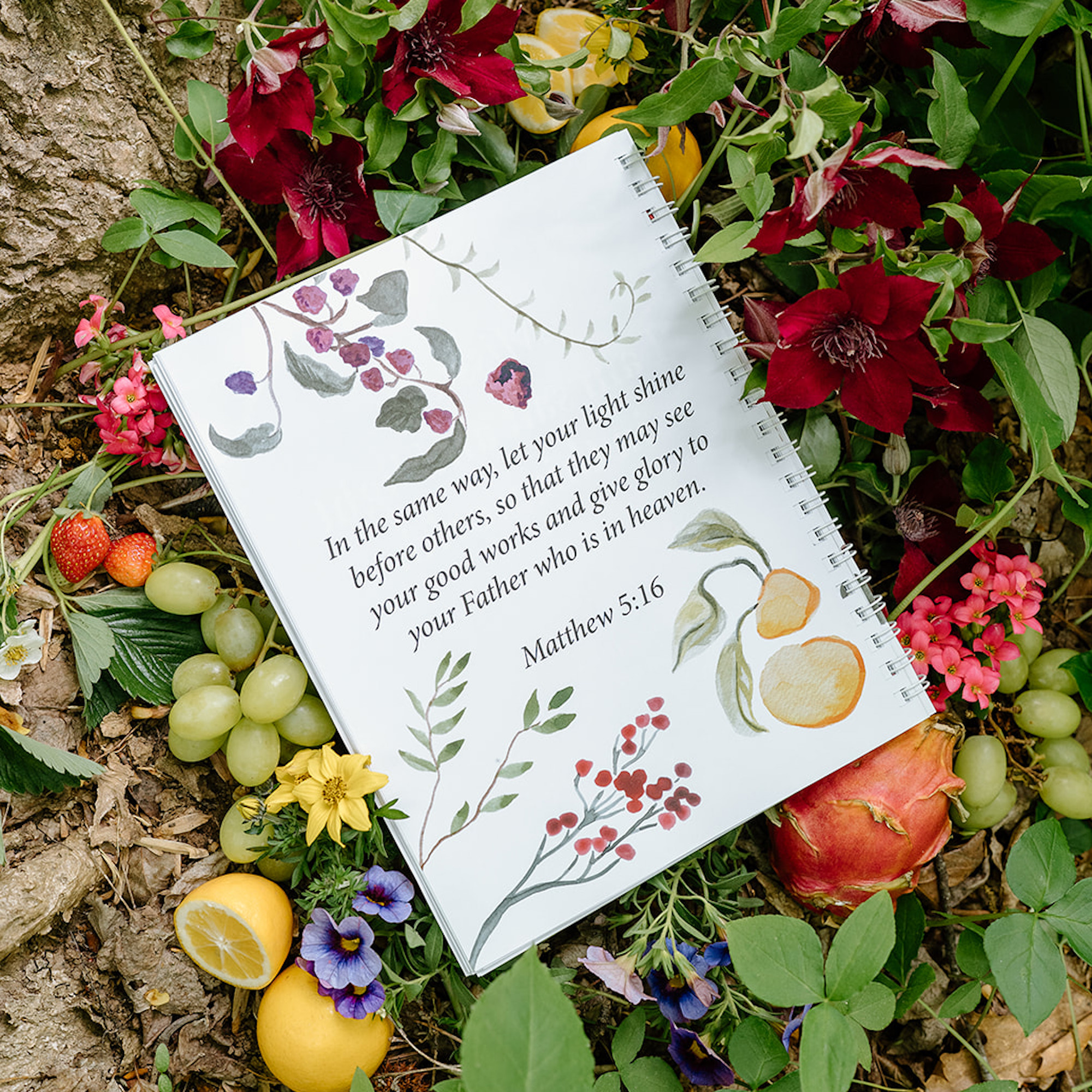
Helping children grow a relationship with God involves teaching them a big-picture story of the Bible, introducing them to prayer, and spending time in Bible lessons to understand God’s purpose in their lives.
It’s a beautiful thing to watch children learn about God and the wonderful stories in the Bible. But it can also feel tricky to help those stories move from their heads into their hearts, growing into a real and personal connection with God.
As we guide kids through childhood and prepare them for the world, nurturing their faith can be a gentle, natural part of their journey. Think of it as planting a tiny seed early on, something we can care for together as they grow, hoping to encourage a faith that is truly their own and provides a strong foundation for whatever life brings.
One simple way to nurture this personal faith is by exploring Bible stories together at home. Just opening the Scriptures, chatting about what the words mean, and maybe even doing a simple activity to bring the story to life can make a big difference. These small building blocks can cultivate a faith in God that is strong and a steady anchor as they navigate life’s ups and downs.
This blog includes simple Bible lessons paired with hands-on activities to help you spend time in Scriptures in your home.
In this blog post:
- How to help children develop their faith
- Benefits of hands-on Bible activities for children
- 10 simple Bible lessons to help children grow a relationship with God
- Try a free week of Flourish Family Bible Curriculum
How to help children develop their faith
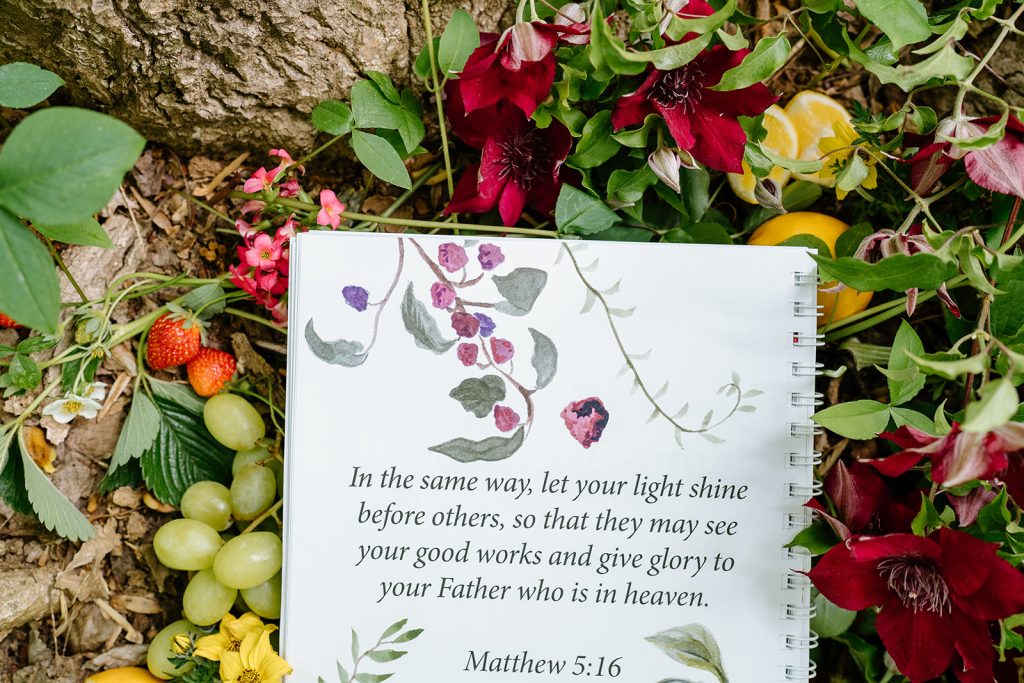
To help children build a strong and lasting faith in God, it’s important to do more than just tell them Bible stories or give them rules to follow. You want them to truly understand and feel connected to the gospel.
Begin by sharing the big story of the Bible, focusing on how much God loves us, spanning from when He created everything to when He sent Jesus to save us. Focus on who God is: holy, loving, fair, kind, and always there for us. Then, show how the Bible stories tell us about these qualities. Talk with your child about what you read together, or ask them to narrate the stories so they have a chance to express it in their own understanding. Let your children ask questions and talk about what they think and feel as you learn together. It is really so simple, and over time children can digest small truths to put together and gain an understanding of who God is and what it means for them.
Make talking to God through prayer a normal part of your day, and teach children that they can speak to God about anything. Introduce them to the Bible in a way that makes sense for their age, so they can start to learn God’s words for themselves. Most importantly, let your children see your own faith in action. When they see you trusting God and living by His teachings, it shows them what it looks like to follow Christ. By doing these things regularly, you create space for your children’s faith to grow stronger and deeper as they get older.
Benefits of hands-on Bible activities for children
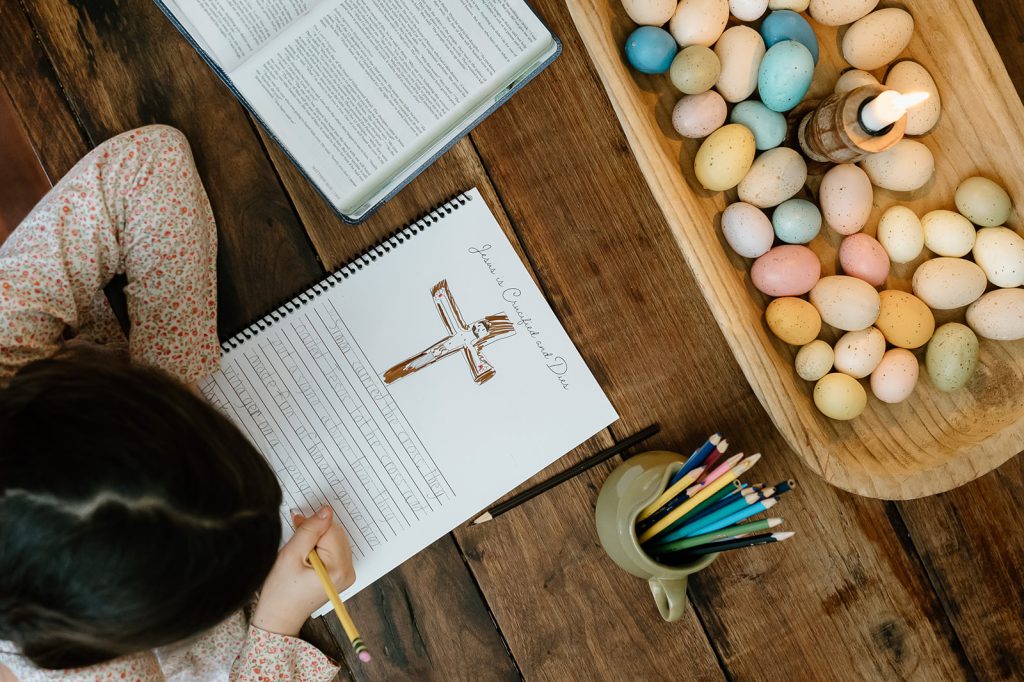
To help your children truly connect with Bible stories, try adding simple hands-on activities. Instead of just listening, kids can learn by doing. For example, after hearing a story, they could copy a key verse and draw a picture that shows what it means to them. Or, you could play a simple game that illustrates the main point of the lesson. These kinds of activities make the Bible stories feel more real and help children understand how the teachings apply to their own lives. When kids are actively involved, they’re more likely to remember the lessons and develop a deeper, more personal understanding of what it means to follow God. These experiences can create lasting memories and shape their understanding of their identity as children of God.
10 simple Bible lessons to help children grow a relationship with God
Here are 10 simple Bible lessons, founded in Scripture, and activities to help children develop their relationship with God and make it more meaningful in their lives.
Celebrating how God created each person and made them special.
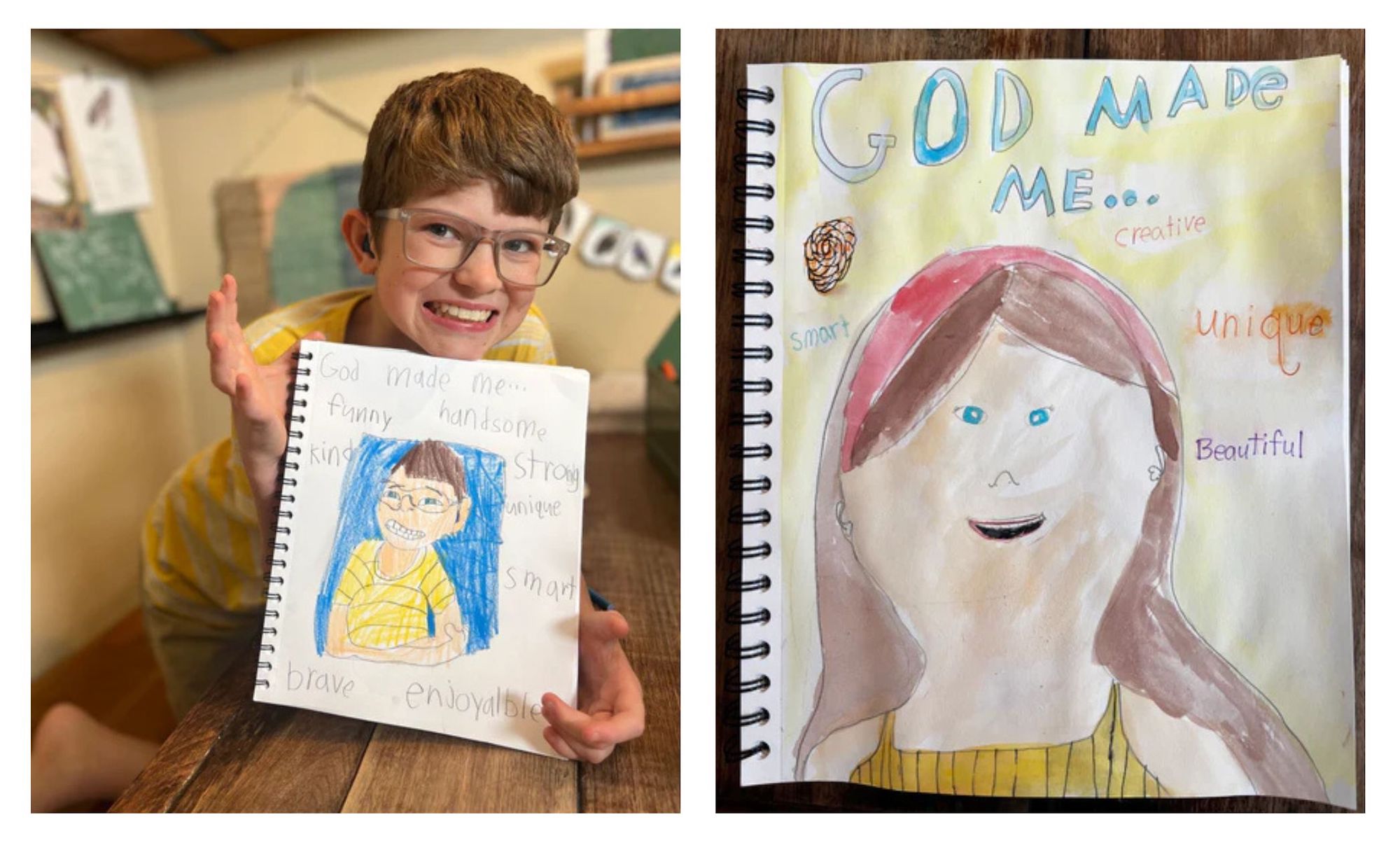
Scripture: Genesis 1:26-31
Lesson: God created all things. While everything has a purpose, the most uniquely loved creations of God are people.
Activity: Draw or paint a self-portrait and write a list of things you love about how God made you somewhere on the paper.
View the full lesson in Rooted Family Bible Curriculum.
Teaching children about the spiritual family of God.
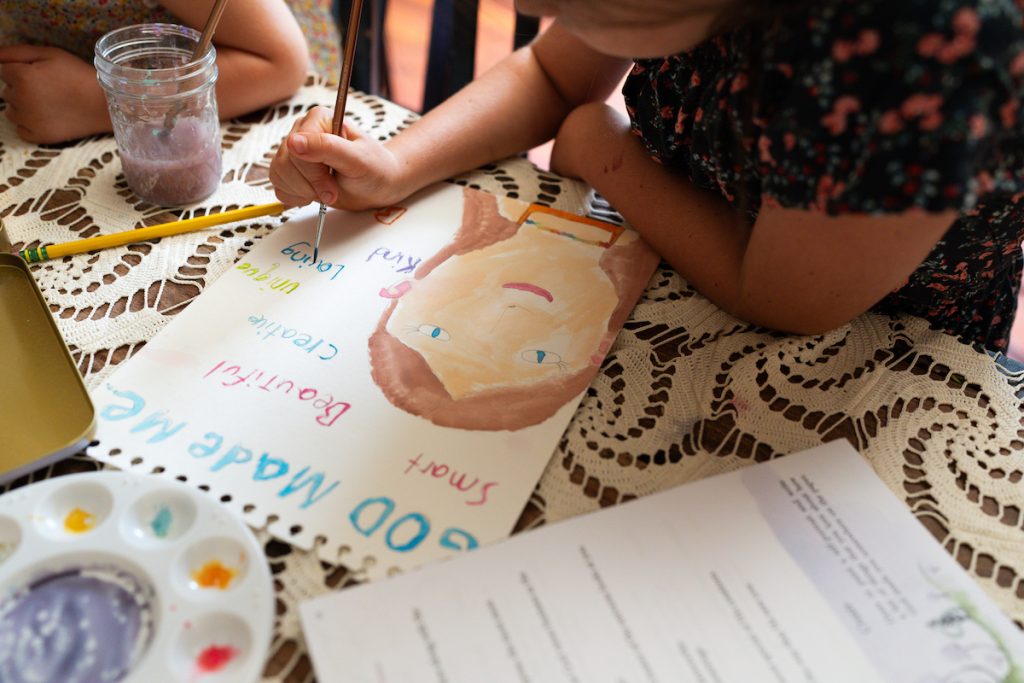
Scripture: Mark 3:31-35
Lesson: Jesus says that when we are followers of God, we have a spiritual family – all believers! We gain a heavenly Father and brothers and sisters in Christ all over the world when we decide to become Christians.
Activity: Brainstorm how you can bless another family in the body of Christ with an encouraging letter, homemade baked good, or an act of service. Make a plan to do it.
View the full lesson in Rooted Family Bible Curriculum.
Encouraging children to abide in the love of Christ.
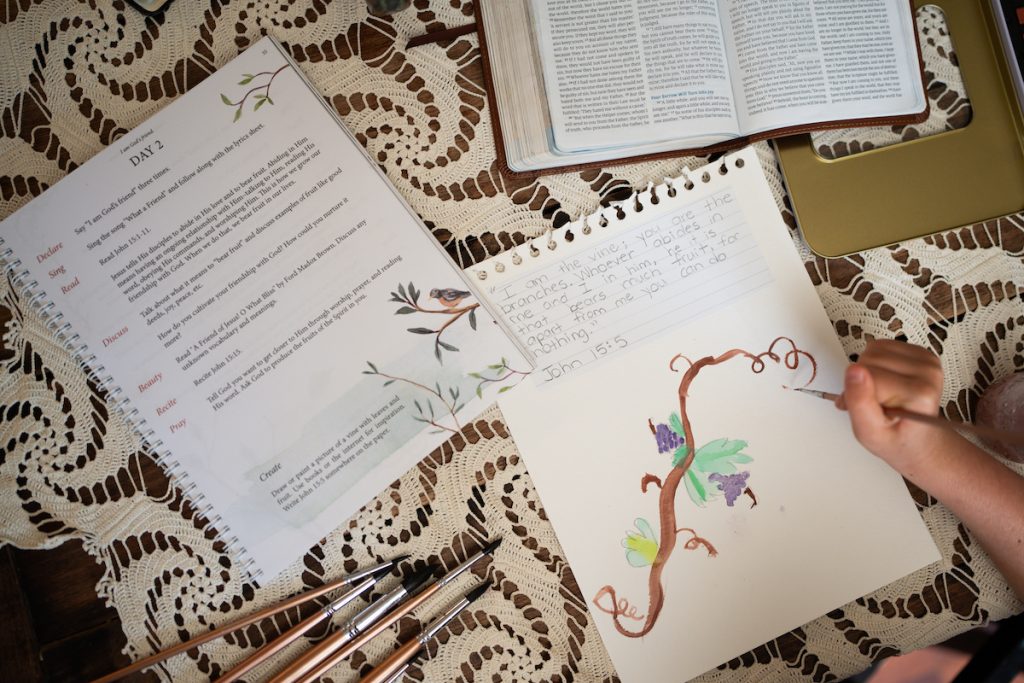
Scripture: John 15:1-11
Lesson: Jesus tells His disciples to abide in His love and to bear fruit. Abiding in Jesus means having an ongoing relationship with Him – talking to Him, reading His word, obeying His commands, and worshipping Him. This is how we grow our friendship with God.
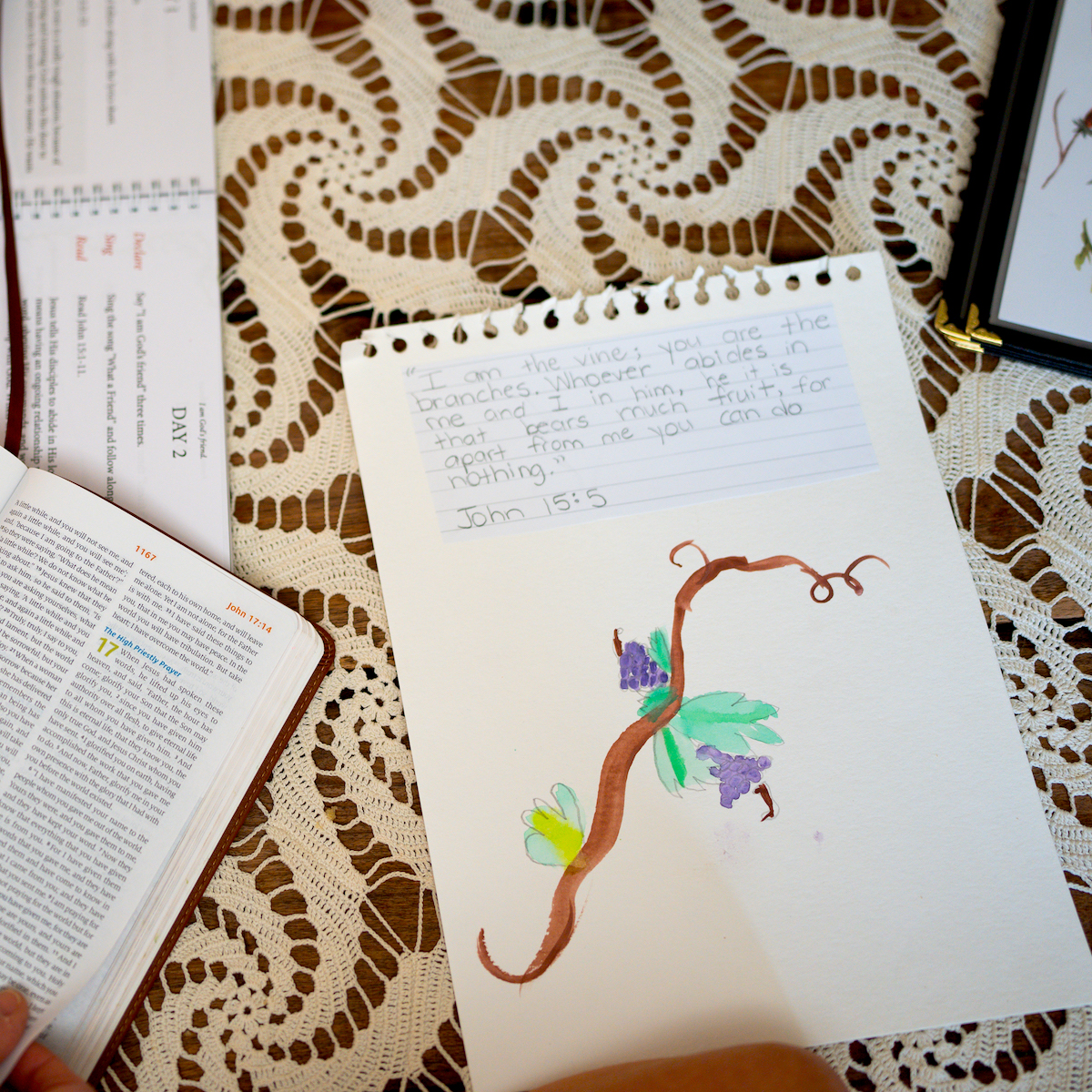
Activity: Draw or paint a picture of a wine with leaves and fruit. Write John 15:5 somewhere on the paper.
View the full lesson in Rooted Family Bible Curriculum.
Praising God for giving us the Scriptures to follow.
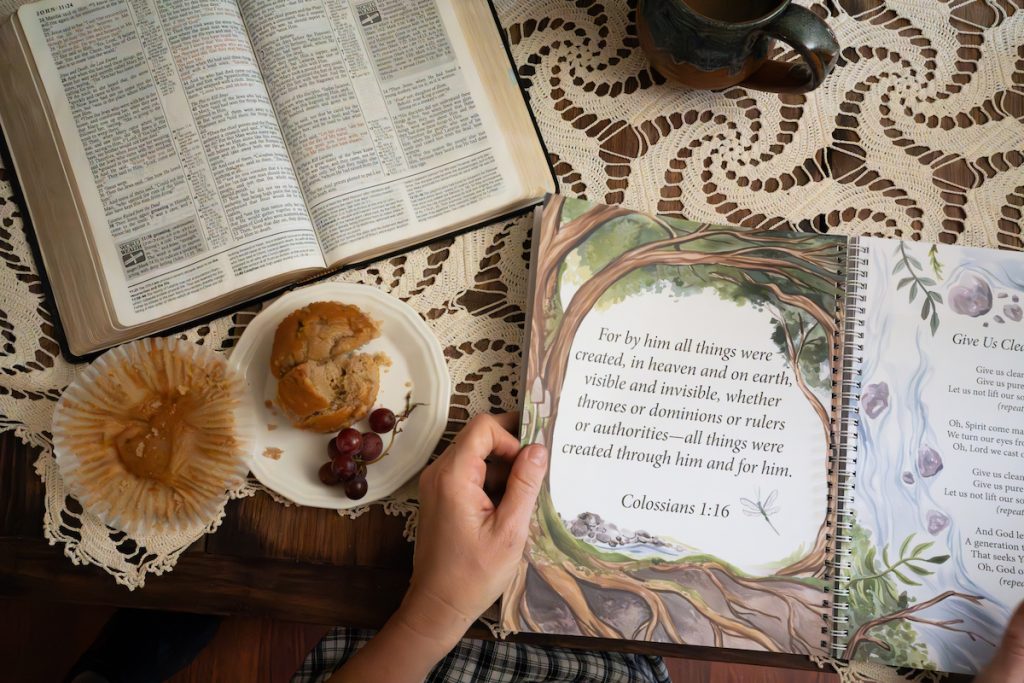
Scripture: Psalm 119:97-112
Lesson: David talks about his love for God’s Word and all it does for him. When we live dedicated to knowing, understanding, and following God’s Word, we will see the fruit in our lives. The Word of God will be like a sweet honey and a light to our path.
Activity: Write a new psalm to God about your love for His word. Use Psalm 119 as inspiration.
View the full lesson in Rooted Family Bible Curriculum.
Teaching children about living a life of wisdom.
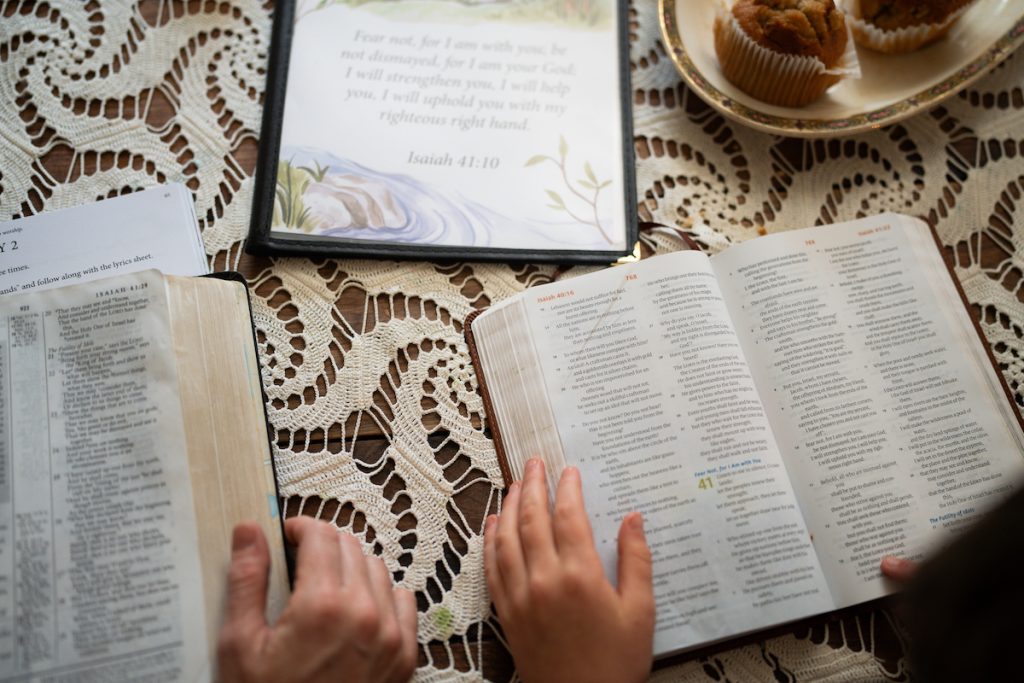
Scripture: Proverbs 3
Lesson: Proverbs 3 is full of wisdom that instructs us how to live. Notice the cause and effect statements in verses 1-12. Living a life of wisdom is more precious than gold and it is available for everyone. Finding and walking in wisdom requires a life dedicated to seeking God and continually choosing to walk on the path of life.
Activity: Hide “treasures” for your children to find, such as coins or candy. As they hunt for the treasure, say “wisdom” when they get near to it and “folly” when they move farther away.
View the full lesson in Rooted Family Bible Curriculum.
Using the Word of God to become more like Christ.
Scriptures: 2 Timothy 3:16-17 and Ephesians 5:1-2
Lesson: The Word of God is full of instructions on how to live our lives. When we aren’t sure how to fulfill our mission on earth, we can always go back to studying and following the Bible. Loving God and becoming like Christ is our first priority, above all else.
Activity: Make a map of your neighborhood. Draw your home, the homes on your street, and the closest playground or store. Take a walk or drive, and have your child use the map to navigate.
View the full lesson in Flourish Family Bible Curriculum.
Explaining to children what it means to live in the light.
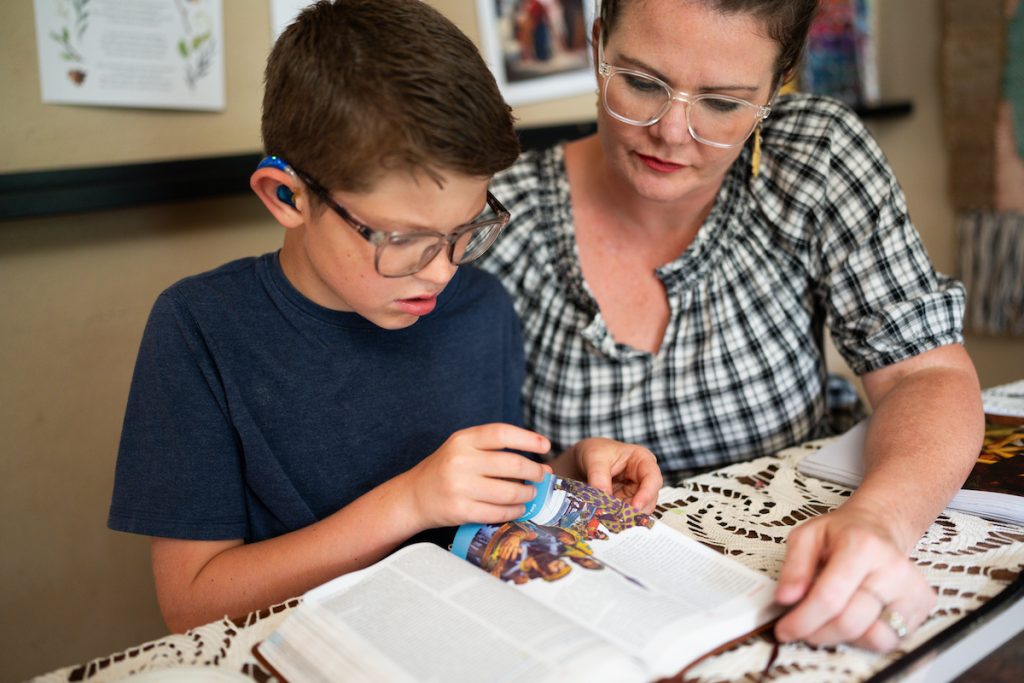
Scriptures: John 1:1-9 and 1 John 1:5-10
Lesson: Jesus came to the earth to be light and dispel darkness. Darkness can never overtake light. One small flame can light up a room and no amount of darkness surrounding it can put the flame out. Living in the light does not mean being perfect and sinless. It means staying humble and confessing our sins to God.
Activity: The moon has no light of its own, but is visible because it reflects the light of the sun. In the same way, believers reflect the light of Jesus so that all can see it in us.
Study the moon and how it reflects the sun’s light. Draw a picture and write about what you learn.
View the full lesson in Flourish Family Bible Curriculum.
Discovering our own unique Christian gifts.
Scripture: 1 Corinthians 12:4-12
Lesson: We are all given various gifts, but they were all given from the same God. These gifts were given to us to be used to benefit everyone, not only for our own good. This passage lists some gifts of the spirit, but there are more throughout the Bible. As we grow in our walk with God, we will discover our own gifts and how we can best use them in the body of Christ and in the world.
Activity: Look up a list of spiritual gifts mentioned in the Bible. Talk about which gifts you think each person may have in your family. Lay hands on each person and pray for them, asking God to “fan into flame their gifts” (2 Timothy 1:6).
View the full lesson in Flourish Family Bible Curriculum.
Learning how to treat one with patience and forgiveness.
Scriptures: Ephesians 4:1-3 and Colossians 3:12-14
Lesson: In two different letters, to two different churches, Paul gives a very similar set of commands to each one about how to treat one another. In both, Paul calls these early churches to have a patience that leads to forgiveness between brothers and sisters in Christ.
Activity: Do an Internet search or look through Paul’s letters in your Bible. How many times does Paul mention this virtue to other churches?
View the full lesson in Flourish Family Bible Curriculum.
Living with integrity and helping those in need.
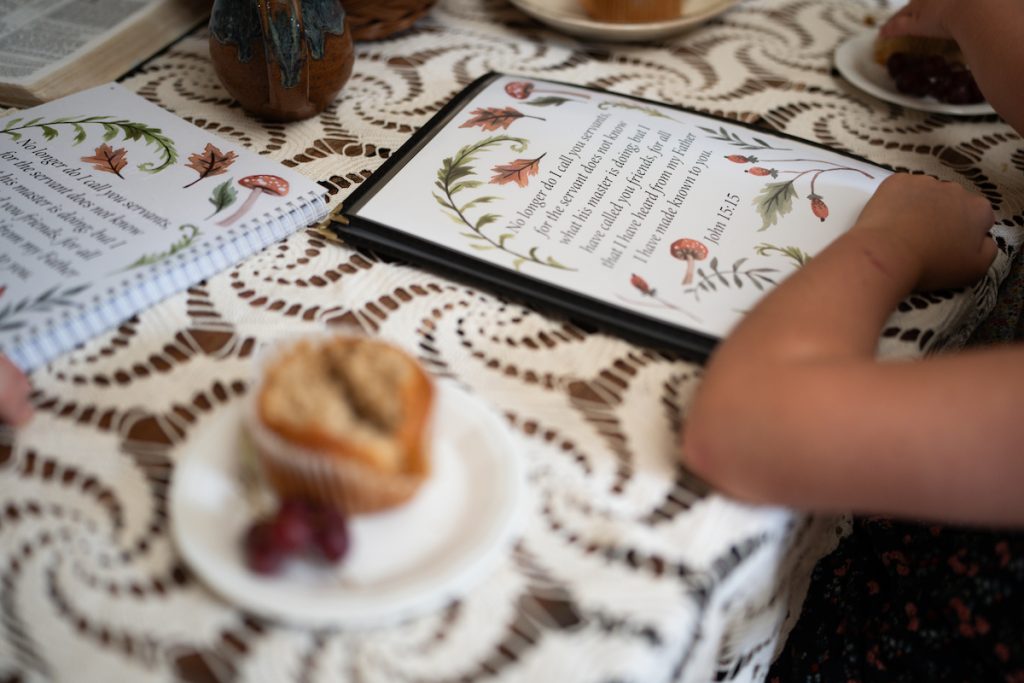
Scriptures: Matthew 25:34-40 and James 4:17
Lesson: Matthew tells one of Jesus’ final recorded instructions. He describes those at the judgment who lived lives full of integrity. Their lives consisted of doing things for others in need. As Jesus tells them, when they were simply trying to do the right thing by helping others, it was the same as doing these acts of service to Christ himself.
Activity: Think of someone you know who is sick/homebound and visit with them. Make a card or goodies to bring to them; reminding them of God’s love for them.
View the full lesson in Flourish Family Bible Curriculum.
Try a free week of Flourish Family Bible Curriculum
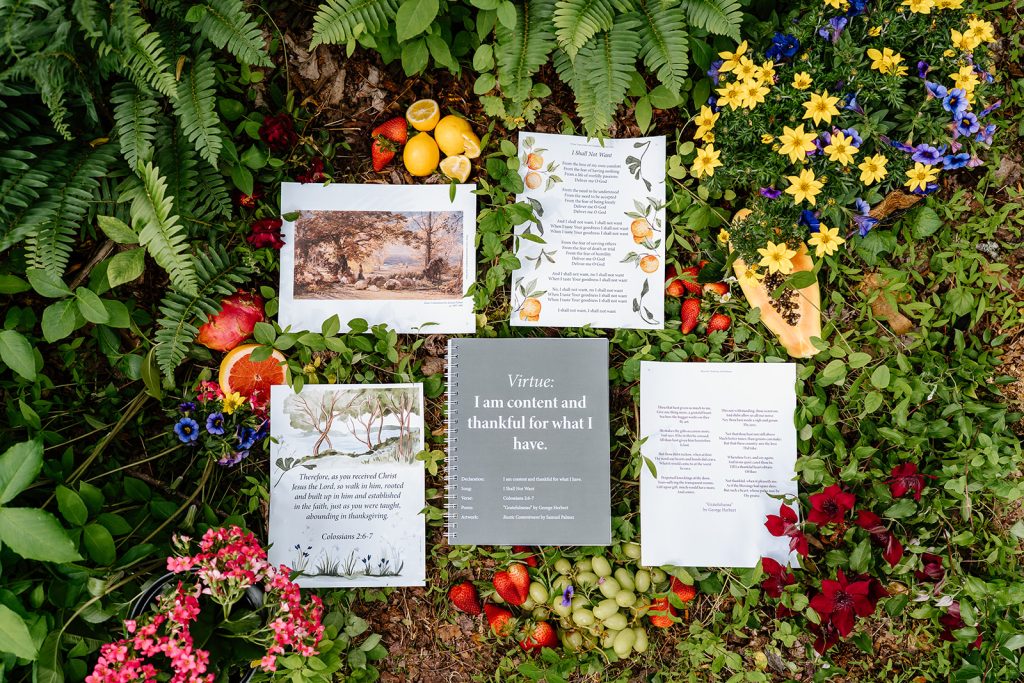
To dive deeper into teaching children how to grow a relationship with God in your home, try a free week of Flourish Family Bible Curriculum, Week 7: I am thankful and content for what I have.
Flourish Family Bible Curriculum is an 18-week family Bible curriculum. Each week centers around one declaration statement related to the themes of Mission, Virtue, and Love. Flourish incorporates beauty subjects with Bible study including daily Scripture readings, discussion and prayer prompts, hymns, poetry, and art study. Enjoy the rhythms of connection and beauty found in our beloved Rooted Family Bible Curriculum with a focus on bearing fruit through our lives in the world around us.
This is a home Bible study curriculum designed to be used together as a family for devotionals and Bible lessons, and can be used with children of different ages at the same time.
How do you encourage your children’s faith and spirituality in your home? Share your thoughts in the comments below.
Meredith Qualls has worked for Treehouse Schoolhouse since 2023, where she helps develop curriculum and writes about motherhood and home education. She was homeschooled in the 90s, has a master’s degree in journalism, and previously worked in traditional print newspapers.