Homeschooling children in middle school has changed my homeschool priorities. More than ever, I’m using these years to focus on building character, learning through living books, teaching independence, balancing structure with freedom, and leaving room for personal interests. In this blog post I share why these matter to me and how I’m applying this when homeschooling middle school-aged kids.
With middle school-aged children in 6th and 8th grade, I’ve changed some of my ideas about what homeschooling should be.
I love homeschool curriculum and have used many beloved studies over the years, since the time my children were little. We have enjoyed many years of doing seasonal nature study and have explored many different math curricula to see what fits our family’s needs. We have used studies as a family, adapting different lessons and activities to my children’s different ages.
As my children have grown older, I’ve spent a lot of time thinking about what matters the most for them right now. I still want to give my kids a strong academic foundation, but I’m making more room for great books, my children’s personal interests, meaningful projects, responsibility, and giving my kids enough time to figure things out for themselves. What I’m learning is that sometimes my job is to teach, and sometimes my job is to get out of the way a little.
In this blog post:
- Our homeschool style
- Seven things my family is prioritizing for homeschool middle school
Our homeschool style
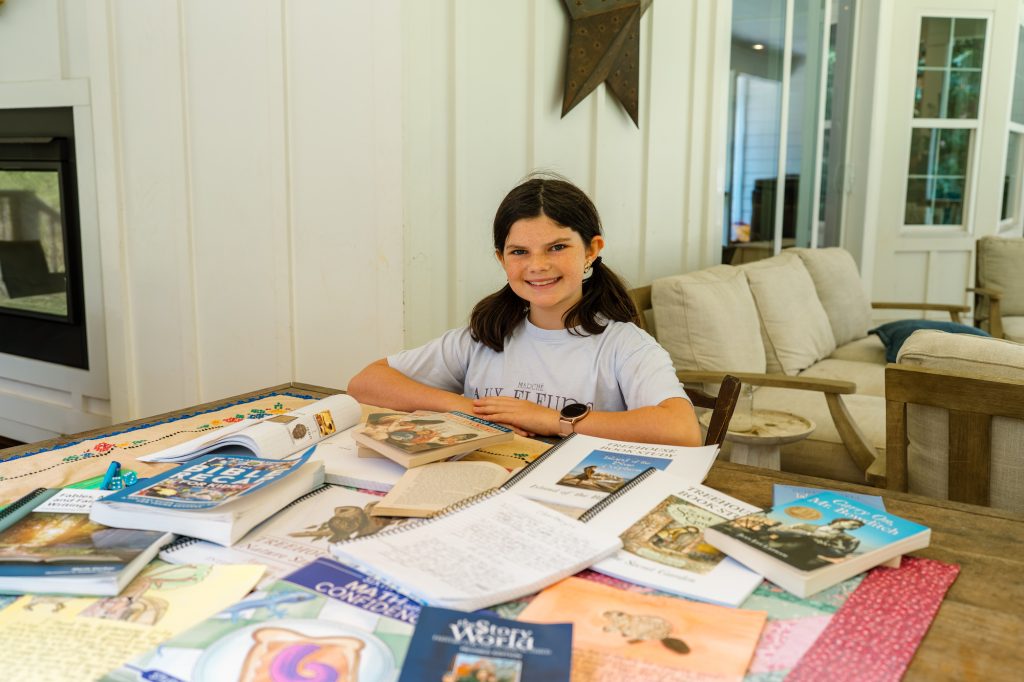
There are so many different ways to approach education and homeschooling. Over the years, with four children in formal homeschooling, here are the things we have landed on that fit our family values.
Family-style learning
As you may know, in our homeschool we do not emphasize grade levels. This is because we do much of our curriculum “family-style.” Family-style learning means we use the same curricula for my children at different ages, tailoring the material to each child’s level and interests. This way, my children learn together, despite being different ages. A lot of our curricula is flexible enough to be tailored to use with all of my children, together, or in small groups, like the older children or the younger children. This style of learning helps us streamline our lessons, and over the years I have seen it draw my children closer together as they do lessons together.
Respectful learning
Rather than forcing my children into specific grade levels, I allow my children to progress at their own pace. Sometimes this means they are above “grade level” according to curriculum labels or state standards. Sometimes this means they are “behind.” My goal as a homeschooling parent is simple – to see my children continually grow in understanding, skills, and the desire to learn. I want them to enjoy their education, while also being challenged at just the right level.
Charlotte Mason-style
While I do not subscribe to one specific method of education, I do lean toward Charlotte Mason principles. I value learning through living books, life experiences, and educating the whole child (not only the mind). We also utilize narration as a cornerstone of our education.
Seven things my family is prioritizing for homeschool middle school
Middle school character and discipleship

Middle school is a pivotal time for children to focus on their character and commitment to Jesus. We are teaching my children the Word and making space for honest conversations about faith, character, choices, and what’s happening in their hearts. We do this through family Bible study and prayer, but we also make an effort to talk with our older kids about how they are doing and what is on their hearts and minds.
More than raising kids who go through the motions or know the right answers, we want our children to know God personally and learn to seek His wisdom for themselves. We love using a family Bible curriculum in our home, like Rooted Family Bible Curriculum, which helps open up discussion about Bible passages so my kids can learn together and talk about what they are thinking.
Using living books as the foundation of middle school learning
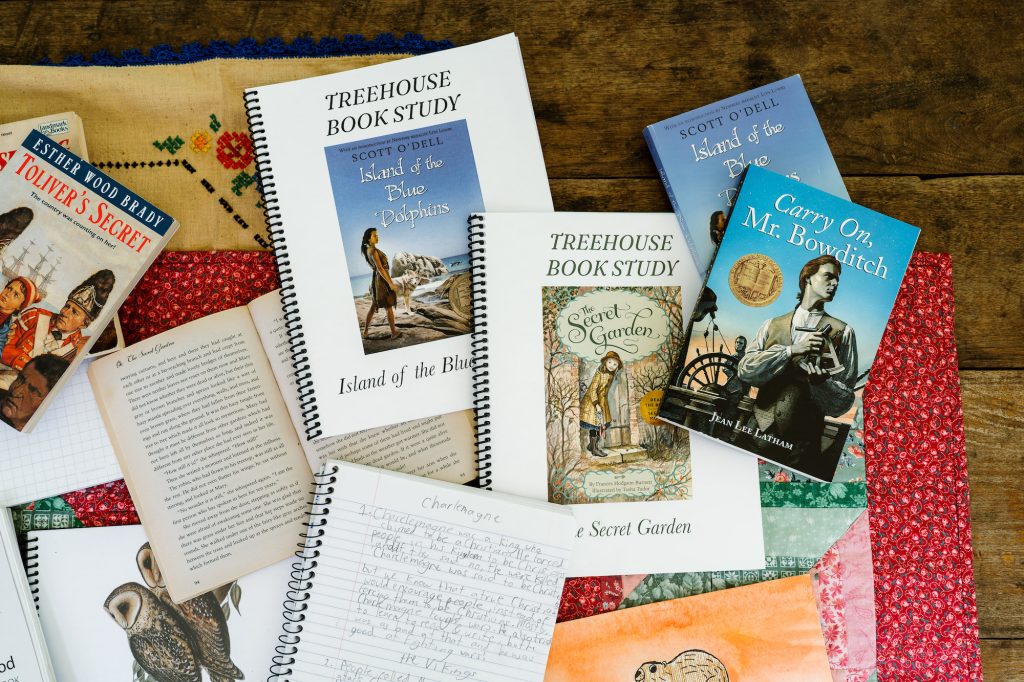
The longer I homeschool, the less interested I am in finding a curriculum for every subject. This year, we’re using less curriculum than we ever have.
We are leaning on living books as the foundation of my children’s learning. We’ve seen how reading great books leads to discussion, writing, research, projects, and offshoots I never could have planned. We started this as a family by reading aloud regularly and doing Treehouse Book Studies together, and we have continued this practice in other areas as well. I’m finding we need fewer resources when we read from really good books that lead us somewhere meaningful.
I still value a good curriculum, and in some subjects we use one consistently. But with my older kids, requiring them to read great books has exponential benefits. A great book rarely stays contained to one subject. It gives us something to discuss, sparks a creative writing assignment, or sends them down a rabbit trail to learn about a person, place, invention, or event. They make connections to other things they’ve read or learned, often in ways I never would have thought to put on a lesson plan.
Here are some books we’ve chosen this fall for my older kids to read independently.
- The Case for Christ for Kids by Lee Strobel
- The Tuttle Twins Guide to Inspiring Entrepreneurs by Connor Boyack
- Bud, Not Buddy by Christopher Paul Curtis
- Anne Frank Remembered by Miep Giles
See all of my favorites on Amazon.
Teaching independence and responsibility in the middle school years
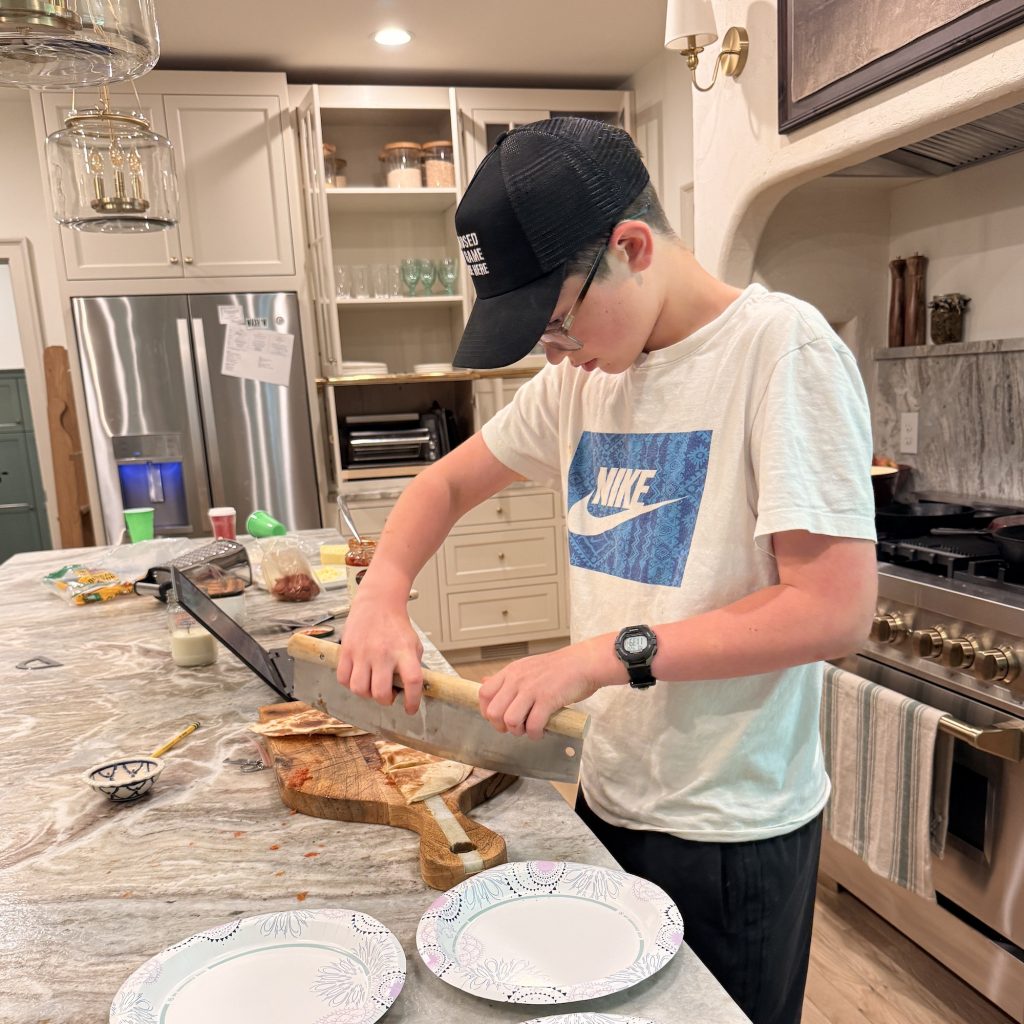
Middle school feels like a great opportunity to bridge the gap between the guided elementary years and the independence they will need when they are older. As their teacher, I’m still choosing some of their books, teaching skills, checking their work, and requiring things they wouldn’t choose for themselves, but I’m also loosening my grip on the idea that I need to orchestrate every worthwhile thing they learn.
I want my children to be independent, self-motivated, and capable, so I’m handing over more responsibility to them, both in their education and in our home life. I’m giving them opportunities for planning, researching, managing their time, setting goals, solving problems, and following through. I’m still here to help guide them and talk with them about what they are doing, but I’m no longer orchestrating and micromanaging what they do.
Here are some ways I encourage my children to be more independent and develop responsibility.
Encouraging my children to apply what they learn
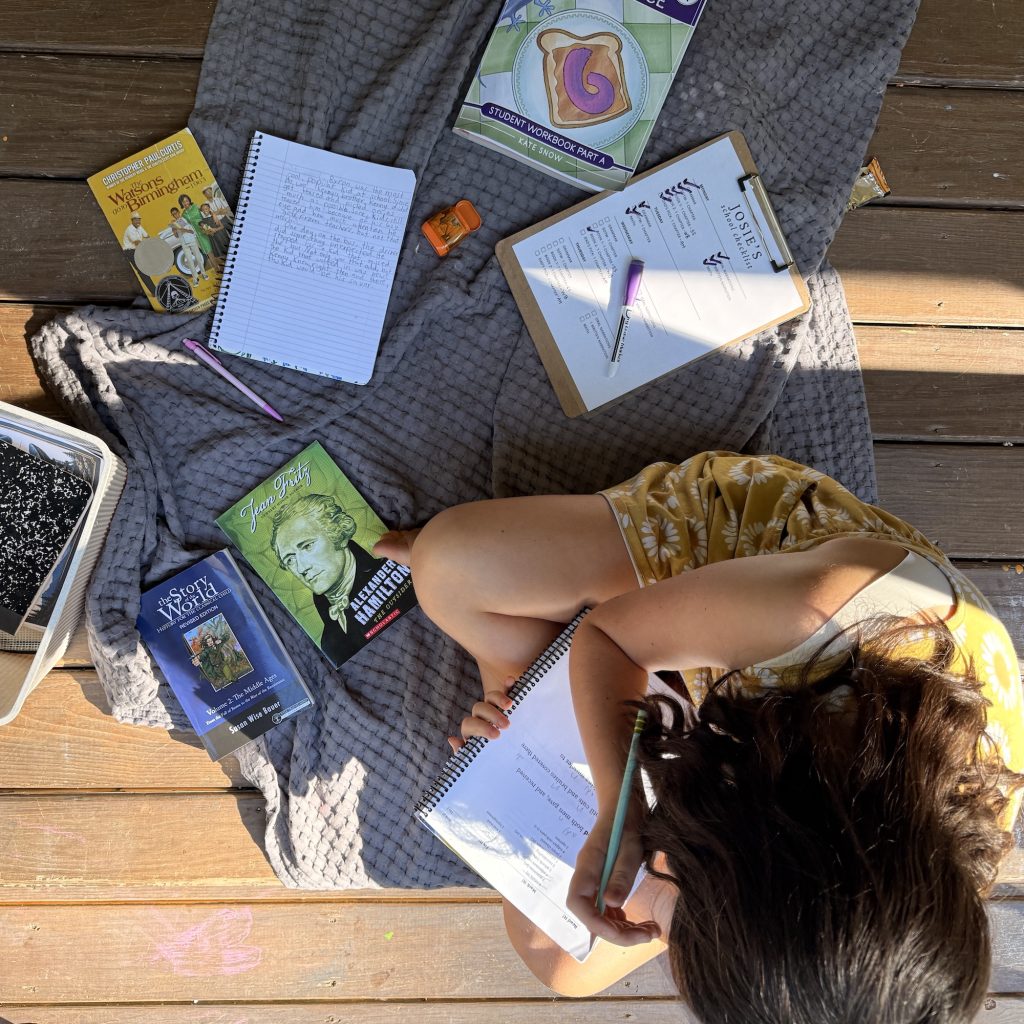
During the middle school years, I want my children to do something with what they learn, not just check boxes or complete assignments without thinking deeply. I want them to use what they learn to write something new, build something, research a question they have, experiment, create, and teach it to someone else. I want them to use what they learn, not just complete a task, check it off a list, and rush on to the next thing.
This is a skill we’ve grown over the years, with curricula like Treehouse Nature Study and other unit studies that leave margin for notebooking and letting children write about what they learn. This style of learning isn’t about memorizing facts or getting every answer right; it’s about engaging with a topic, thinking deeply, and making connections. In middle school, I require more depth while letting them take the lead: researching topics they are interested in, choosing books they are curious about, or applying what they learn to special projects and experiments.
Leaving space for personal interests
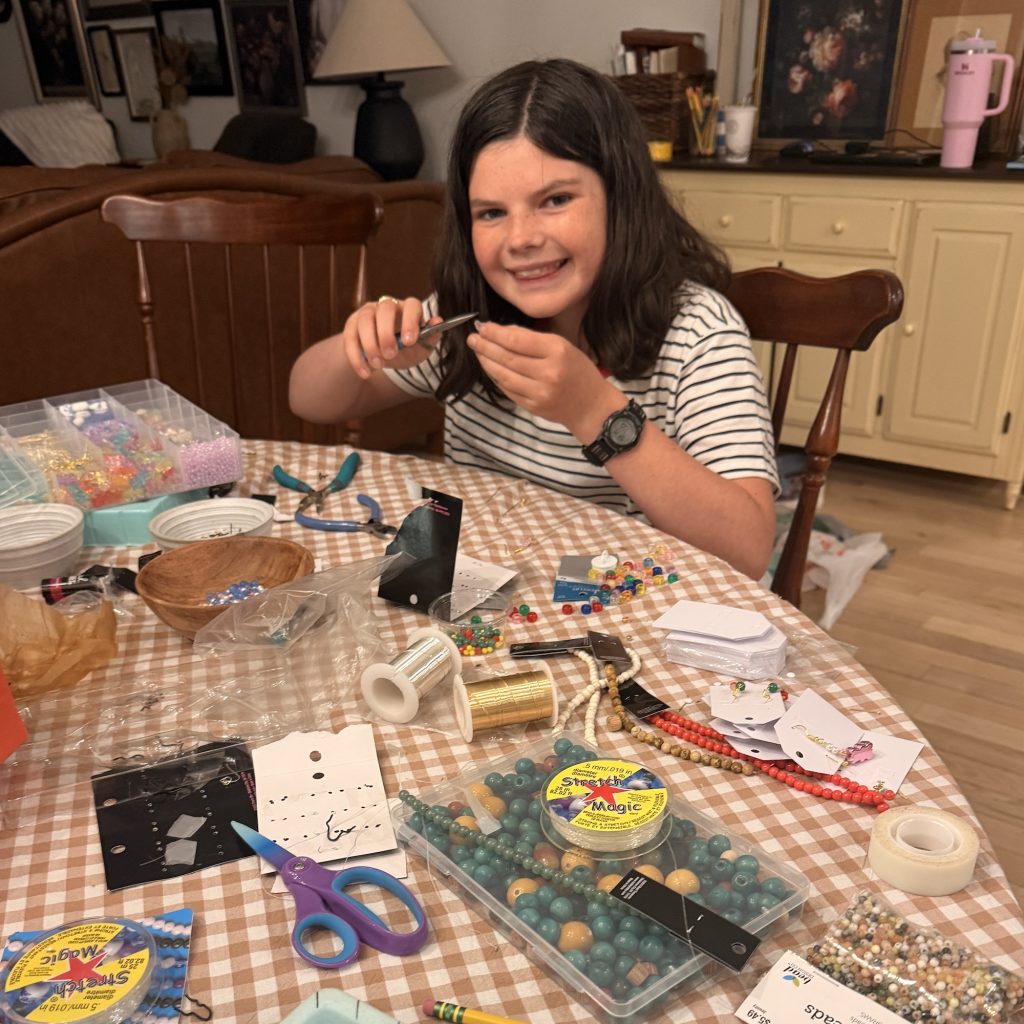
It’s easy to fill a middle schooler’s day with assignments and classes until there’s no room left to become completely absorbed in what they love. I want to reserve time for their own interests, even if it has no overlap with our homeschool lessons. I believe that if they have space for their own passions and projects, some of their most important learning may begin there.
My oldest son spends time every week working on creative and hilarious LEGO stop-motion videos, 3D-printing projects, and his own podcast. For the podcast, he researches topics, sorts through information, writes scripts, organizes his thoughts, and figures out how to communicate them to someone else. I want to give him enough time for his hobbies so I don’t miss the education happening when he voluntarily spends hours researching and writing because he’s creating something that matters to him.
My daughter is doing the same thing in completely different ways. She’s exploring recipes, sewing, and spending time working as a mother’s helper. She’s learning to follow directions, troubleshoot, manage her time, serve someone else, care for younger children, and create useful things with her own hands.
Balancing structure and freedom
Middle school needs structure, but it also needs space.
We still do math. I still assign work they don’t love or push back on. I require my kids to read certain books, and there are things they have to learn whether or not they are interested. We still love doing science and nature study, but for my older kids, their learning often happens through research, writing, or hands-on projects that require more independence and critical thinking. The older my children get, however, the less I feel the need to fill every hour of our day with lessons or cover every subject with a separate curriculum.
Leaving room for creativity
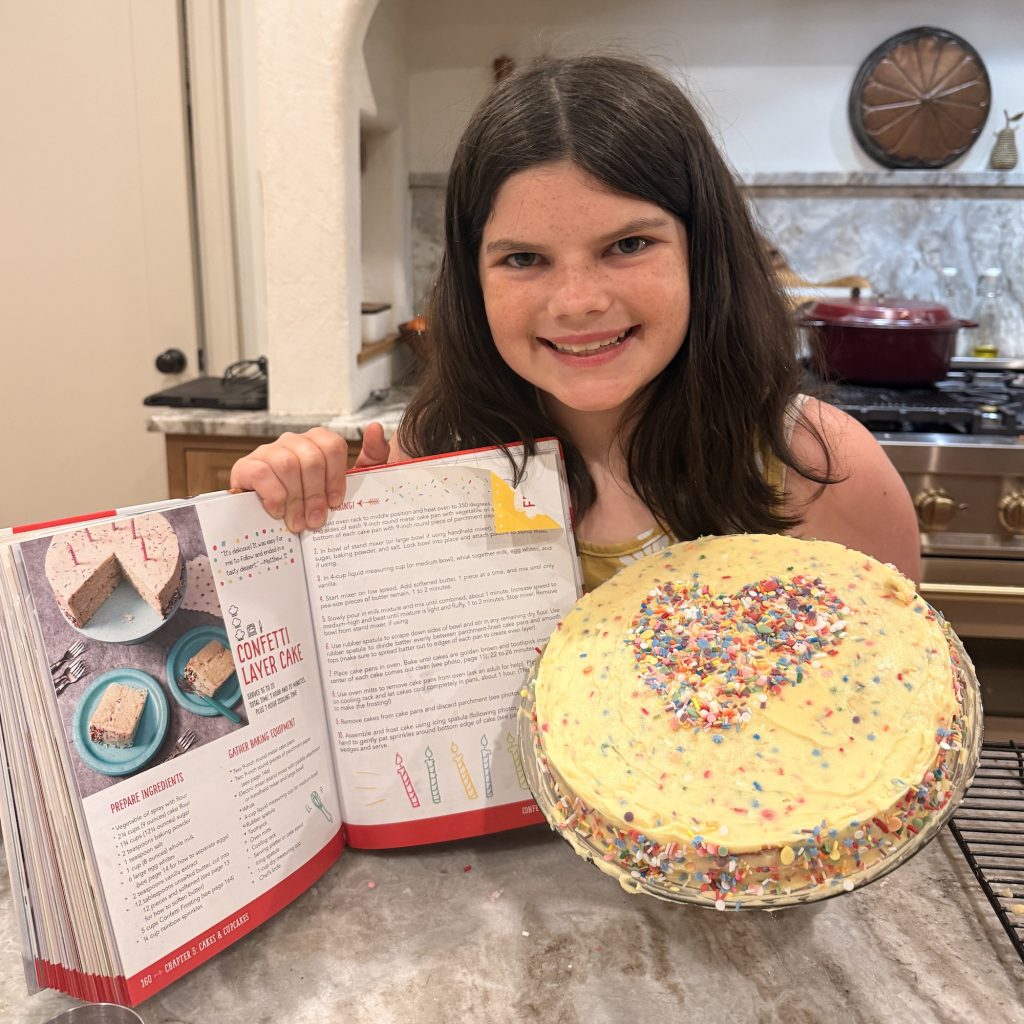
I don’t want all of my children’s best energy to go toward completing assignments someone else assigned; I want them to have time to make things themselves. I want them to have space to write, build, sew, design, film, cook, experiment, and bring their ideas to life.
One part of this is keeping our schedule from becoming too heavily scheduled. Creativity doesn’t overflow when our schedules or homeschool assignments are long and burdensome. Creativity happens when children have time to be bored and come up with new ideas and ways to entertain themselves. Creativity needs room to breathe, and it’s important to me to let this aspect of my children’s personalities come through.
Do you have a vision for homeschool middle school? Did anything change when your children entered these years? Share your thoughts in the comments below, I’d love to hear.
Lyndsey Mimnagh is a homeschool mom of four, founder of Treehouse Schoolhouse, and lifelong believer in the power of stories, play, and creativity. Lyndsey lives in North Carolina with her husband and children and can usually be found reading aloud, crafting, hiking, or enjoying good espresso. Connect with her on Instagram @treehouse_schoolhouse.