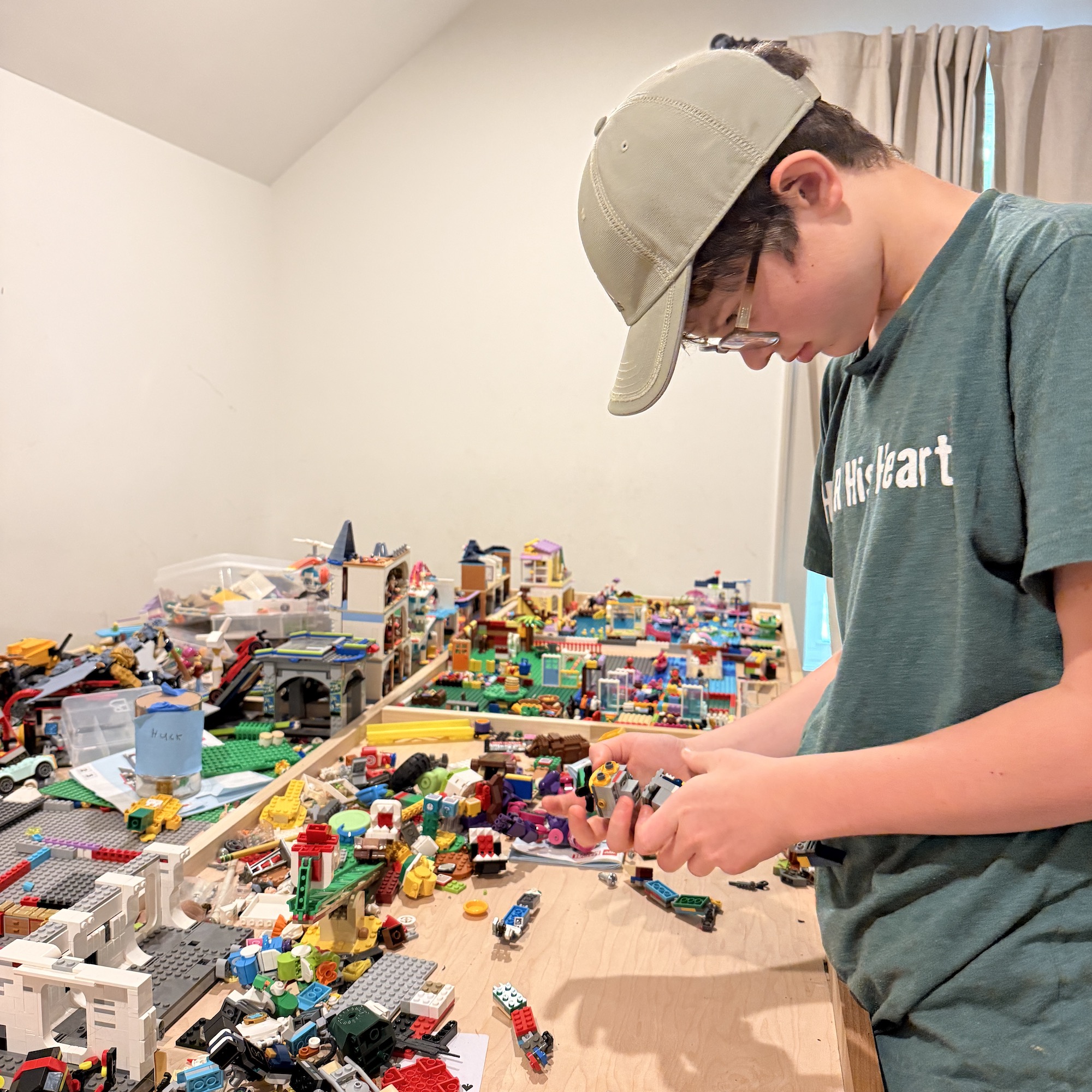
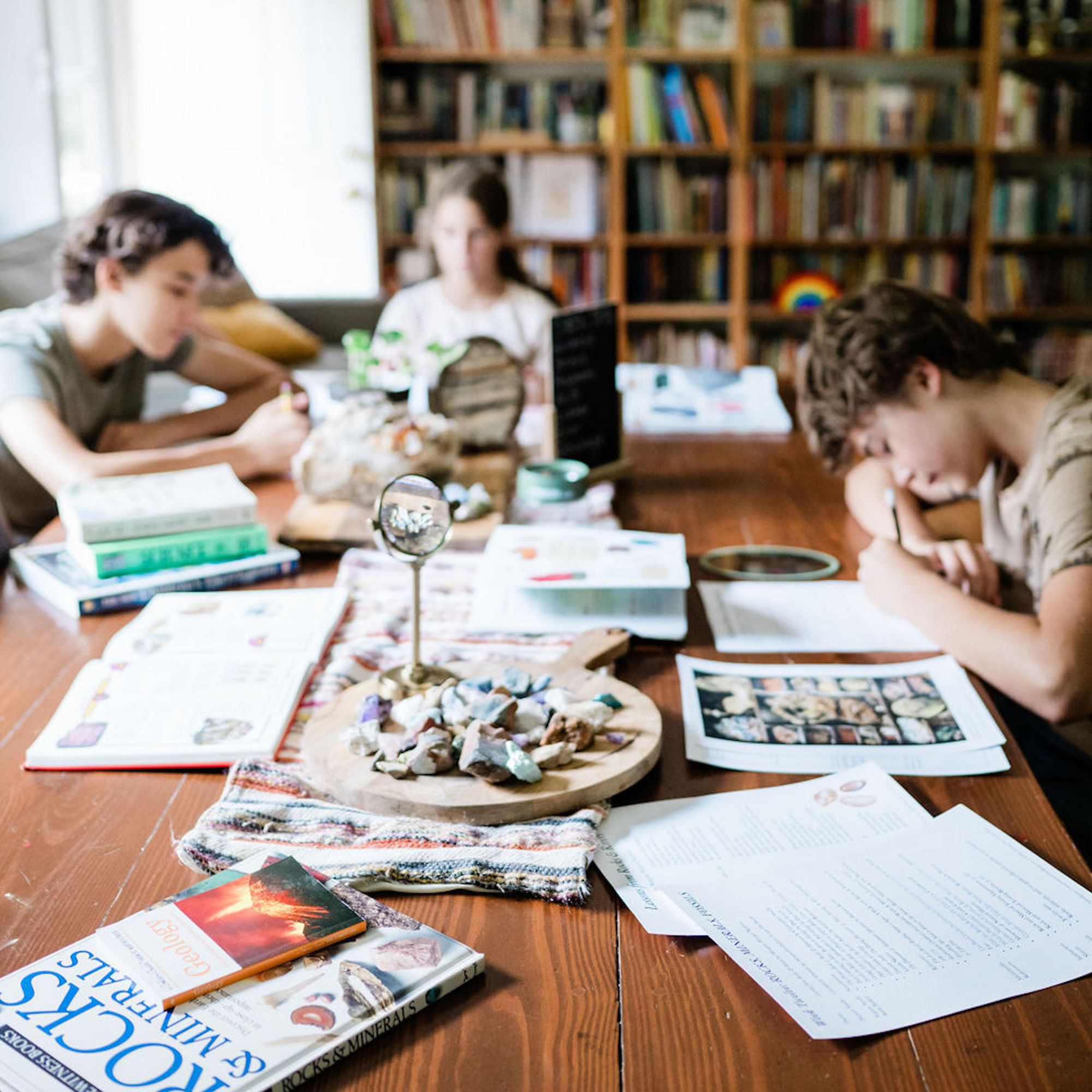
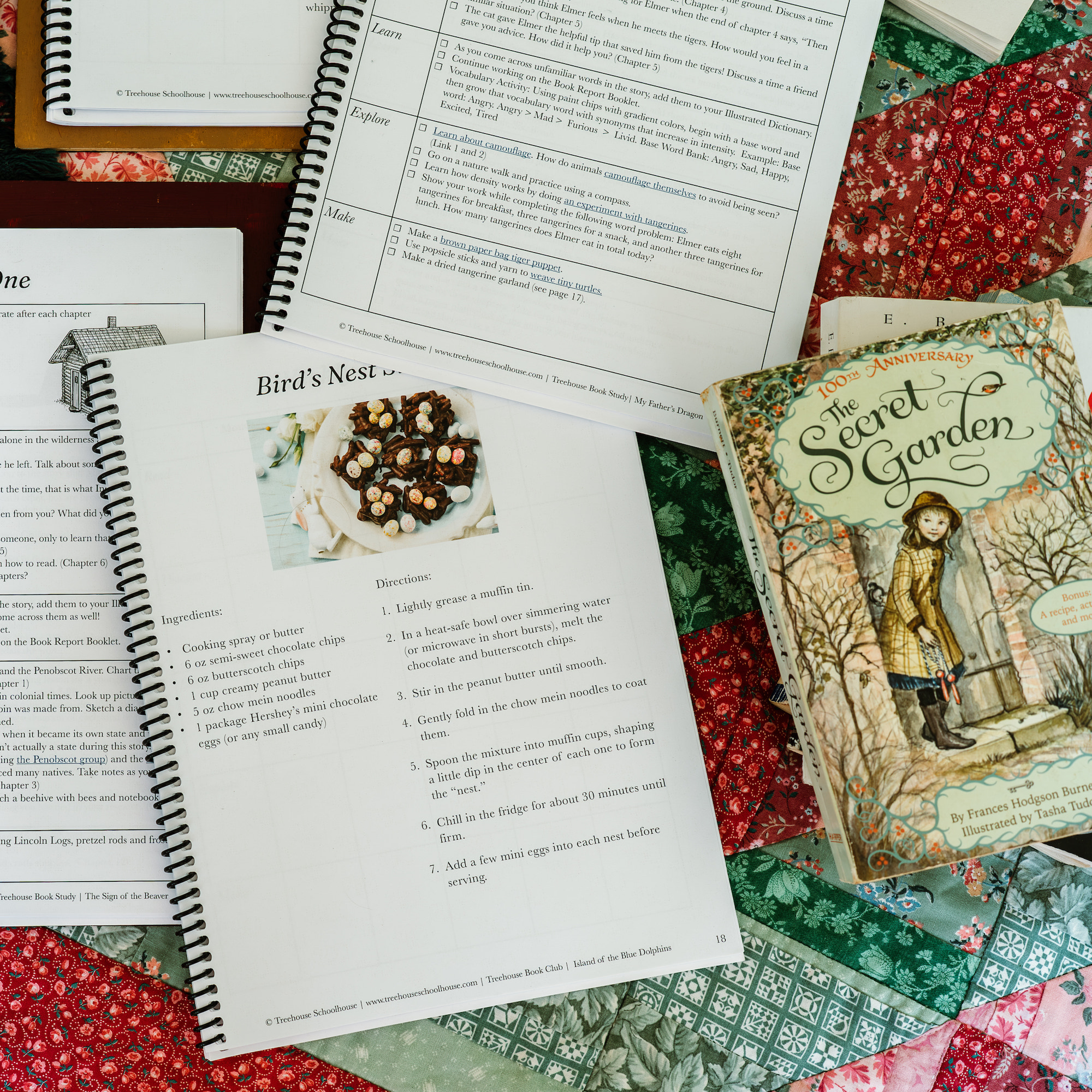
Some of the most meaningful science lessons in our homeschool have started with a simple question about something we noticed outside. A spider spinning a web, a hawk that swooped through our backyard, or a creature we discovered in the garden can open the door to books, research, experiments, notebooking, and deeper study.
This natural science approach, influenced by Charlotte Mason, helps children build a relationship with the world around them through living books, firsthand observation, and hands-on exploration. In this post, I’m sharing what natural science can look like in the elementary and middle school years and how we incorporate it into our homeschool.
In this blog post:
- What is natural science?
- How does natural science differ from a traditional science approach?
- How we study natural science in our homeschool
- Following a curriculum while leaving room to chase interests
- 10 examples of learning through a natural science method
- Frequently asked questions about using a natural science method
What is natural science?

Natural science is the study of the physical and living world around us. It includes biology, earth science, chemistry, and physics, sciences that help us understand living things, matter, energy, weather, landforms, and the many ways these things work together.
For young children, though, natural science doesn’t have to begin with formal definitions or complicated explanations. It can start with a child noticing a bird building its nest, watching a caterpillar change, wondering why the moon looks different each night, or discovering mushrooms after a week of rain.
This is one of the things I love about a natural science approach: It begins with the real world. Children observe, wonder, ask questions, and slowly build relationships with the things they encounter.
How does natural science differ from a traditional science approach?
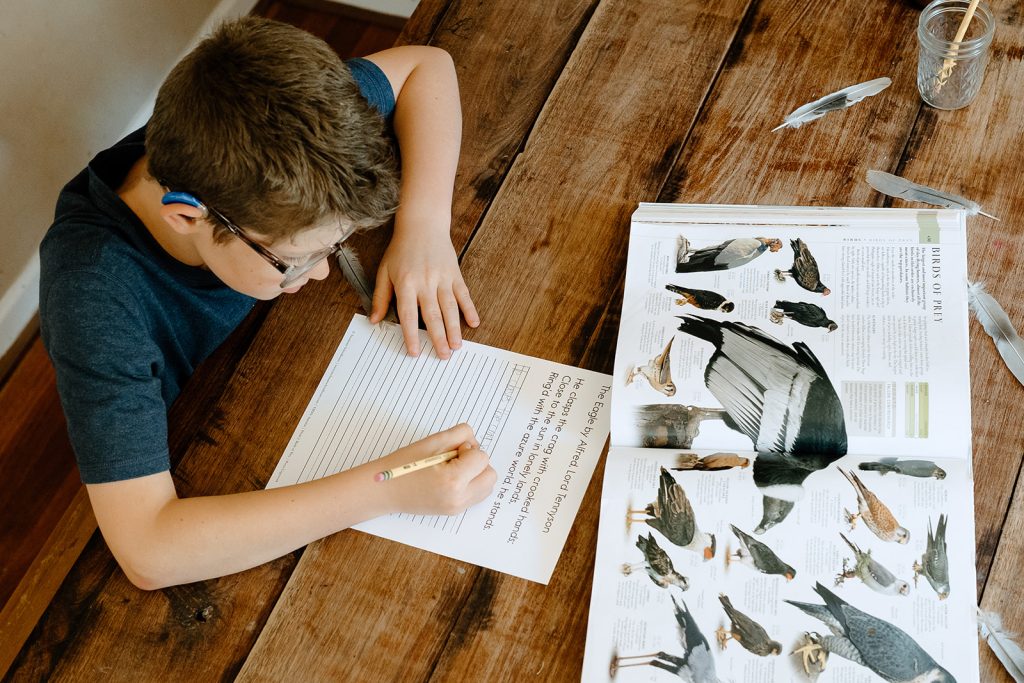
For children, the goal of a natural science approach is to introduce elementary and middle school children to science in a way that encourages curiosity about the world around them, especially with the things they can see, touch, observe, and experience in nature. A traditional science curriculum may begin with a textbook, a list of vocabulary words, or an explanation of a scientific concept. Those things can certainly have a place, especially as children grow older, but we prefer to begin with something living and tangible whenever possible.
Instead of only reading about the parts of a flower, we examine one. Instead of studying charts of the stages of a butterfly’s life cycle, we watch caterpillars grow and change. We notice the moon, follow the weather, search for animal tracks, collect leaves, and pay attention to which birds come and go with the changing seasons. Then we bring in living books, stories, demonstrations, experiments, and other resources to help us understand what we have observed.
This approach is part of Charlotte Mason’s philosophy of education. She believed that education is built through relationships with God, with people, with ideas, and with the natural world. Nature study wasn’t simply another subject to complete. It was an opportunity for children to spend generous time outdoors, practice careful observation, and develop a personal knowledge of the plants, animals, and patterns around them.
In this kind of science education, children are not only collecting facts. They are learning to pay attention. They begin to recognize the call of a familiar bird, notice which flowers bloom first in spring, and understand how weather, plants, animals, and people are connected. The scientific vocabulary and formal explanations can grow from what they know to be true.
How we study natural science in our homeschool

In our homeschool, much of our science learning follows the rhythm of the seasons and begins with what we see in the world around us. Rather than learning from a textbook, I want my children to connect what they read and study with things they can see, touch, and experience for themselves.
In autumn, we may study changing leaves, migrating birds, mushrooms, apples, or pumpkins. Winter invites us to learn about hibernation, animal tracks, evergreen trees, weather, and the night sky. In spring, we notice returning birds, emerging insects, budding trees, and new growth. Summer gives us opportunities to explore gardens, ponds, insects, and bodies of water.
These experiences are the starting point for deeper study. Something we notice on a nature walk may lead us to a living book, a nature notebook entry, an experiment, a documentary, or further research. We may sketch and label what we find, identify an unfamiliar species, read a biography about a naturalist, or return to the same place throughout the year to observe how it changes.
As my children grow older, we add more formal science instruction, scientific vocabulary, experiments, and written work. But even in the middle school years, I want their studies to remain connected to the real world through living books, hands-on experiences, careful observation, and time outdoors.
This is one of the things I appreciate most about a Charlotte Mason approach to nature study. Children aren’t only gathering facts about the natural world; they are forming a relationship with it. They develop the habit of attention: They learn how to slow down, look closely, ask questions, and delight in the beauty and complexity of God’s creation.
Here are some of the practical ways we study natural science in our homeschool throughout the elementary and middle school years.
Science in the elementary years: Scientific discovery through living books and observation
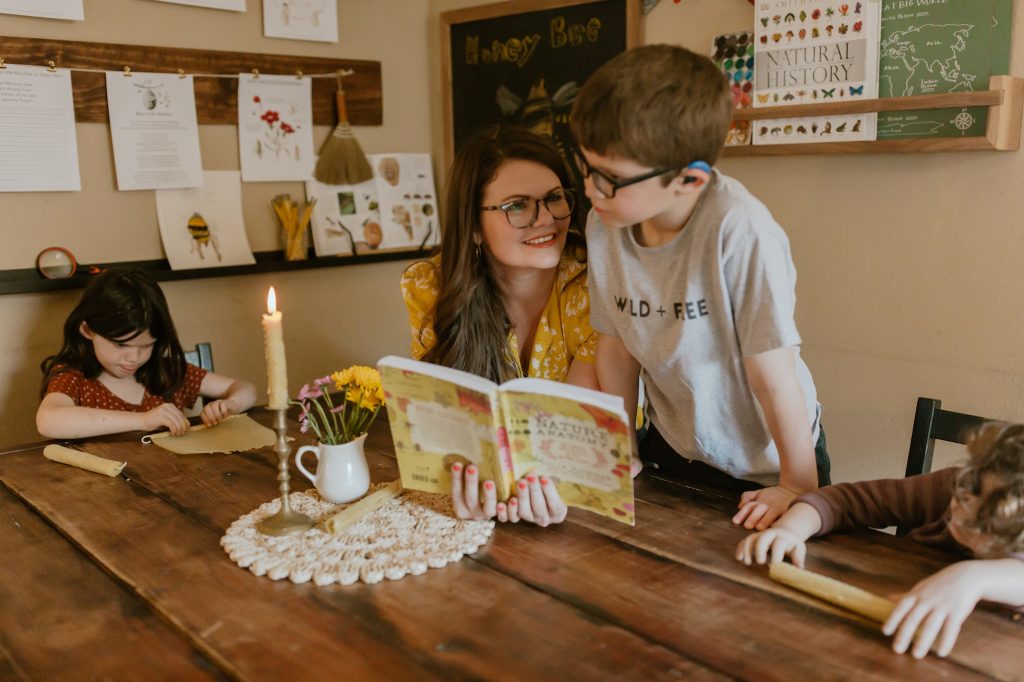
During the elementary years, we lean heavily on living books and firsthand observation. The term “living books” comes from the Charlotte Mason philosophy of education. Rather than presenting disconnected facts for a child to memorize, a living book brings a subject to life through beautiful language, compelling ideas, and the voice of an author who knows and cares deeply about the topic.
Living books often:
- Are written by an author with firsthand experience or a genuine passion for the subject.
- Use engaging, narrative language rather than presenting information like a textbook.
- Offer meaningful ideas that invite children to wonder and think.
- Capture the imagination and stir the emotions.
- Stay with the reader long after the book has been closed.
- Help children remember what they have learned and connect it to the world around them.
Through living books, children can encounter nature and science in a personal and memorable way. They may learn about birds through the journals of a naturalist, follow the life of an animal through a beautifully told story, or explore a scientific discovery through the biography of the person who made it.
We pair these books with opportunities to observe the natural world firsthand. A story about a monarch butterfly becomes even more meaningful when a child finds a caterpillar on milkweed, watches it form a chrysalis, and records the changes in a nature notebook. The book gives language and ideas to the experience, while observation makes the learning tangible and personal.
Living books do not remove facts from science. Instead, they give those facts a meaningful context, helping children develop knowledge alongside curiosity, imagination, and a genuine relationship with the world they are studying.
As children learn about the world, they can also learn to pay attention to their own surroundings and see what they can gather with their own senses. Children may learn by going on a nature walk, tasting different varieties of apples, identifying different types of pumpkins and gourds, or learning how to identify birds in their backyard.
We also carry natural science exploration into other areas, like folk songs, hand rhymes, poetry, and picture study. Alongside learning science ideas and paying attention to what is in the outside world, children can enjoy fun songs, beautiful stories, and poems about things they learn in science.
Living science in the upper elementary and middle school: Exploration, research, and discovery

As children move into the upper elementary and middle school years, they are ready to take their science studies deeper. They can make more complex connections, conduct independent research, perform experiments, record detailed observations, and communicate what they have learned through notebooking and writing.
We continue using living books, nature study, and hands-on experiences, but we build on that foundation with more formal scientific vocabulary and instruction. Older children can begin asking their own questions, gathering information from multiple sources, testing ideas, and presenting their findings. This allows science to grow naturally from observation and wonder into deeper research and discovery.
During autumn, children can grow mushrooms and then do a baking project using yeast. In spring, children can walk through the wood and collect seeds to see what types of seeds are being dispersed in the springtime. They can attempt to identify the seeds they collect, then test distributing seeds through wind, water, and hitchhiking. In summer, science is not only about naming the types of bodies of water, learning about rivers, lakes, oceans, and estuaries, but making it meaningful by mapping out the bodies of water nearby, practicing geography skills, and making personal connections.
Science becomes a way to become involved in the world, learn new skills, and understand your own community by paying attention to the intricate details about your world. The experience of living science turns into a path for growth and learning instead of a checklist of assignments and projects.
Getting outside and making connections in nature

At the core of living science is simply getting outside and exploring the world. Regular time in nature gives children the chance to observe patterns, ask questions, and connect what they are studying with something they can see and experience for themselves. This can be going to new places, like taking field trips inspired by your studies, or just visiting the same hiking trails throughout the year and noticing how things change with the seasons.
They might observe a bird’s behavior, identify, collect, and compare leaves from different trees, track the phases of the moon, record the weather, examine pond water under a microscope, or revisit the same location throughout the seasons. Repeated experiences help children become familiar with their surroundings and notice details they may have missed the first time. A curious child knows there is always something new to discover.
Hands-on learning can also include cooking a recipe that demonstrates a scientific process, conducting an experiment and recording the data, collecting and comparing specimens, or creating charts and graphs to record findings. Field trips to gardens, farms, nature centers, science museums, waterways, or other new environments give children even more opportunities to encounter science in the real world.
Science research and further study
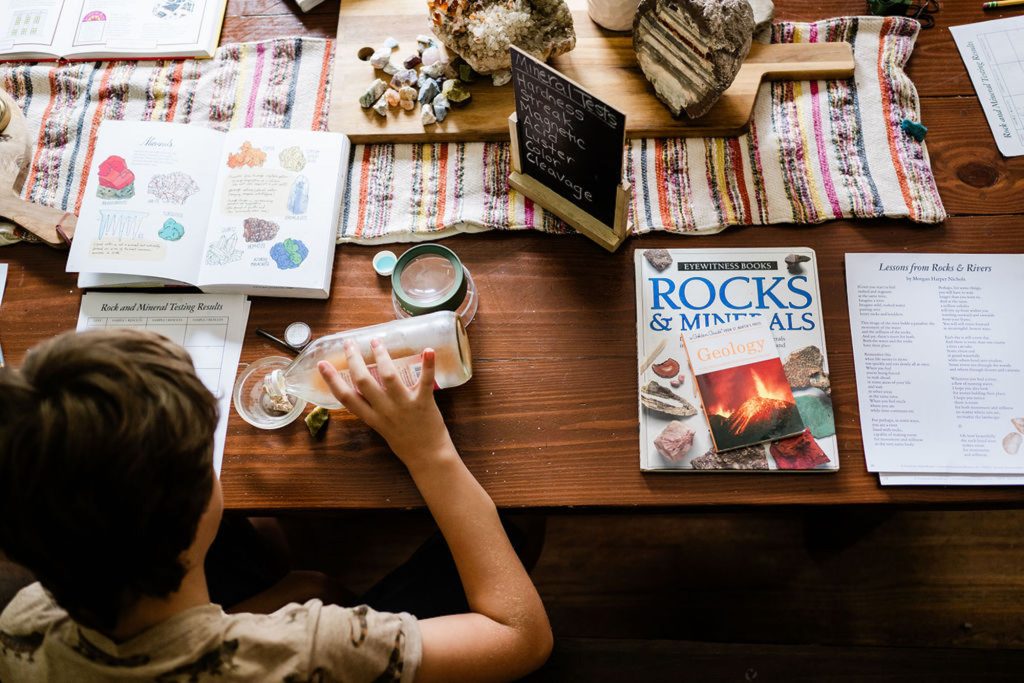
Curiosities and questions from reading and observation are wonderful starting points for further research. An unfamiliar word, species, process, or scientific idea can lead a child into a much deeper study if they are given the margin to veer off the set plan from time to time.
Older children can practice defining scientific terms, researching how something works, consulting multiple sources, and organizing what they discover. Rather than relying on a single explanation or summary, they can research, gathering information from books, articles, documentaries, field guides, and firsthand observations to develop a fuller understanding of the topic.
When studying science with multiple children, each child can research different topics and share what they learned with the family, whether casually or by giving a presentation. This gives children a meaningful reason to organize and communicate their ideas while allowing everyone to benefit from one another’s discoveries.
Exploring science through language arts

Integrating science with language arts gives children a meaningful way to practice handwriting, grammar, narration, research, and composition. Instead of completing writing exercises that feel disconnected from the rest of their learning, they can write about subjects they are already exploring and care about.
Children might:
- Copy a nature poem.
- Create an illustrated glossary of new scientific terms.
- Label a detailed drawing or diagram.
- Write a narration or summary of a living science book.
- Write instructions explaining how to perform an experiment.
- Create a report about an animal, naturalist, ecosystem, or scientific discovery.
- Compare two species, habitats, processes, or scientific ideas.
Creative writing also gives children the opportunity to consider science from a different perspective. They might write a story from the point of view of a migrating bird, compose a poem about the changing seasons, or imagine the journey of a drop of water through the water cycle.
The goal is to give children repeated opportunities to observe closely, think deeply, communicate clearly, and experiment with different forms and purposes of writing.
Nature study notebooking

The goal of notebooking is for children to make knowledge their own by sharing what they are most engaged with. Notebooking can be done in a variety of ways based on how much time you want to spend on it, or the learning level of your children.
Here is how we do notebooking with children in upper elementary or middle school.
- Upper elementary (Grades 4-5): Ask your child to draw a picture of the subject and orally narrate what they learned that relates to the picture they drew in complete sentences. You may require a certain number of sentences for the child to complete. Ask them to write the sentences on the lines on their notebook page, expecting excellence in spelling, handwriting, and grammar. Another option is to complete a first draft on a separate paper, edit together, and have them write their final draft on the notebook page.
- Middle school (Grades 6-8): Ask your child to independently develop a written narration to describe what they have learned and have drawn. You may require multiple paragraphs and use a separate paper for their written narrations. Another option is to complete a first draft on a separate paper, edit together, and have them write their final draft on the notebook page. Expect excellence in spelling, handwriting, and grammar.
Following a curriculum while leaving room to chase interests

Following a curriculum and chasing a child’s interests are two completely different approaches. A curriculum can give direction, ideas, and helpful resources, while still leaving plenty of room to follow the questions and discoveries that naturally arise.
We use Treehouse Nature Study in this way. It gives us a seasonal framework of living books, poetry, picture study, folk songs, nature notebooking, hands-on activities, and ideas for further exploration, but we don’t follow the curriculum to a T or feel pressure to complete every activity. I think of it more as a menu than a checklist. We choose what our children are interested in, our schedule, and what is happening in nature around us.
Because the curriculum is organized by season, we cycle through it each year, choosing different weeks or themes to explore. Some years we may skip a theme entirely and return to it the following year. Other times, a single week captures our children’s interest, and we stretch it into several weeks of reading, observation, research, and projects. This gives us the structure of a curriculum while still allowing curiosity, the seasons, and our children’s interests to guide our learning.
10 examples of learning through a natural science method

Here are some things we have done over the years of learning through nature and natural science to encourage curiosity, wonder, and a personal connection with science and the natural world.
- When studying pumpkins and corn as part of Treehouse Nature Study: Autumn, we cut open a pumpkin together, separated it, then labeled the parts on a worksheet using tweezers and other tools.
- We studied apples with Treehouse Nature Study: Autumn and learned about the life cycle of an apple from seed to fruit, then baked an apple pie together.
- For winter nature study, we read beloved picture books about snow and ice and did an experiment to create dew and frost. (Treehouse Nature Study: Winter)
- Over a period of time leading up to and following the winter solstice, the darkest day of the year, we charted the time of sunrise and sunset, plus the total hours of daylight. (Treehouse Nature Study: Winter)
- During springtime, we made pressed flower lanterns and researched the meaning of different common flowers. (Treehouse Nature Study: Spring)
- When learning about reptiles and snakes in Treehouse Nature Study: Spring, we watched videos about a snake’s unique Jacobson’s Organ, made model snakes out of clay, and played a game together to mimic how snakes hunt their prey.
- When learning about flowers with Treehouse Nature Study: Summer, we dissected sunflowers and replicated paintings from Vincent Van Gogh.
- We learned about the summer solstice in Treehouse Nature Study: Summer and deepened our understanding by learning about dehydration and UV rays, and celebrated a week of learning by making ice cream together.
- We explored summer storms in Treehouse Nature Study: Summer by learning about weather terms like updraft, downdraft, and microburst. Then we made moody paintings inspired by summer storms, and a list of things to do indoors on a rainy summer day.
- We gathered together to learn about seashells with summer nature study and sang She Sells Sea Shells together, then used 3-part cards to learn the names of common seashells. (Treehouse Nature Study: Summer)
Frequently asked questions about the natural science method

- Is a living science approach rigorous enough? A living approach to science is absolutely rigorous enough. This style of learning builds toward learning complex science ideas in the later years by honing in on cultivating a real love for science, authentic connections, and curiosity for learning, rather than just facts without a lot of personal meaning.
- Will my child fall behind in science by using a natural science method instead of a traditional approach? Using a natural science approach does not delay science learning. This method is not about leaving out science concepts; instead, it is about deepening learning and bringing these ideas to life through an approach that explores ideas in nature, literature, and beauty in addition to learning new terms, ideas, and performing hands-on experiments.
- What is considered a living book for science curriculum? A living book is defined in the Charlotte Mason method as a book where the author has a personal connection to the subject. This is a broad term that could categorize works of fiction or nonfiction. It is about books presented with information that is learned firsthand.
- How do we do science outdoors in poor weather conditions like rain, severe weather, or excessive heat? If you are a family who wants to spend more time outdoors, weather will absolutely play a role in how much you are able to get outside. Depending on the time of year or the climate where you live, conditions can make being in nature more accessible or more difficult. I recommend making weather a learning opportunity. Children can chart the weather, read the forecast, and go outside to observe weather patterns. If playing outdoors, hiking, or planning field trips in nature, research safety guidance for your destinations and how to prepare, with specific gear, sunscreen, hats, bug spray, and plenty of snacks.
- What if I don’t know the answers to my child’s nature questions? Wanting to spend more time in nature and learn from the outdoors doesn’t mean you have to be an expert or a nature guide. You don’t have to know the answer to every question your child rattles off, and what a relief that is. Turn questions from an inquisitive child into a discussion and then work together to learn the answers, whether you decide to check out books from the library, ask a local expert, or find educational resources online to learn more. Praise a child for their smart and curious questions and turn it into a way to bond and learn together.
- What do I do if my child doesn’t seem interested or curious about science? This is a question that can come up with any curriculum or subject, not just science. In my experience, I have found it is often less about the specific subject. If a child is unengaged in learning or protesting or complaining about a subject, I tend to take that as a cue to pause and try to learn a little more about what’s going on. When this has happened in our homeschool, a lot of times we have resolved this by playing outside or just taking a break. If it’s prolonged or happening repeatedly, I try a different approach with the study, adding in a hands-on connection or fun activity without making a big deal about it.
- How do I assess my child’s learning without quizzes or tests? There are many ways to engage with a child about what they have learned, but we love the practice of notebooking, which at its core is a narration practice. Children can narrate what they learn, and then write down sentences about what they know and draw pictures to go along with it. Over time, notebooking pages become a cherished collection of what children have learned and gained from different studies. Learn more about how we do notebooking for different ages in this blog post.
- How much time should we spend on nature study and science each week in the elementary years? Deciding how much time you want to spend each day or week is a personal choice! You could do science every day or weekly, depending on your children’s ages, interests, and learning goals. Regardless of what you decide, I would leave extra margin for children to use what they learn in science as a starting point for other projects and further research in case something strikes their curiosity and interest. You could also consider doing science as part of a loop schedule.
How do you study science in your homeschool? Feel free to share your thoughts in the comments; we’d love to hear.