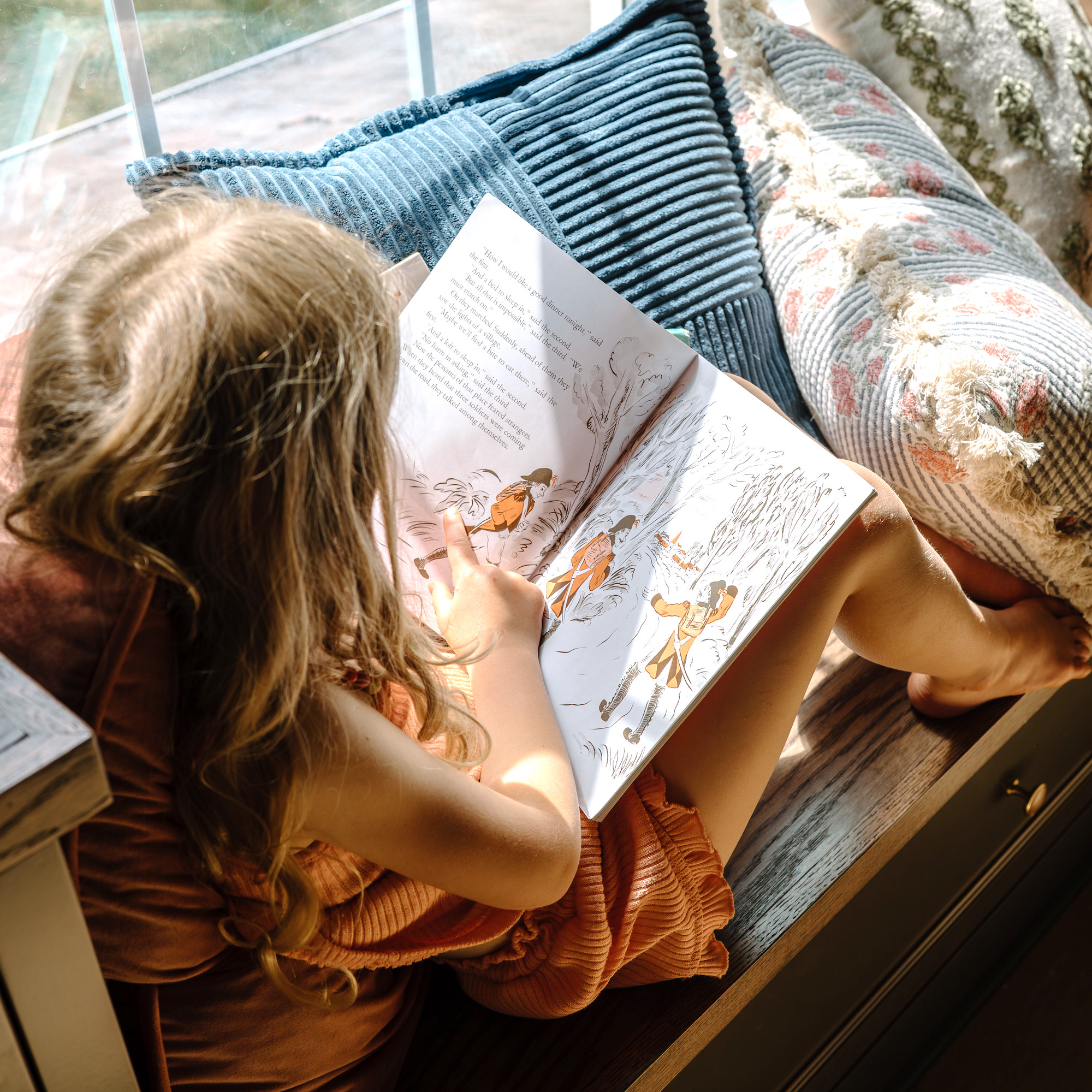
I think it’s really important to make space for creativity in our homes. Not in a perfect, Pinterest kind of way with planned crafts and tutorials, but in a way that invites children to use their imaginations and create without a lot of set-up or structure when they feel inspired.
After thinking through ways to add more creativity into our days, I realized I could easily set up a place for my kids to create and try new things without having to worry so much about making a mess.
In this blog post I am sharing details about our creative space, a corner of our porch we’ve designated for open-ended arts and crafts. I’m sharing the art supplies we love the most and the art books that have made the biggest impact for my kids.
In this blog post:
- Why I set up a creative art space for kids in my home
- Encouragement for small spaces or a home with small children
- Supplies that make the biggest difference in our art space
- Favorite books for inspiring child-led creativity
- Questions about our creative space in our home
Why I set up a creative art space for kids in my home

When I was a child, I remember my mom setting up a craft closet for me in the hallway. It wasn’t big or fancy, and it was probably a sacrifice to give up a closet she could have used for storage. My mom lined the shelves with bins and baskets of supplies like construction paper, tape, and paint. All of our art supplies were ready to go. I would grab the materials I needed for a project I imagined and would sit at the bottom of the closet, or on the floor in the hallway, to create.
In our home, I love to plan projects and pull out specific materials in our homeschool room for the kids to use. But we were missing a creative space where my kids could access art supplies on their own without asking for permission or worrying about making a mess. My idea is for the kids to have a place where they can create, and then leave a project and pause and pick it up again later. I also think it is fun to have a space for them to display what they’ve made, so they can explore their creativity on their own terms.
One day this spring I was looking around at our porch and decided to transform a corner into a creative space. I gathered a few supplies, many of them free or repurposed, like old bookshelves I was thinking about dragging to the curb, glass jars, baskets, and simple art supplies. Pom poms in one jar, buttons in another, paintbrushes in a cup, and little scraps and nature finds all mixed in. I didn’t do anything fancy… for the most part just what we already had. I got a couple of colorful rugs secondhand that bring a touch of whimsy to the space. I picked up a used easel for the corner and rolled a stump in front of it for a seat. I strung yarn with clothespins as a drying rack, plus a way to display any artwork the kids want to. Last, I got an antique table off of Facebook Marketplace to use as a craft table the kids can get paint, glue, or glitter on.
This space is exactly what we were missing. In the past, we kept all of our craft supplies stored away in our homeschool room closet, out of sight. If the kids wanted to make something, they would ask to pull it out and spread out supplies on the dining room or school room table. I would get frustrated because we also use those spaces for school and meals, so it created a lot of piles, requests for clean up, and constantly moving things around.
Adding a creative nook for the kids has sparked so much creativity, and I love how easy it is for them to just walk up and start making something. Every time I pass by, it reminds me that this is the kind of home I want to create: a home that feels lived in, not perfect. I dream of our home being a place where creativity is part of our everyday life.
Encouragement for small spaces or in a home with small children

We have lived in very small homes in the past where our entire home was smaller than our porch now! I understand wanting to have a designated creative space but not being able to. I also understand not being able to keep materials out because toddlers and babies will reach and spill (or eat) everything!
Here are a few ideas if you find yourself in this place:
- Make it portable – Instead of trying to carve out a permanent space, create a portable creative station. A basket, wooden crate, or small rolling cart can hold everything and come out when your child is inspired to create, then tuck away when you need the space back. I also like these bins for toting around markers and pencils.
- Go vertical (your best friend in a small home) – When floor space is limited or toddlers hands are always reaching, use your walls. Install a few higher shelves, peg rails, or hooks to hold supplies out of toddler reach but still visible. You can hang clipboards with current artwork or inspiration, too. It keeps things beautiful and functional without taking up too much floor or table space.
- Create a “yes space” – Instead of saying no all day, give your toddlers a small area where the answer is always yes. A low bin with washable crayons, thick paper, maybe stickers, just things they can access freely. Then keep the smaller or more messy supplies up high for older children or to be used within limits and oversight. It creates freedom with some boundaries, and it teaches them that creativity is something they’re invited into, not something they have to wait for.
Supplies that make the biggest difference in our art space

Here are the things we have added to our space that the kids use the most:
- Storage space or shelves – I grabbed these storage cubes (similar) off of Facebook Marketplace, but anything will work. Having a space to set up craft supplies and odds and ends is the most important part of our space. Instead of having to find supplies and cart them around or shove things in bins, these shelves help my kids skip past the set up and move straight to creating.
- Craft table – This could be as simple as a folding table and chairs or even a floor space that is designated for crafting and inventing.
- Art supplies – Keep supplies stocked on the shelves like paper plates, paint palettes, and jars of paint brushes, markers, and colored pencils. I like to find craft supplies at the dollar store and thrift store, as well as craft stores like Hobby Lobby. You could even post on your local Buy Nothing group and see if anyone wants to volunteer craft supplies they no longer use.
- Recycled items – The kids love to craft with things like cardboard, bottlecaps, egg cartons and old paper towel rolls! They save everything and put it in the creative corner to make something later.
- Nature finds – We have baskets of rocks, feathers, shells, pinecones, and leaves that the kids collect and then craft with! They’re always on the lookout for items in nature to use for their next creation.
See more of my favorite art supplies on Amazon.
Favorite books for child-led creativity

I don’t think that kids need any formal instructions or lessons, but my older kids have had a lot of fun with art tutorial books. Here are some that they have stuck with over the years, that speak to their own interests.
- Childcraft Make and Do Encyclopedia – These are vintage volumes of activities for kids to make (pictured above) and are very fun. If you know where to look, you can find these at Thrift Stores or Friends of the Library sales, or on sites like thriftbooks.com.
- Awesome Construction Activities for Kids – This book has tons of simple STEAM building projects for kids to make.
- Fun and Easy Crafting with Recycled Materials – This book has lots of DIYs from everyday objects or recycled items, including decorations, toys, and practical items kids can make.
- Things to Make and Do – This book has a lot of 10-minute projects for kids that use everyday materials or recycled items.
- Learn to Draw Forest Animals and Wildlife – These are great step-by-step instructions, but also echo what we see in our own natural environments. It has been fun to see my children improve their drawing skills but also learn to apply that to what they see in nature.
- How to Draw People – Drawing people has been a fun way for my kids to explore creativity. This has carried over into writing stories and drawing characters and to projects in our homeschool.
- Sewing School – My oldest daughter learned how to use a sewing machine last year, and this book has given her a lot of inspiration for sewing clothes and items for herself and others.
- Draw Art for Kids Hub Animals – We have loved these YouTube videos for years, and love to see that there is an instruction book our kids can turn to without needing to pull up a screen or video.
Questions about our creative space in our home

Will you keep everything outside all year-round? What about humidity, bugs, and rain?
Our porch is 10 feet deep and the shelves are on the inside, up against the house. Rain won’t touch them, but high winds, cold temps, and humidity will. Certain materials can stay out year-round, like mosaic tiles, pinecones, colored pencils, chalk. and paintbrushes. Other materials may be affected by weather and temperatures like paint, construction paper, and glue. When needed, I will tuck those more sensitive materials in the homeschool closet and pull them out as requested.
Do you make your kids clean up after they are finished with projects?
I am not as concerned with lingering messes and half-finished projects because that is the only thing the space is used for! However, just like any other area of the house we do “clean resets” where we work together to tidy the space. I also just enjoy being outside with the kids as they’re creating (or creating myself), so I tidy the shelves and table throughout the week when I am out there.
How do you encourage kids to be creative in your home? Share your thoughts in the comments below. For more fun, take this Creative Home Quiz to evaluate how your home supports imagination and creativity.

![Best Educational Board and Card Games for Kids and Families [2026]](https://storage.googleapis.com/treehouse-schoolhouse-media-dev/d9b5ca6e-image-scaled.jpg)