
Did you love doing crafts as a child?
Handcrafts offer so much for children and are worth the time it takes to teach new things. Teaching children new skills and handcrafts is a fun way to help them learn, build creativity, strengthen focus and perseverance, and more.
In this blog, we are sharing our favorite handicrafts to teach children, along with tips to get started. This includes ways to get started with handicrafts like crocheting, sewing, making stationery, and more.
In this blog post:
- Why should children learn handicrafts?
- The best handicrafts for kids to try and tips to teach them.
Why should children learn handicrafts?
In the Charlotte Mason philosophy, she encourages children to learn different skills and crafts that are both useful and beautiful. In her thinking, crafts were not intended to be disposable, but skills learned with patience and precision over time. She emphasizes activities like knitting, woodworking, embroidery, candle making, and leather crafts because they translate into real-world skills rather than just aesthetic beauty. These skills were learned with a commitment to the practice, selecting a craft and then spending one or two hours a week improving that skill for a time.
This list of activities includes a mix of crafts and handicrafts that we think are great for trying with children. Some of them are useful, and some are more aesthetic. We think thate while crafts may not all be useful items or forever keepsakes, helping children learn new skills and create things is a wonderful way to help kids get off of screens, improve fine motor skills, think creatively, and enjoy learning new skills without a lot of pressure to do it perfectly. Crafts offer a great way to connect and bond with your kids as you work on new things together.
Sometimes with children it’s easy to focus on skills that are suitable to their level. There is nothing wrong with this, but it can be easy to underestimate what children can learn with a little bit of time and attention. If you give children exposure to new activities, you might be surprised at what they can create.
The best handicrafts for kids to try and tips to teach them
These are our favorite handicrafts to try with children. These crafts encourage children to be creative, attentive to detail, and learn new skills.
Each handicraft includes an age recommendation, which should be considered as a loose minimum age a child could start learning each handicraft. As children grow, they will be able to advance their skills and learn more techniques and complete larger, more complicated projects.
Beading
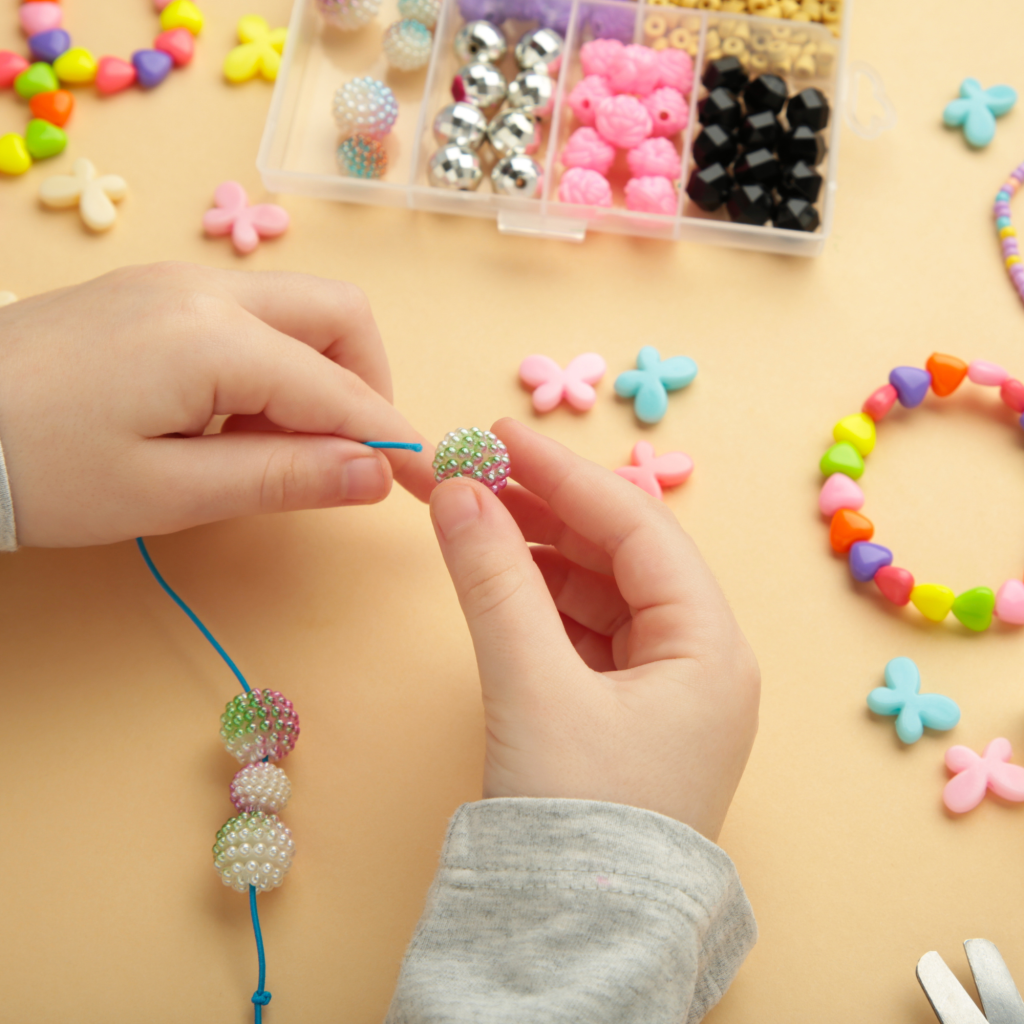
Beading is a fun activity that kids can do at any age. Children can create their own bracelets, keychains, ornaments, garlands, or whatever they can imagine. Simply string beads up and go.
Age: 3+
Tips to get started:
- For young children ages 3-5, start with large pony beads or wooden beads so kids can easily string beads together without getting frustrated.
- Tape the end of the string to a table or surface so beads don’t fall off later.
- Add 2-3 extra inches of string for knotting or tying it to a clasp.
- Use a bead organizer to separate bead colors or styles.
Favorite supplies:
- Wooden beads or pony beads for little kids
- Tackle box bead organizer to keep colors separate
- Beading board for measuring and laying out patterns
- Fun beads, like these chunky letter beads, or a kit with letters and charms to get started.
- Pony bead kit for making animal keychains.
Calligraphy
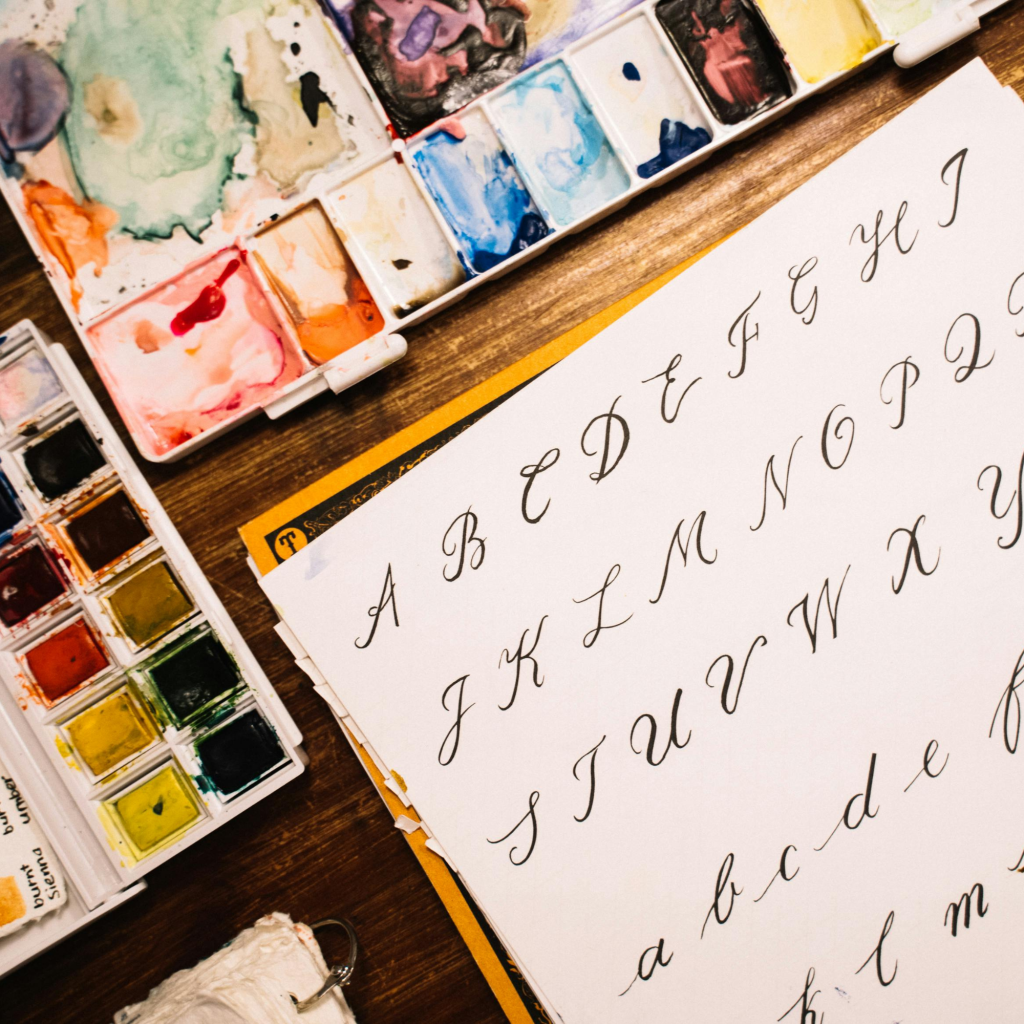
Some kids will really love learning and practicing calligraphy. It is also a useful skill when you mail letters or Christmas cards, and when you decorate cards and envelopes. Kids who love art, illustration, and decorating their own handwriting will enjoy this.
Age: 8+
Tips to get started:
- Young kids can try this too, but if you start with little ones, focus on simple shapes and patterns instead of letters.
- Start when kids have a good grasp of fine motor skills and their own handwriting.
- Crayola Broad Line Markers are a great way to practice calligraphy without needing expensive pens and paper.
- Focus on drawing shapes over writing letters or words.
- For practice, try using calligraphy paper, which uses a slanted grid to guide lettering.
Favorite supplies and resources:
- Crayola Broad Line Markers for inexpensive practice. (Use this YouTube tutorial for practicing calligraphy with Crayola markers.)
- Tombow Fudenosuke Brush Pens for hand-lettering.
- Calligraphy paper.
- Traditional calligraphy instruction book or modern hand-lettering ideas.
- Kids who catch on might enjoy trying a pen-and-ink set.
Clay and sculpting
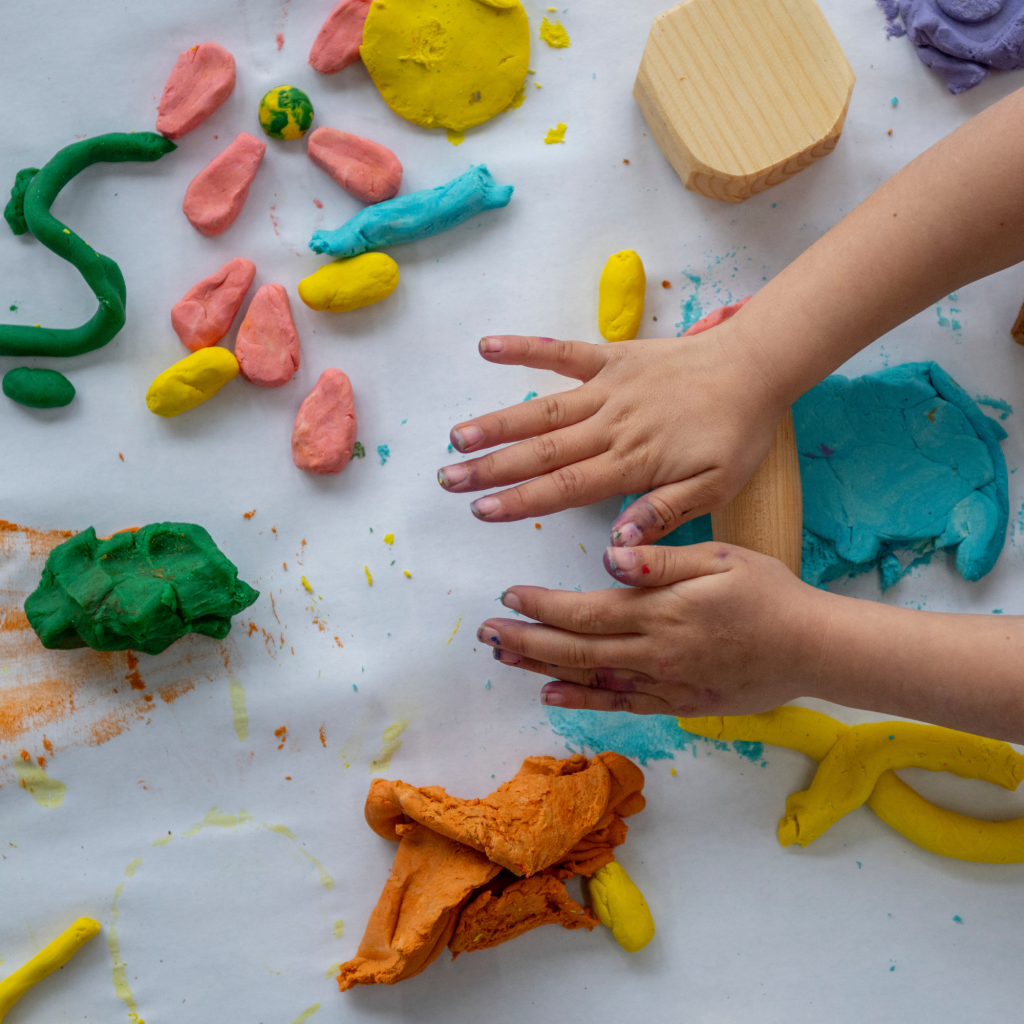
You can make tons of crafts from clay, and it’s easy to tailor to any age. Try making your own pinch pots, sculpting food items or animals, or imprinting designs into clay. You can learn with air-dry clay or polymer clay for fun colors. If their interest grows, visit a local pottery studio together and learn how to throw clay on a pottery wheel or do other advanced projects.
Age: 3+
Tips to get started:
- Let toddlers and preschoolers enjoy the process by feeling and squishing clay, with minimal instructions or feedback. Let them enjoy using the materials without worrying about the final result.
- Little kids can squish beads, rocks, or twigs into clay to make full-on sculptural art pieces.
- Gather home items like plastic knives, rolling pins, or toothpicks, which work well for clay crafts.
Favorite supplies:
Crochet
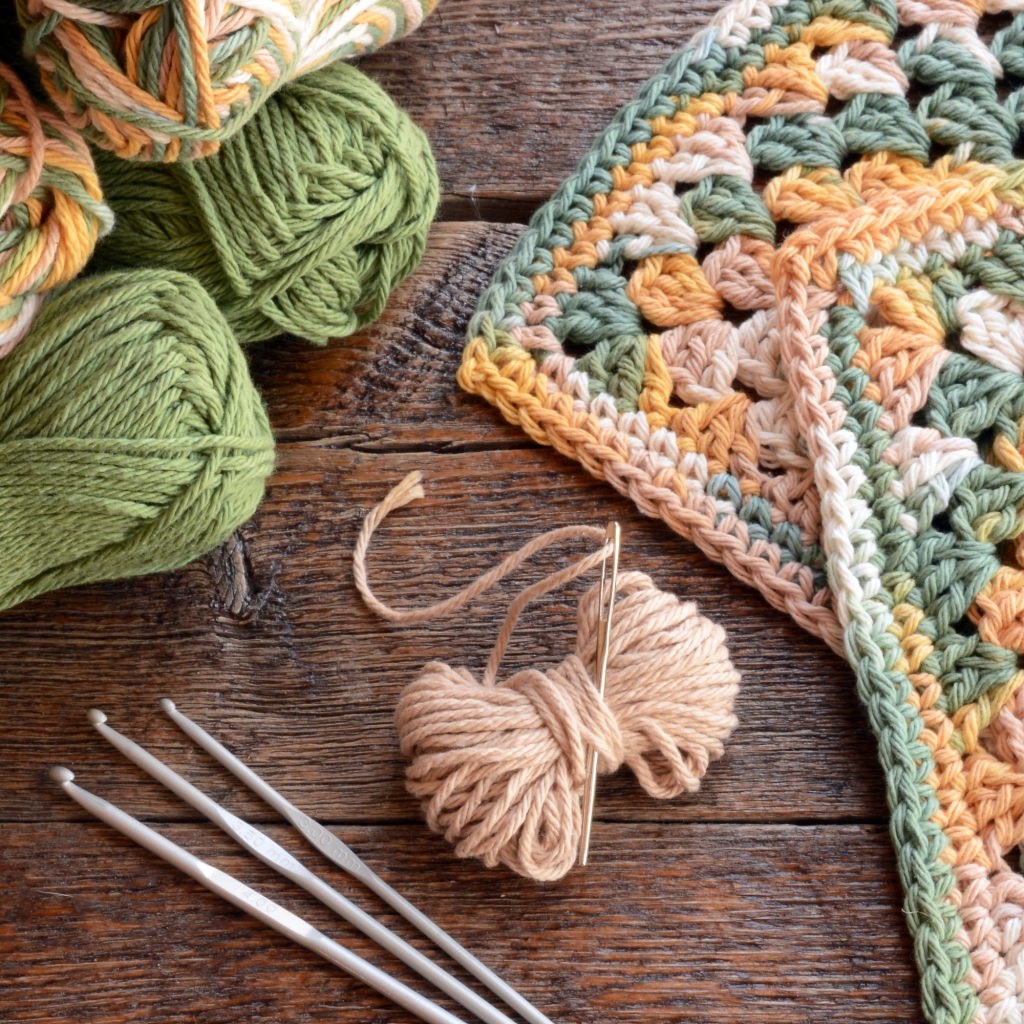
Once they get the hang of it, crocheting opens the door for all kinds of crafts and projects for kids to make. Start with a simple scarf that uses straight lines, and once kids grasp how to handle the crochet hook, they can move on to more complicated projects.
Age: 6+
Tips to get started:
- Little children who want to try can start by finger crocheting before they have the fine motor skills to use a crochet hook.
- Let children pick their favorite multi-colored yarn that changes colors as they make progress.
- Let the child hold the crochet hook as much as possible while they learn. Once they get this down, they can do so much!
- Let children make mistakes, and focus on making progress over making it perfect or even making spaces.
- Master the chain stitch, then move on to single crochet and double crochet stitches.
- Start with a small project and master the basics first.
Favorite supplies:
- Multi-colored rainbow yarn.
- Easy-to-grip crochet hooks.
- These finger rings help kids hold proper tension as they work.
- Crochet pattern books.
- These animal crochet kits are great once children get the hang of it and can follow a pattern.
Cross-stitch
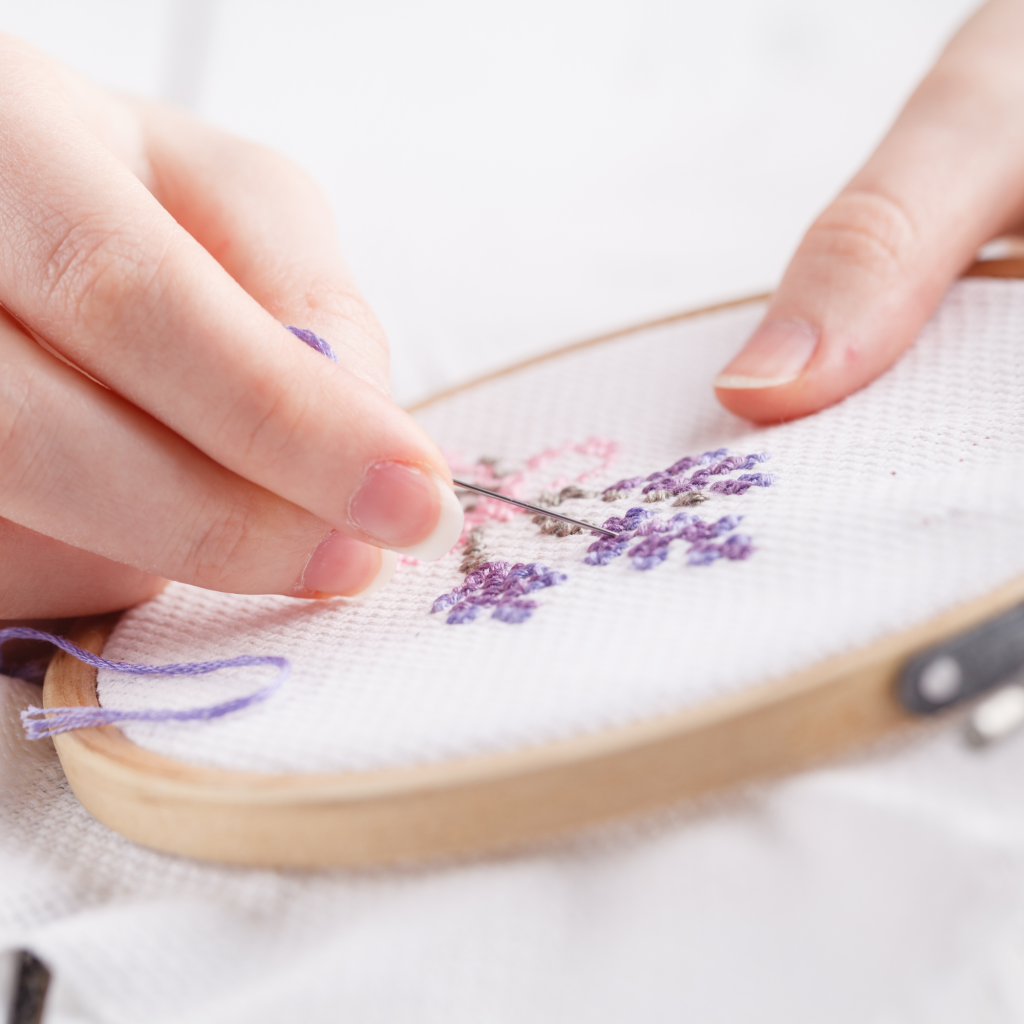
Cross-stitch is a form of embroidery that uses X-shaped stitches to create pictures and grid-like patterns with thread and a dull needle.
Age: As early as 6+, but more like 8-10 to be able to cross-stitch independently.
Tips to get started:
- Even though this uses a dull needle, supervise children and stay present while they work.
- Let children play with the stitch and materials before working on a pattern.
- Younger children can learn by using a plastic embroidery needle, which is safer for little hands.
- Let kids practice making stitches in an “x” pattern, starting at the back of the material to make the “x” on the front. Here is a great step-by-step beginner’s guide.
- Use masking tape to cover the edges of Aida cross-stitch fabric so it doesn’t fray.
Favorite supplies:
- Embroidery hoop and Aida cross-stitch fabric.
- Embroidery floss and a plastic embroidery needle for kids, or a tapestry needle.
- A keychain cross-stitch kit, or kits with a fun pattern.
- Older kids might enjoy making their own cross-stitch pattern online.
Drawing and sketching
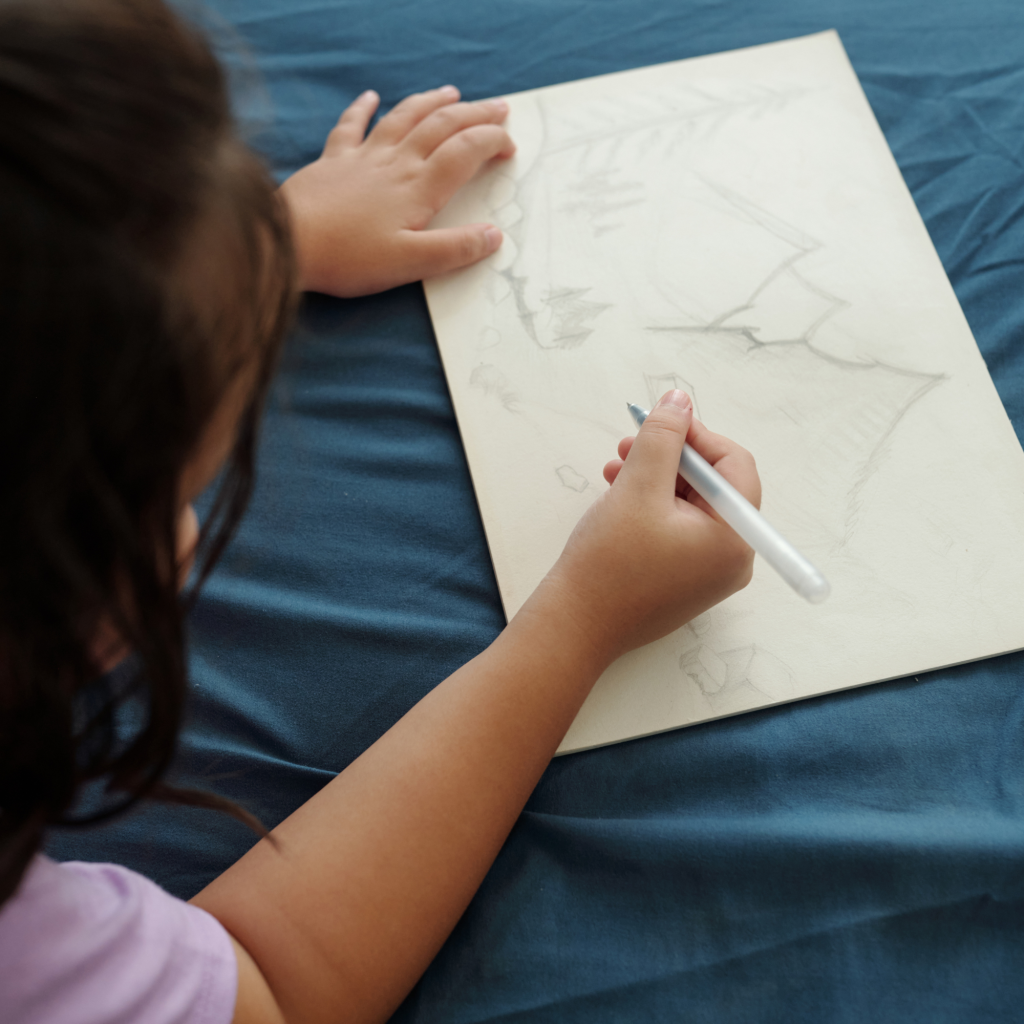
Practicing drawing and sketching is a wonderful way to encourage children to practice observation and build their art skills. Drawing is a craft that can truly be tailored to any age. It helps little children build fine motor skills, while advanced students can learn which shapes make up different objects and begin to understand perspective and proportions. The most important thing is to have fun and see where kids can go with it.
Age: 3+
Tips to get started:
- Provide lots of encouragement and excitement as kids sketch and draw.
- Encourage observation skills by asking questions about what children see and what shapes occur in images and scenery.
- Let kids practice with step-by-step art tutorials, like Art for Kids Hub, one of our favorites.
- Use tutorials so kids can learn how to draw their favorite things and characters.
Favorite supplies:
- Sketchbook and tracing paper.
- Drawing on graph paper is great for teaching proportions.
- Graphite drawing pencils.
- Artist-quality erasers for easy, precise corrections.
- Drawing books. (These are great to grab at thrift stores or used bookstores.)
Embroidery
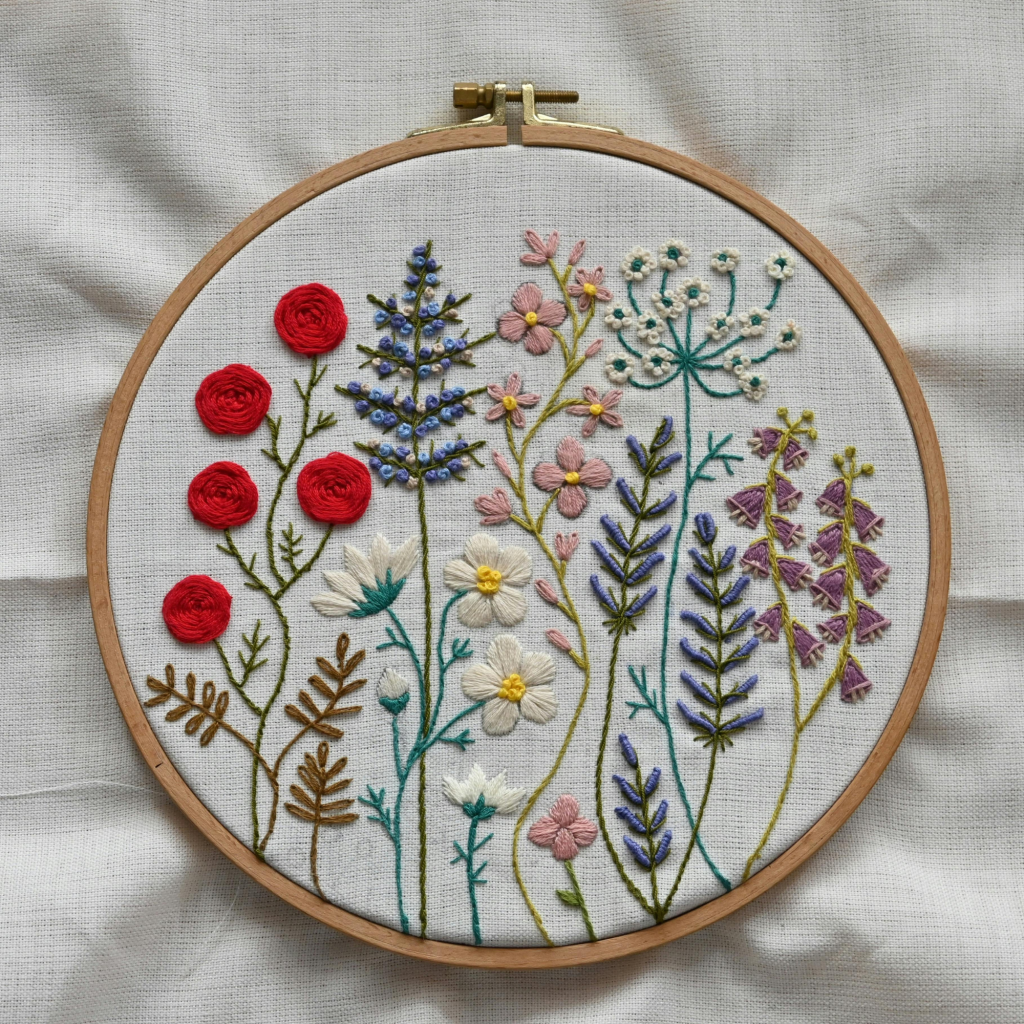
Embroidery is similar to cross-stitching, where you use needle and thread to sew pictures onto fabric. Embroidery is more free-form and can be done on almost any fabric.
Age: As early as 6+, but more like 8-10 to practice embroidery independently.
Tips to get started:
- Supervise children and stay present while they work.
- Let children play with making their own pattern and materials before working on a design.
- Start with simple stitches like the running stitch and the back stitch.
- Use a fabric marking pen so kids can draw and embroider their own designs.
Favorite supplies:
- Embroidery hoop and loose-weave fabric.
- Embroidery floss, plastic embroidery needles, or a tapestry needle.
- Loose-weave fabric like cotton twill or Essex linen cotton material.
- Embroidery kits for kids.
Knitting

Knitting takes a little bit of patience to learn how to use knitting needles. Once kids get it down, they can make tons of fun things, like hats, scarves, and other simple items. Little kids can try finger knitting, or you can try loom knitting.
Age: 6-8+
Tips to get started:
- Start by learning basics like casting on, knitting a basic stitch, and binding off. This is a great explainer for learning to knit.
- Young kids who want to learn can try finger knitting with chunky yarn.
- Beginners might also enjoy trying a loom knitting kit to make woven designs.
Favorite supplies:
- Knitting needles and yarn.
- Knitting kits to make cute animals are fun once a child has learned the basics.
Latch hook

Latch hook is a fiber craft where you tie pre-cut yarn to a grid to make a plush tapestry, like a mini rug, pillow, or wall hanging. This is great for kids who love having a pattern or a plan as they work through a project. This craft helps children practice patience, fine motor skills, and attention to detail.
Age: 6+
Tips to get started:
- Young children will need supervision and help, while older children can easily do this independently.
- Focus on learning how to use the latch hook tool so the yarn doesn’t slip off.
- Start with a small or mini latch hook project so it is easier to keep track of the pattern.
Favorite supplies:
- Latch hook tool, pre-cut yarn strands, latch hook canvas.
- We recommend starting with a latch hook kit for kids, so you have all the supplies and your child can refer to instructions as they work. There are dozens of fun options will have kids excited.
Leather working
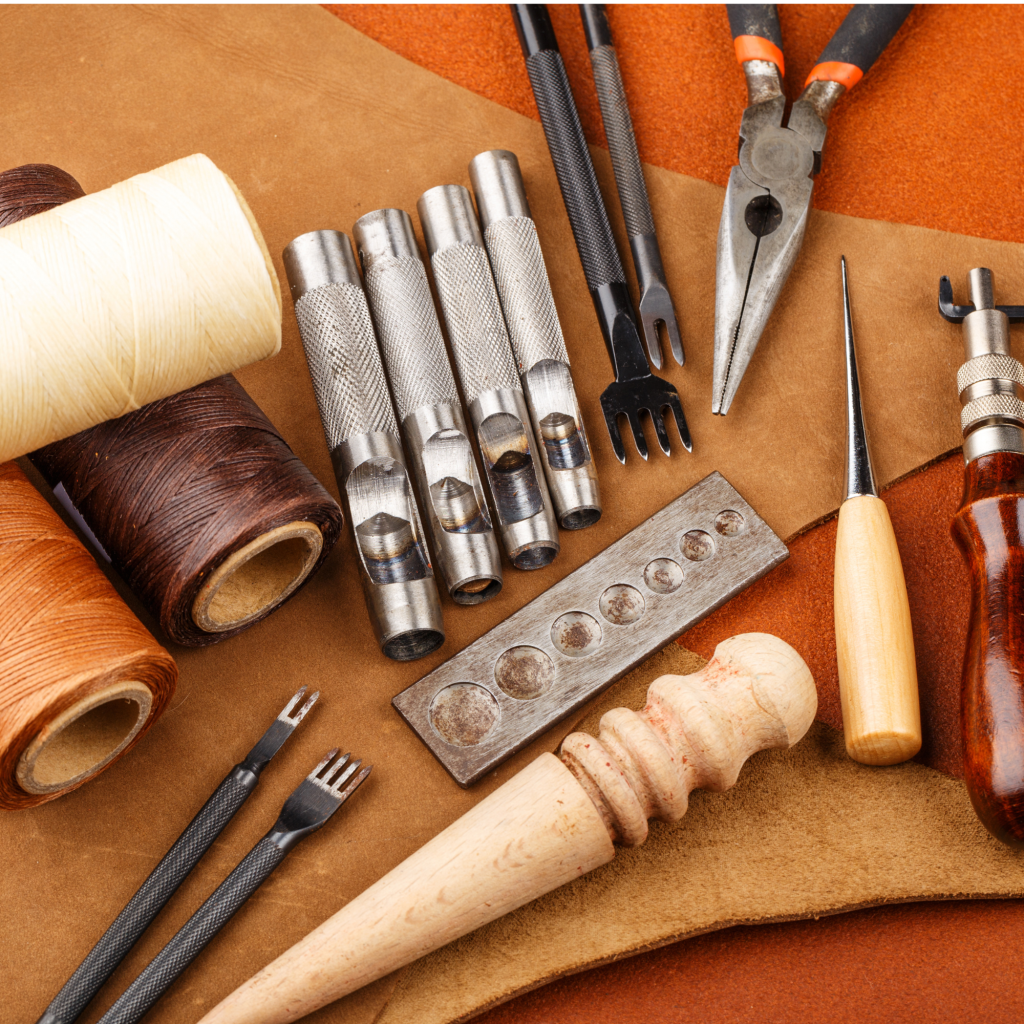
You can make lots of fun, functional crafts from leather scraps, like bookmarks, jewelry, wallets, and more. You can decorate leather with designs or stitch it together to make cases or coverings for items.
Age: 6+ for simple projects and avoiding any sharp blades; 10+ can work more independently but may require some adult assistance.
Tips to get started:
- Start with simple projects or pre-cut, beginner kits.
- Utility scissors can be easier and safer to start with than sharp knives.
Favorite supplies:
- Leather scraps. You can buy these on Amazon, but it’s worth checking with a local upholstery shop to see if they sell scraps at a lower cost.
- Self-healing cutting mat.
- Leather glue to attach material before stitching together.
- A leather tool kit with chisels, waxed thread and needle, snaps, rivets, and stamps.
- Try a kids’ leatherworking kit that includes all the tools you need and project supplies.
Loom weaving

Loom weaving turns cloth, thread, or yarn into a woven tapestry. It uses a loom to hold thread under tension to weave threads together.
Age: 6+
Tips to get started:
- This is a great tutorial for making a simple loom out of cardboard.
- Start with a small project (like a potholder or small item) to try it out.
- Encourage children to lay thread loosely to prevent an hourglass shape.
Favorite supplies:
Macramé and friendship bracelets

Did you ever make macrame bracelets as a child? This simple technique lets children easily make bracelets in different patterns using embroidery floss. This requires some fine motor skills to hold thread with the right tension, but it’s easy to learn.
Once kids have it down, you can use different materials to make macrame wall hangings and other more advanced projects.
Age: 6+
Tips to get started:
- Use a clipboard or tape to hold the knot in place while you are working.
- Try a tutorial to make a macrame friendship bracelet, like a square knot or chevron bracelet.
Favorite supplies:
- Embroidery floss in your favorite colors for friendship bracelets.
- Cotton rope for macrame, 2mm-4mm.
- Friendship bracelet kits help keep strands organized and make jewelry the right length.
- Use a macrame kit for projects like your first plant hanger or wall hanging.
Model kits and 3D wooden puzzles
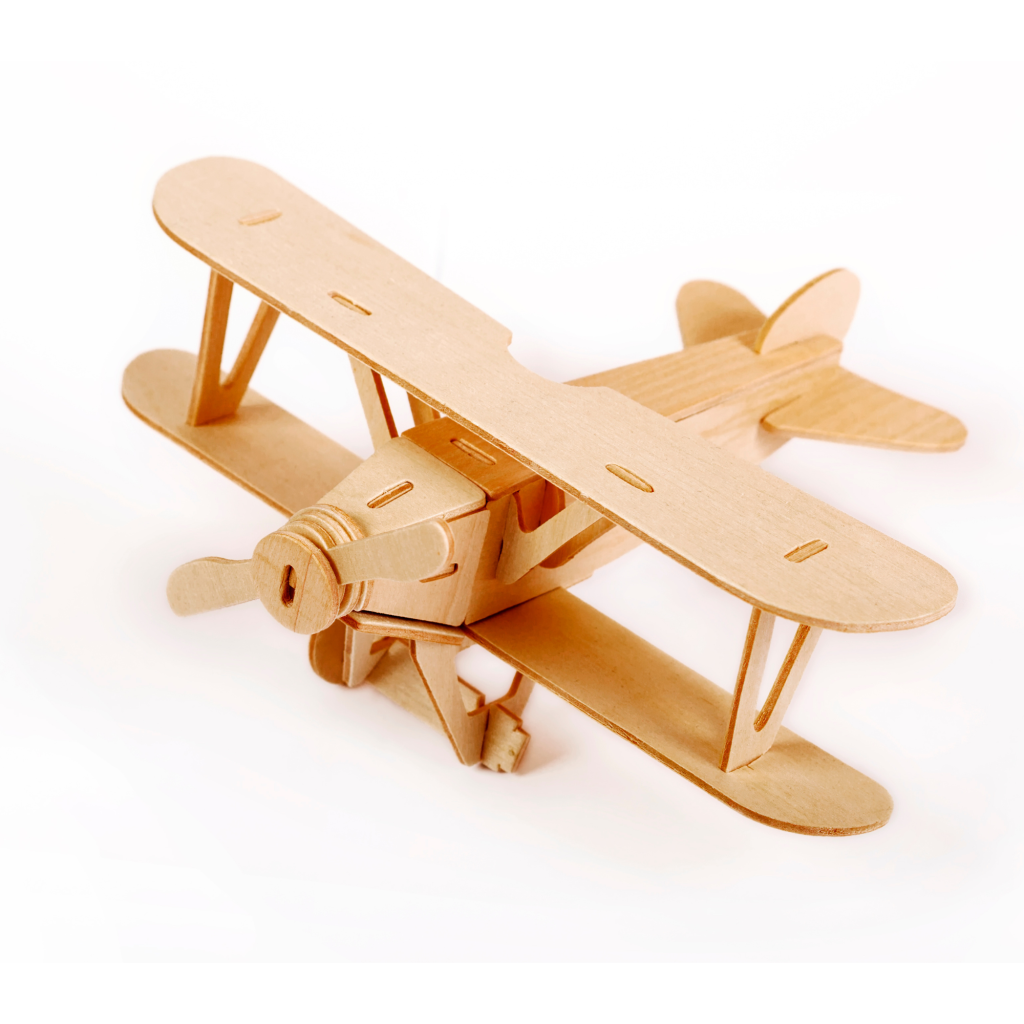
Kids who love building and LEGO might enjoy model kits and 3D wooden puzzles. These kits include laser-cut wooden pieces that fit together to create all kinds of models, like cars, animals, and insects.
Age: 5+
Tips to get started:
- Start with a beginner-friendly model to make a shape your child is excited to build.
- Clear off a large, flat table before you work so you can lay everything out and see all of the pieces.
- Keep sandpaper handy to clean up any rough edges.
Favorite supplies:
- Wooden vehicles kit, like helicopters and motorcycles.
- Remote-controlled car kit.
- Wooden insects, like dragonflies and grasshoppers.
Paper crafts

Paper crafts is a broad category that includes anything kids can make from paper. There are so many ideas for kids of every age, like making paper fans, weaving strips of paper together, or making origami.
Age: 5+
Tips to get started:
- Store your kid’s favorite supplies in a bin so it’s easy to pull out and put away when you want to give kids time to create.
- Little kids will need more help using scissors, but it’s a great way to encourage them to practice motor skills and patience.
- For learning origami, start with 2D shapes that are easy to make as kids learn.
Favorite supplies:
- Construction paper.
- Scissors and glue.
- Origami paper.
- Idea books for inspiration.
Scrapbooking

Scrapbooking is another fun way for children to preserve their favorite photos and keepsakes. This is typically done by decorating pages in photo albums to highlight special memories, family moments, and accomplishments.
Age: 8+
Tips to start:
- Kids can start small by scrapbooking small albums with just one photo per page instead of making large, elaborate pages with lots of expensive materials. You could also decorate photo-sized pages and slip them into photo albums.
- Print duplicate copies of photos instead of letting children cut original family photos.
- Supervise kids when using paper cutters.
Favorite supplies:
- Glue tape is the best for adhering photos without warping paper.
- Paper cutter for cutting perfectly straight lines.
- Scrapbooking paper.
- Letter stickers.
- Scrapbook album.
Sewing
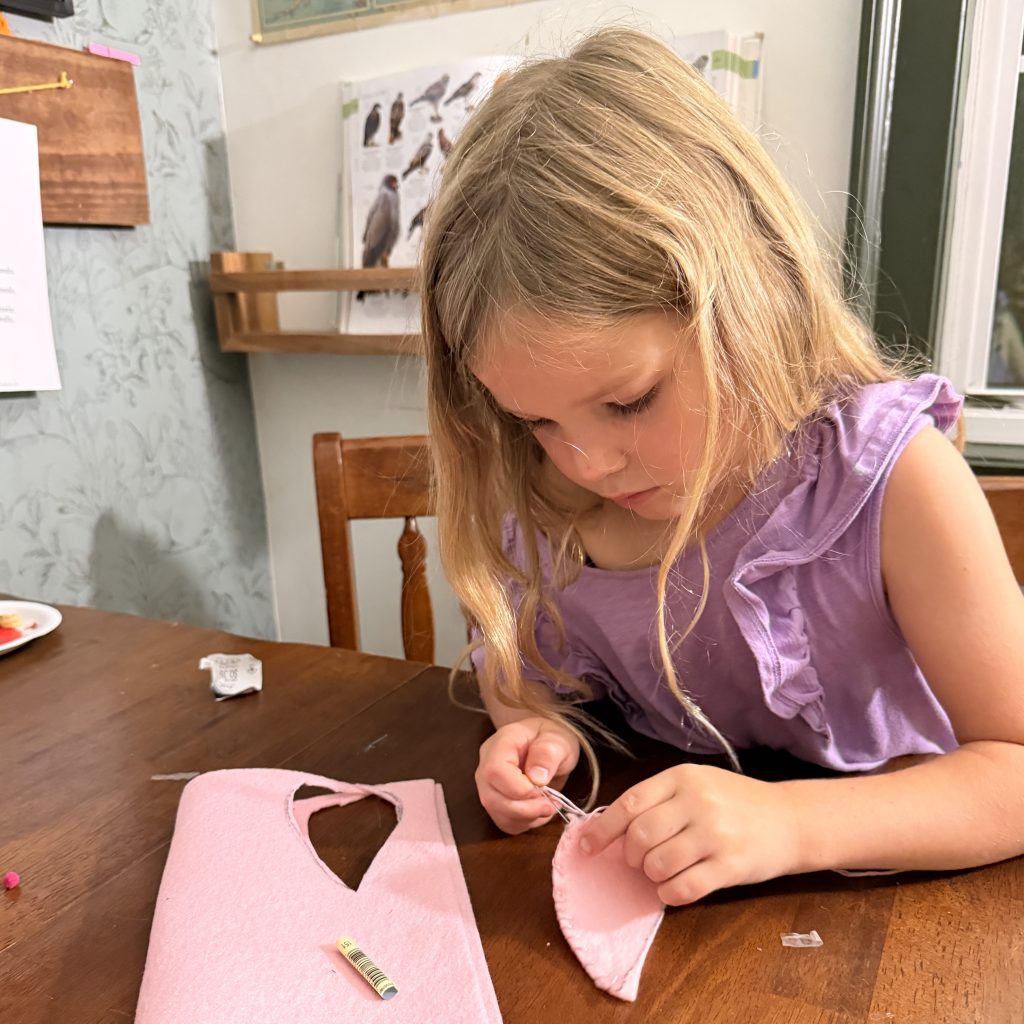
Sewing is not only a fun hobby, but is a useful skill for kids to have as they grow. Children can learn how to hand-stitch with a needle and thread, or older children can learn how to use a sewing machine. Try sewing simple projects like bags or pillowcases, or, with more advanced skills, follow patterns to make aprons or dresses.
Age: 5+ to learn simple hand sewing skills; 8+ to learn how to use a sewing machine
Tips to start:
- Supervise young children as they learn how to use a thread and needle.
- Teach kids fundamentals first, like threading a needle, tying knots, a running stitch, and a whip stitch.
- Small kids might like sewing with felt material, which is easy to hold.
- For children learning to operate sewing machines, an adult can help with cutting, pinning, and guiding the machine while kids press the pedal.
- Teach kids the sewing machine settings and setup tasks like threading a bobbin and threading the machine.
- Let kids choose their own material for projects you make together.
Favorite supplies:
- Sewing School and Sewing School 2 are our favorite books for project inspiration.
- Sewing kit with needle and thread.
- Singer sewing machine.
Stationery and rubber stamps
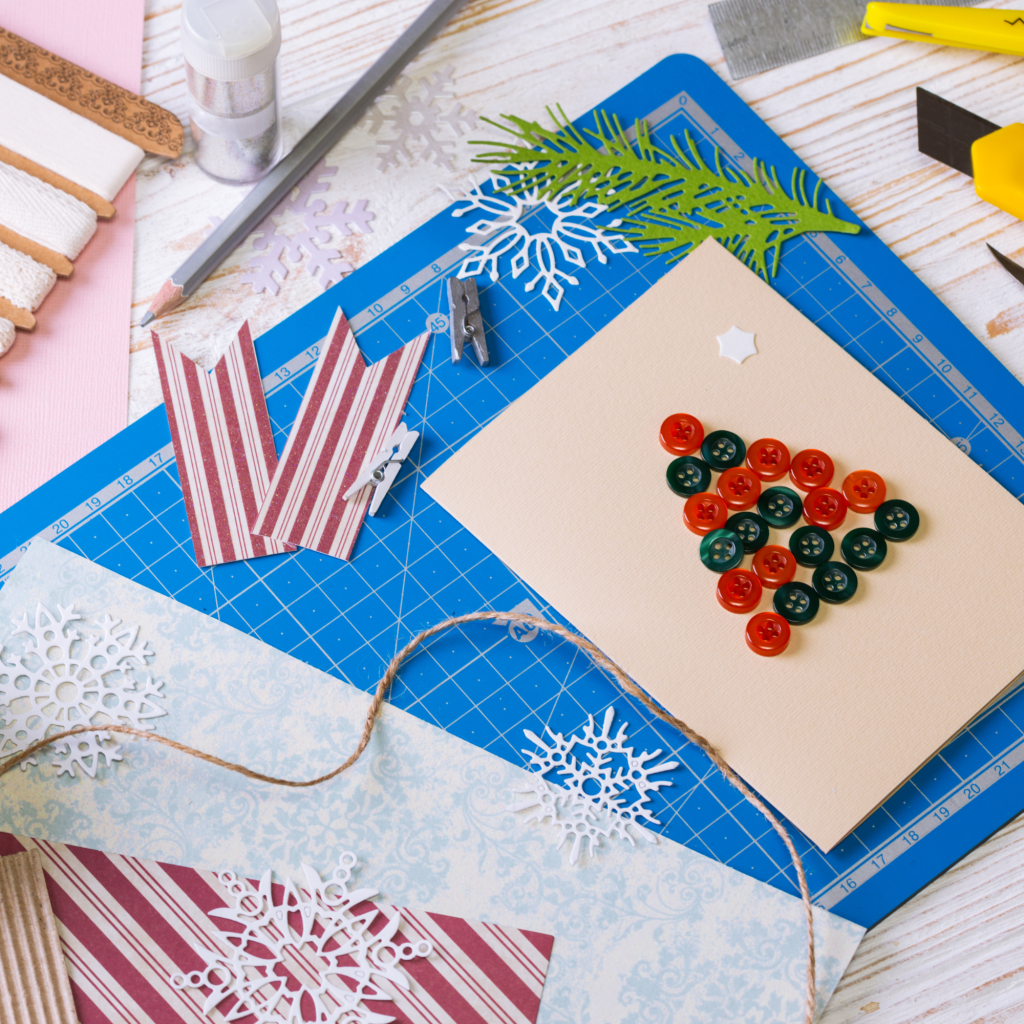
Making stationery is a cute way for kids to design greeting cards to send to friends and family. Kids will love using paper to make their own designs as they cut and glue paper. You can also add rubber stamps for fun designs.
Age: 5+
Tips to start:
- Let children choose a theme or color to narrow down their ideas and keep it from becoming overwhelming.
- Make cards by occasion, or make a card for someone special.
Favorite supplies:
- Scrapbooking paper.
- Letter stickers.
- Paper cutter. (With supervision!)
- Blank cards.
- Washi tape.
- Dual brush pens in pretty colors.
Wood carving and woodworking

Kids who love to build and work with their hands will enjoy making objects and designs by carving wood.
Age: 8+ to begin learning with supervision; younger children can try out soap carving if they are curious.
Tips to start:
- Let children draw designs on wood when starting so they start thinking about how the 3D shape will form.
- Let children learn by watching you carve, and explain what you are doing as you work.
- Start by introducing carving with a chisel and mallet, which is safer because the tools are facing away as you work.
Favorite supplies:
- Wood whittling kit for kids that includes safety gloves.
- Wood blocks.
- Book of super easy carving ideas for beginners.
What handicrafts have you tried with your children? Share your favorites in the comments below. See all of our favorite supplies for crafts on Amazon.
This post was originally written by Heidi Joy. You can read more from Heidi on her blog, A Basketful of Joy, where she shares ideas and encouragement for homeschool families. This post has been adapted and expanded to include current links and supplies.
If you buy something through our links, we may earn an affiliate commission at no cost to you. We only recommend products we genuinely like. Thank you so much.

![Best Educational Board and Card Games for Kids and Families [2026]](https://storage.googleapis.com/treehouse-schoolhouse-media-dev/d9b5ca6e-image-scaled.jpg)
![Kitchen Skills for Kids: Cooking for Every Age [Checklist PDF]](https://storage.googleapis.com/treehouse-schoolhouse-media-dev/c38c61dd-gtb8983-enhanced-nr.jpg)