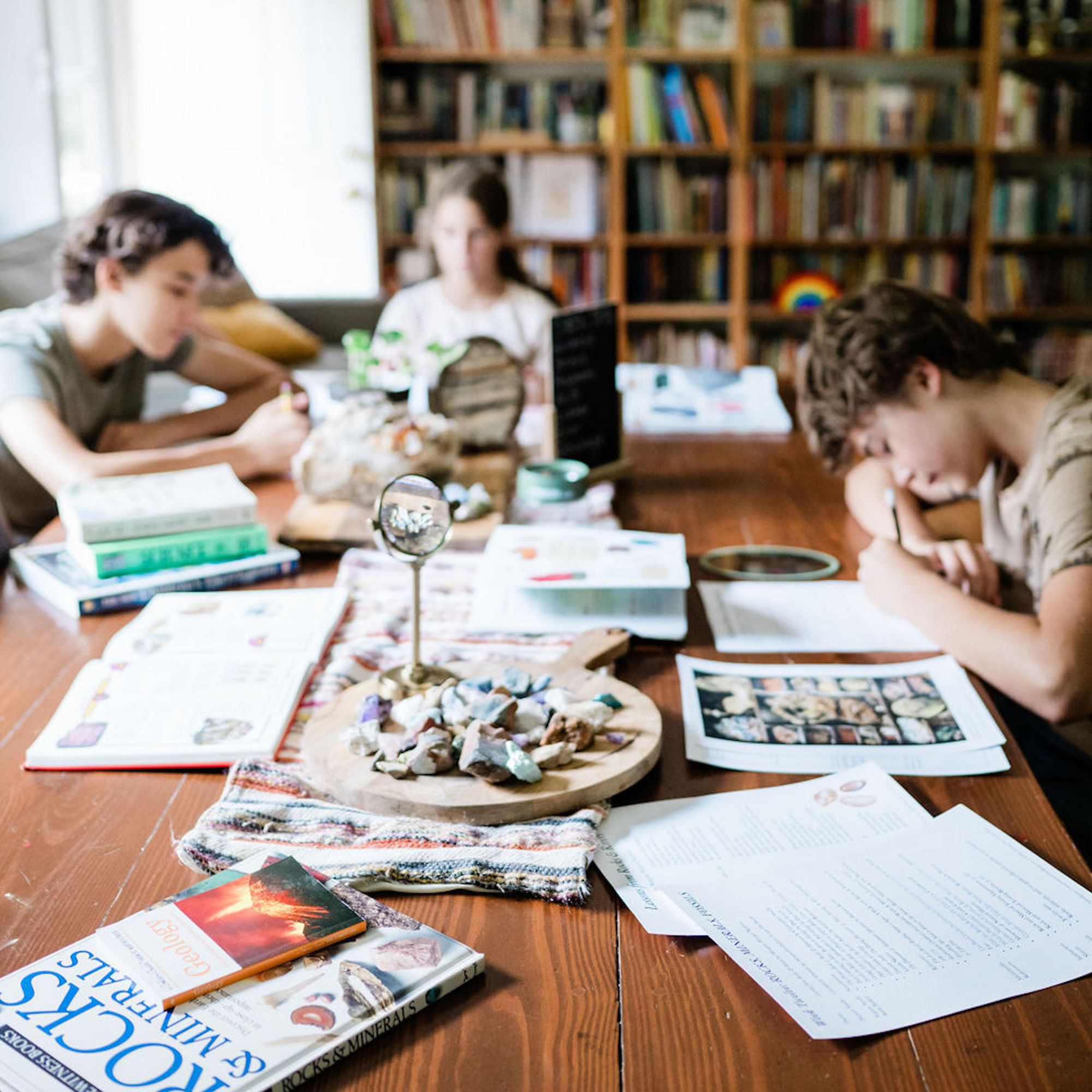
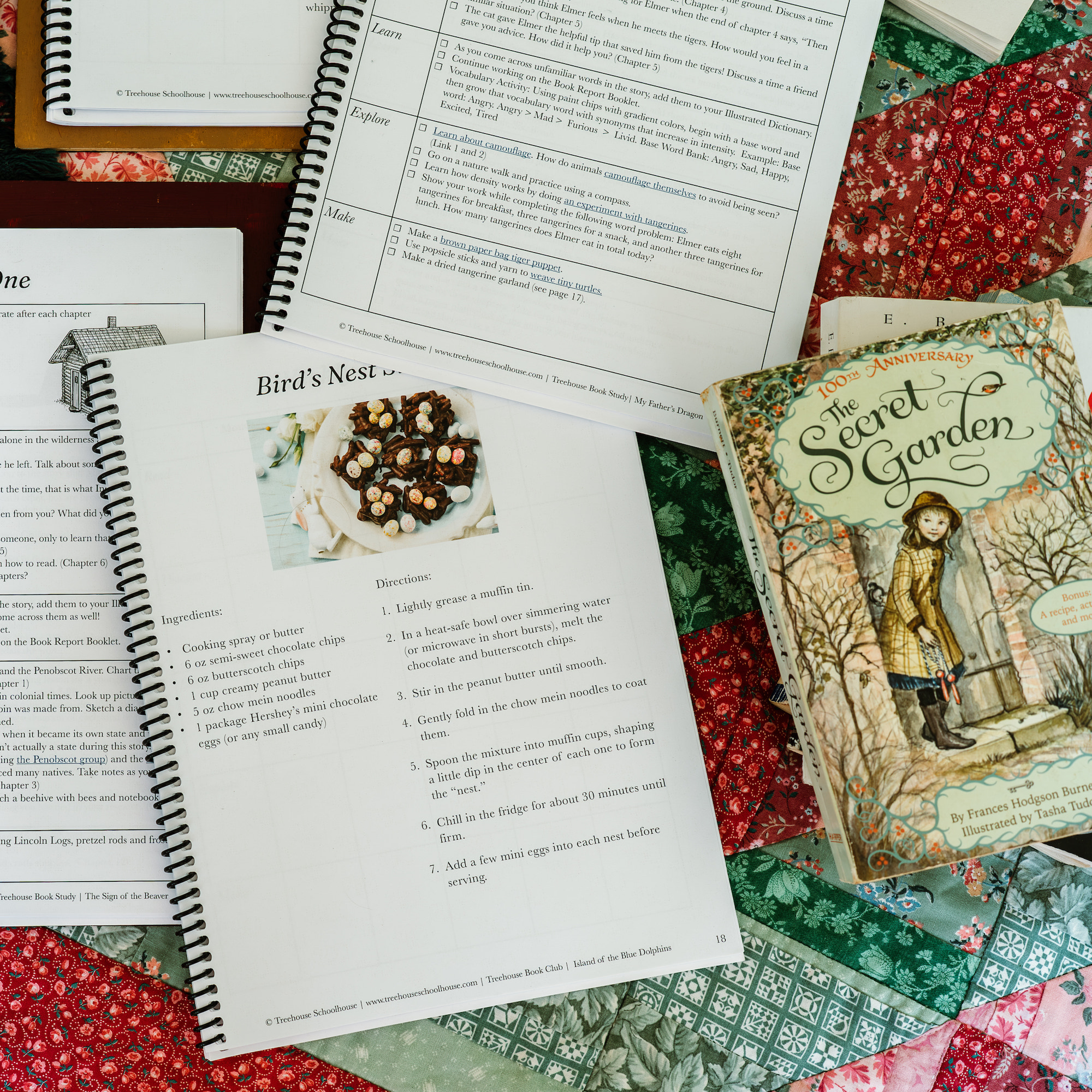
After many weeks of “check the list” lessons because of a busy season in our home, we needed a way to come together and bring a bit of excitement into our homeschool. I let the kids pick a theme from Treehouse Nature Study to explore, got a bunch of books, and chose a few projects to do together.
My kids chose to study snails and worms, a unit from Treehouse Nature Study: Spring. We shaped tiny clay snails at the table, built a wormery by digging in the dirt together, and made homemade gummy worms and a dirt pudding cup. We read together, memorized a sweet poem about a garden snail, painted with watercolors, and researched ideas for notebooking pages.
Adding this fun into our mornings did the trick. I saw that spark in their eyes more than once that week, and heard the words, “I love school.”
I know it’s unrealistic to expect every homeschool day to feel full of wonder. There will be days where we’re tired, distracted, or just trying to keep up. But when those good weeks come, the ones where curiosity bubbles up again and connection feels easy, they’re worth noticing, celebrating, and holding onto. Our study of snails and worms was one of those weeks for us where we had the chance to pause and enjoy moments of learning together, and it reminded me why we do this in the first place.
If you’re looking for some fun ways to connect and enjoy nature this spring, in this blog post I’m sharing my favorite books and hands-on activities to teach children about snails and worms, inspired by the unit in Treehouse Nature Study and the activities we loved the most.
In this blog post:
- How we approach unit studies in our homeschool
- Books for learning about snails and worms with children
- Hands-on activities for learning about snails and worms
- Music and movement for kids about snails and worms
- Try a free week of Treehouse Nature Study: Spring [Free PDF]
How we approach unit studies in our homeschool

As a homeschool mom of four, learning together as a family has been the foundation of our home education for years. But as my children have grown older, this is not always possible. Though we differentiate for subjects like reading and math, unit studies are a great opportunity to come together in our homeschool. Learning together, even though my kids are different ages, helps my children learn from each other and have a way to bond together as they spend time reading books and exploring new ideas.
My children enjoy learning alongside each other, talking about subjects together, and doing fun activities. While we study the same subject, the older children may read more advanced books or do research projects, while the younger kids will read picture books, memorize poems, learn folk songs, or invite more play into learning.
Books for learning about snails and worms with children

Whenever possible, we love to study through the lens of living books. This can be through playful stories, beautiful illustrations, or nonfiction books. Reading makes everything more fun, shows children other perspectives, and offers them a way to make connections as they learn.
Here are some books we enjoyed as we studied snails and worms in our home.
Books for learning about snails and worms for younger children (K-3rd)
- The Snail and the Whale by Julia Donaldson
- The Biggest House in the World by Leo Lionni
- Worm Weather by Jean Taft
- Diary of a Worm by Doreen Cronin
- Are You a Snail? by Judy Allen
- Wiggling Worms at Work by Wendy Pfeffer
- Yucky Worms by Linda Glaser
- An Earthworm’s Life by John Himmelman
- The Dirt! Wildlife Under the Soil’s Surface by Lindsey Leigh
Books about snails and worms for older children (4th-8th)
- The Snail by Emily Hughes
- Snail Trail by Ziggy Hanaor
- Bees, Snails, & Peacock Tails: Patterns & Shapes by Betsy Franco
- The End of the Beginning: Being the Adventures of a Small Snail (And an Even Smaller Ant) by Avi
- The Unfortunate Life of Worms by Noemi Vola
- Worm Effect: An Educational Story About Earthworms, Gardening, Compost, and Recycling by Anu Madhavan
- Worms Eat My Garbage by Mary Appelhof
We also use reference books, including Nature Anatomy by Julia Rothman and Natural History by DK.
See all of our favorite books about Snails and Worms on Amazon.
Hands-on activities for learning about snails and worms

Here are some fun ways to explore learning about worms and snails using simple materials or from digging around in nature.
- Make a wormery: Make a home for worms by digging in the dirt and finding worms, then creating a habitat for them in a household object like a glass jar (or similar) so you can observe them. Use the instructions in Treehouse Nature Study: Spring, Primary Years.
- Sculpt a worm and snail: Use air-dry clay or colored beeswax to make models of worms and snails. Look through books to see a variety of types to get inspiration.
- Nature notebooking: Draw pictures of what you have learned about snails and worms using illustrations in books or reference materials. Write down a few facts you enjoyed learning. See our guide to notebooking here.
- Make your own gummy worms with this recipe and these molds.
- Make dirt pudding cups: Make dirt pudding cups for your worms to live in and enjoy this treat as you read books together. (Recipe from Treehouse Nature Study: Spring, Primary Years.)
- Build a vermiculture compost: Teach children how worms help make compost by building a vermiculture compost system.
- Worm painting: Use yarn to make a simple worm painting.
- Paper worm experiment: Watch worms “grow” with this paper worm experiment.
- Observe earthworms in different types of soil: Fill trays with different types of soil (sand, potting soil, etc.) and put earthworms in each bin. Observe how earthworms move and behave in different environments.
- Test earthworm reactions to light and dark: Observe how earthworms react and adjust to changes in light with this experiment.
- Test how earthworms affect plant growth: Plant two potted plants, one with earthworms and one without. Observe how the two plants grow and the differences between the two.
- Microscope observation: Observe an earthworm under a microscope to see their segmented bodies up close.
Music and movement for kids about snails and worms

Young children will love these sweet songs about worms.
Wiggly, Wiggly Worm Hand Rhyme (YouTube)
Lots of Worms by Bob Neary is a sweet song for kids that is part of our playlist for Treehouse Nature Study. Check out the full playlist on Spotify.
Try a free week of Treehouse Nature Study: Spring [Free Printable PDF]
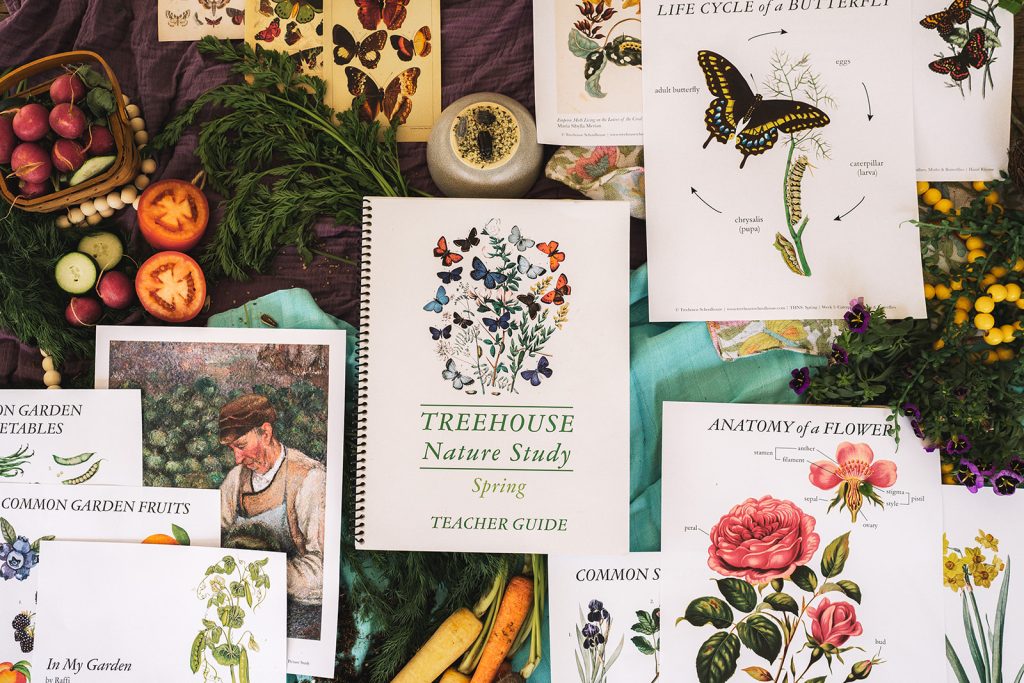
If you enjoy this style of learning, which combines living books, hands-on activities, and heart-felt connections, you can find more weeks of intentional nature study in Treehouse Nature Study: Spring. This free week features Caterpillars, Moths, and Butterflies Week, and includes:
- Lesson plan overview with detailed material and book list
- Lesson plan grid with daily lesson instructions
- Folk song lyric sheets with coordinating Spotify link
- Hand rhyme lyric and hand motion sheet with coordinating YouTube video
- Poetry display sheet with coordinating copywork
- Full color, high-resolution picture study display sheets
- Extensive booklists including fiction picture books and non-fiction picture books
- Life Cycle of a Moth Display Sheet
- Life Cycle of a Butterfly Display Sheet
- Moth and Butterfly Venn Diagram
- Butterfly Nectar and Feeder Instructions Sheet
Download the free week below.
Will you study snails and worms with your children this spring? Share your thoughts in the comments below.