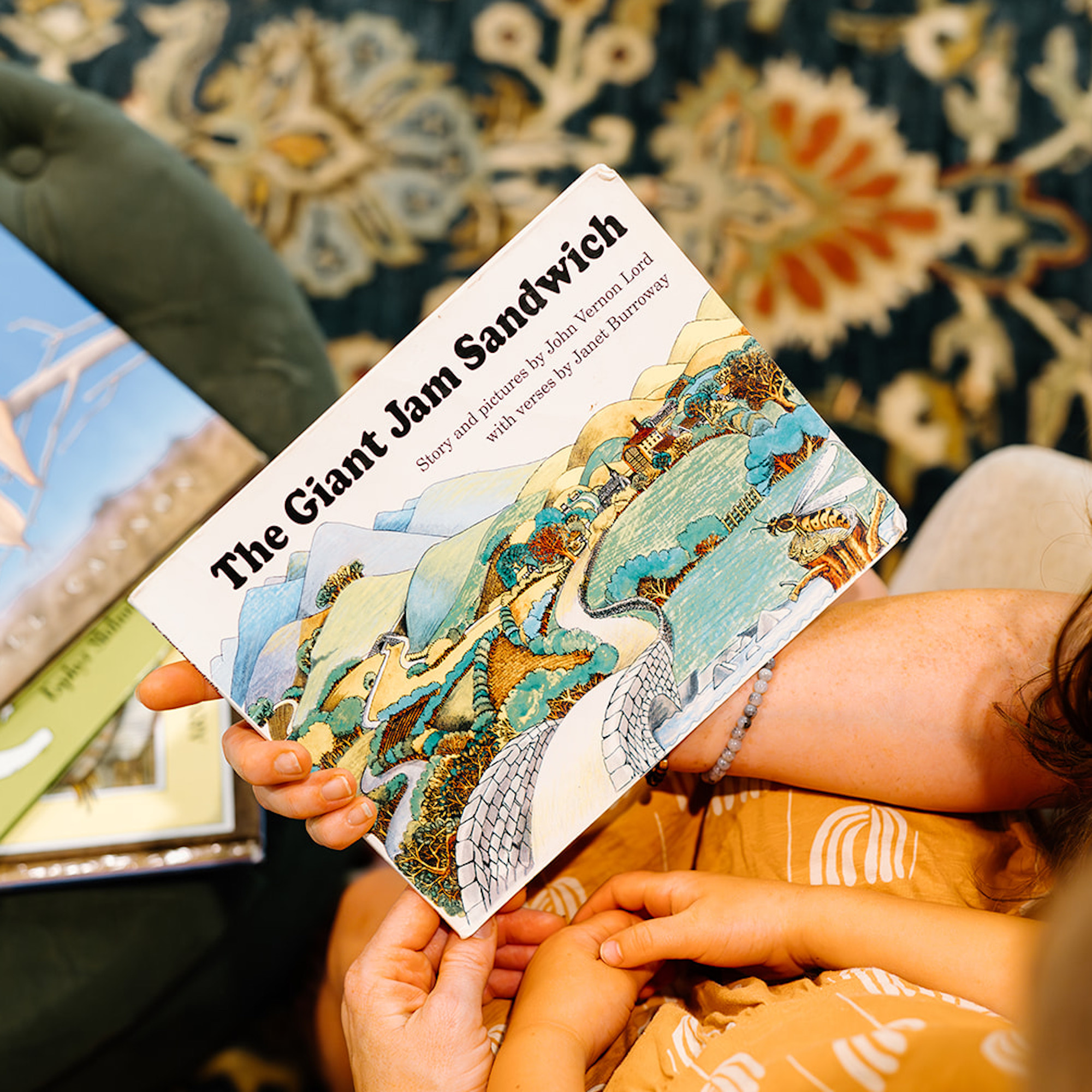
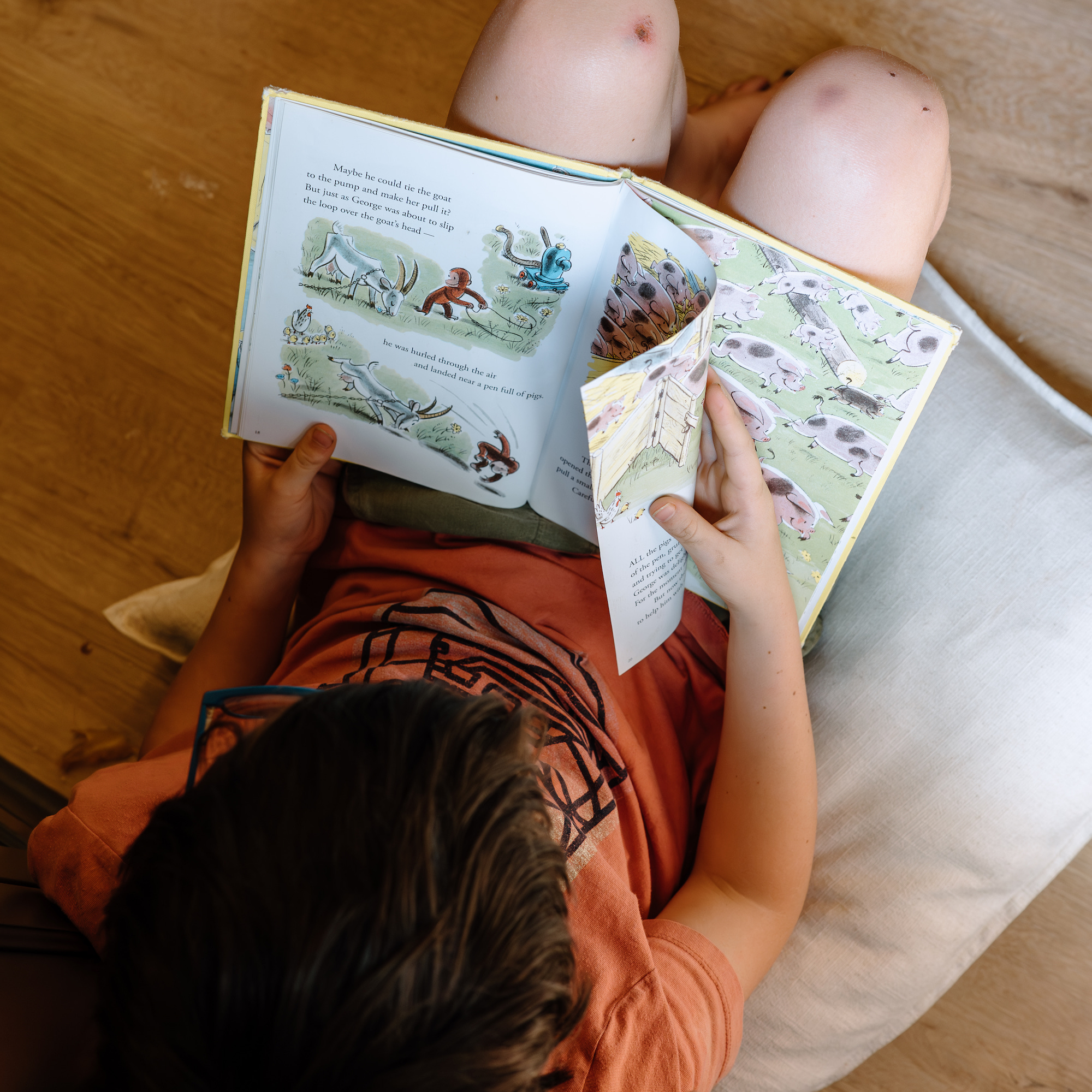
From the time a child is very young, there are opportunities to introduce letters and sounds organically through everyday life. You can point out the letters in books, in their name, on signs, and around the house. You can play rhyming and sound games and listen to music that teaches letters.
Children learn the alphabet at different ages and stages, and that’s completely normal. During the preschool years some children may only be ready to recognize a few uppercase letters, while others may naturally begin noticing lowercase letters and sounds, too. There’s a wide range of what is developmentally appropriate in the early years.
One of my favorite ways to gently teach children is by reading stories together. Even sweet picture books are a great way to encourage early learning and build connections.
In this blog post I am sharing how I introduce children to the alphabet in the early years, ages 3-5. I am also sharing a free, printable booklist, featuring a picture book to coordinate with each letter of the alphabet. I also share simple activities to expand learning into opportunities for sweet activities and fun moments together.
In this blog post:
- How to explore the alphabet with toddlers and preschoolers
- How to use picture books to teach the alphabet [Free Printable PDF Download]
- Simple, hands-on ways to pair alphabet learning with favorite picture books
How to explore the alphabet with toddlers and preschoolers

When you are ready to explore teaching your child the letter of the alphabet, I encourage a gentle, invitational approach rather than rushing toward mastery by a certain age. The goal is not perfection or pressure, but simply creating small, meaningful opportunities for learning over time.
As children grow in interest and readiness, alphabet learning typically begins with letter recognition and gradually moves into letter formation. Letter recognition includes identifying letters by their name, shape, and sound. Letter formation is the ability to begin writing or forming those letters.
For preschool-aged children (roughly ages 3–5), I recommend focusing first on letter recognition. Starting with the letters in a child’s name is often especially meaningful because those letters feel personal and familiar. From there, you can naturally introduce uppercase and lowercase letters alongside their sounds in playful, low-pressure ways.
And if your child doesn’t seem interested yet, that’s okay too. Children develop at their own pace. Early learning is not a race. Keep offering gentle invitations, reading wonderful books together, and trusting that learning will come in time.
How to teach the alphabet with picture books [Free Printable PDF Download]

One of my favorite ways to gently introduce the alphabet is through picture books. I like to choose stories that naturally connect to a letter and simply emphasize that letter as we read together. For example, for the letter A, you might read The Seasons of Arnold’s Apple Tree by Gail Gibbons and spend time learning about apples. For the letter B, you could read Stellaluna by Janell Cannon and explore bats together.
As you read rich, engaging stories with your child, you can naturally point out letters and sounds as they appear throughout the book. There’s no pressure to force lessons or memorize everything right away. The goal is simply to create meaningful connections and help children become familiar with the alphabet through stories they love.
To make this even easier, I created a free, printable A-to-Z Preschool Picture Booklist with 26 living picture books, including one book for each letter of the alphabet. It’s designed to help you gently encourage alphabet recognition through beautiful stories and reading together. Download the free, printable PDF booklist below.

Simple, hands-on ideas to pair alphabet learning with favorite picture books

After reading a picture book together with your child, explore the letter and sound together by pairing it with fun, hands-on activities like baking, a craft, or a game. As you do, reinforce the letter you are working on and the sounds it makes. By trying out a range of activities, not only will you expose your child to new ideas and skills, but you may also be surprised to find out what your child loves doing the most.
Here are some ideas to get you started.
Letter A: The Seasons of Arnold’s Apple Tree by Gail Gibbons

Continue learning by trying these simple activities:
- Make homemade apple pie or apple sauce.
- Go apple picking at an apple orchard.
- Cut open apples and count the seeds.
- Cut an apple in half and make art prints, using the apple as a stamp.
Letter B: Stellaluna by Janell Cannon

Explore bats and then try these fun, hands-on activities:
- Make a fruit salad that even the fruit bats in the story would love, and practice kitchen chopping skills at the same time.
- Build a bat cave using chairs, pillows, blankets. Allow your child to “hang” upside down on a chair or couch like a bat.
- Talk about what emotions Stellaluna may have felt at different parts of the story. Talk about times you have felt similarly and encourage your child to share.
- Make a night sky process art by painting a piece of watercolor paper black. When it dries, glue on gold sequins as the stars and black bats cut from black construction paper.
Letter C: Corduroy by Don Freeman

Corduroy is a bear who lives in a department store and goes on a search for a missing button. After you read, enjoy these sweet activities together:
- Use buttons to explore or make patterns, like an AB pattern or an ABBA pattern. Show your child how to continue it.
- Make Bear Toast using bananas, blueberries, and peanut butter.
- Use string and buttons with large holes to help your child make a button necklace.
- Sort a group of buttons by colors. Name the colors as you sort together.
Letter D: Harry the Dirty Dog by Gene Zion

Harry is a strong-willed dog who doesn’t want to take a bath. Try these fun ideas after you read together:
- Set up a play area outside with a tub of soapy water, a toothbrush or sponge, plastic toys like dolls or animals, and a towel for drying. Let your child wash and dry each one.
- Give your child a soft sponge and two buckets. Fill one bucket with water, and demonstrate how to soak the sponge. Then squeeze the sponge over the empty bucket to transfer the water.
- Paint with mud by mixing dirt and water and letting your child paint with the mud on trees, on themselves, or on white paper. You could also draw an outline of the dog on white paper and let your child paint spots on Harry.
- Harry loved his family. Help your child draw a picture of your family and label each person by name. Then, hang it somewhere special.
Letter E: An Extraordinary Egg by Leo Lionni

Enjoy these simple activities that play off of the themes of reptiles and eggs in the picture book:
- Practice motor skills by opening and closing plastic eggs, which takes patience and precision for little fingers. Add some stones to each egg.
- Mix equal parts shaving cream and green tempera paint in a shallow plastic bin to create an Alligator Swamp. Add rocks, plastic alligators, and plastic eggs for some sensory play.
- Lay stones on paper and let your child paint them with tempera paint.
- Make Rice Krispie Treat Eggs.
If you love this style of learning gently through stories and simple activities, consider Treehouse Story School: Preschool. This curriculum for children ages 3-5 uses living picture books as a platform for learning about music and movement, the alphabet, early math skills, life skills, fine motor skills, and more. It would be a great fit for your toddler or preschooler if you are looking to incorporate multi-sensory, play-based learning while introducing them to timeless stories. Enjoy activities like these and more in this comprehensive curriculum for young children.
How are you encouraging your child to learn the alphabet in your home? Share what has worked for your family in the comments below.