Teaching children polite manners and simple etiquette rules helps kids behave with kindness and respect and improves their social interactions. This blog shares ideas to help children improve their manners and 20+ polite habits to teach kids.
Manners are a funny thing: they depend entirely on how we interact with others. Manners show up in interactions between parents and children, siblings, friends, or strangers. Teaching children to be polite and act appropriately helps children learn how to behave and live with others more peacefully.
If you’re wondering how to train your child to act more politely, know that improving habits is hard, but children can learn with encouragement and repetition. Adult or child, it’s hard to be kind when you’re in a storm of emotions, rushed, or caught up in the moment.
To learn how to be more polite, children will also learn about empathy and how to defer to others. This is not taught in one conversation, but over hundreds of moments and interactions with others. This unfolds in watching how a parent behaves and learning from their own behavior.
In this blog post, we are sharing ideas about why manners matter and how to help children improve their behavior, plus 20+ ideas for manners to work on with your kids. Along with ideas about behavior and table manners, we have also included a free printable guide to teach children how to set the table.
In this blog post:
- Why manners matter: How to encourage children to be polite
- 20+ manners for children that encourage kindness and politeness
- Children’s books about manners, politeness, and virtues
- Table Setting Guide for Kids [Free printable PDF]
Why manners matter: How to encourage children to be polite
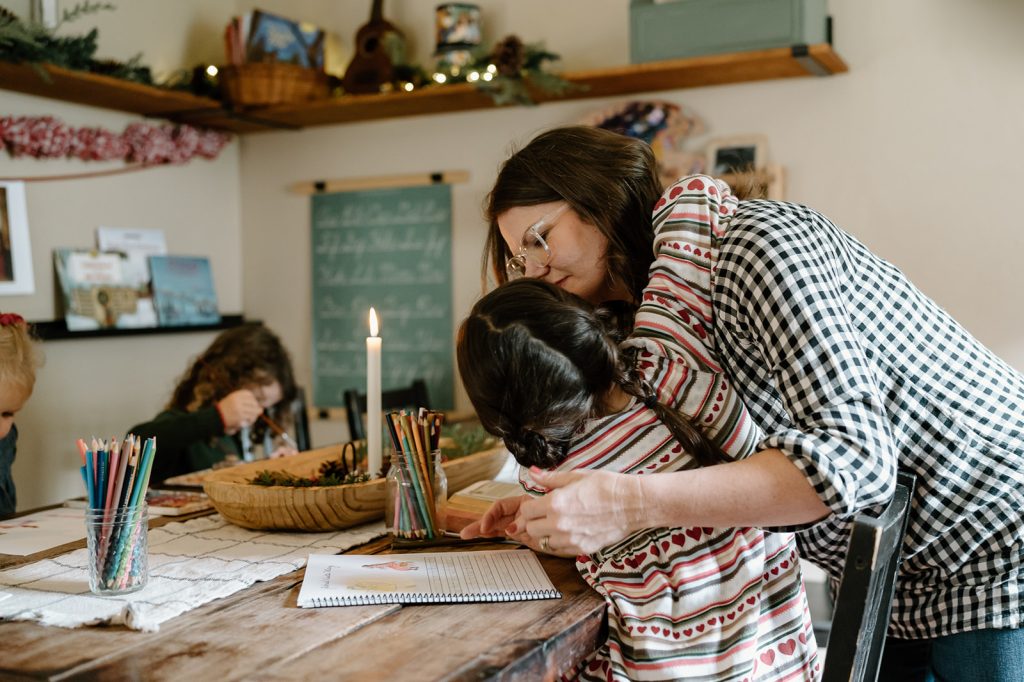
Charlotte Mason wrote in Home Education, “A mother who invests in good habits ensures smooth days, whereas neglecting them leads to endless friction.”
Manners are a habit like anything else parents teach their children. Often, manners are simply habits of thoughtfulness, like learning to pause instead of acting on impulse, or learning to consider others. Learning and adopting manners and polite behavior requires practice and hundreds of tries
Children are capable of acting politely and improving their behavior in the same way they learn kindness or how to get along with siblings. Learning manners can reduce friction at home, whether between siblings or between parent and child. Teaching manners may need repetition and guidance from parents, but it is something that children can learn as they grow.
Here are some ways parents can gently encourage children to behave politely while helping improve a child’s character.
- Model manners and politeness. Reflect and consider if you are acting politely in your home or when you interact with others in the world. Make requests with “please” and “thank you,” practice patience, and treat your children with respect and consideration. Monitoring your own manners and politeness is one way to decide what is important to teach your children.
- Work on one habit at a time. You don’t have to teach everything at once. Select one manner to teach a child – like saying “please” and “thank you” or knocking before entering – and practice it repeatedly, for weeks or months at a time. Don’t be discouraged if it takes a long time for children to catch on. Instead, rest in the understanding that these repeated efforts are teaching valuable lessons that will stay with your child for life, and it’s worth it. Manners do not come naturally. They take time and practice.
- Assume that children are doing their best. Be gentle with children as you teach them new things. When children act out, speak harshly, or make demands, use your best judgment on how and when to correct their behavior, but also understand that they are probably doing their best. A child’s behavior is affected by fatigue, hunger, frustration, and more. They are not always going to get it right, but you can gently guide them as they learn and grow.
- Encourage children to practice acting out polite and impolite behavior. Ask them to behave like someone behaving rudely, or ask them to behave like someone very fancy who has very good manners. Let them try both, and ask them which they like more. Enjoy this silly time together, letting them explore what it can be like to be rude or polite.
- Give children experiences to practice manners and politeness. Take children to a restaurant and let them order their own food, practicing making eye contact with the server, saying “please” and “thank you,” and speaking loudly and clearly. Or, take children to a fancy restaurant to practice dining etiquette, noticing how restaurants set the table. Run errands together and give your child ways to practice responsibility and politeness, waiting patiently and saying, “Excuse me,” when asking for assistance. Small experiences show why these manners are important when you interact with others, and that they are more than just a list of rules.
- Use book characters as a model of behavior. As you read together, talk about the choices that characters in literature make, discussing whether characters are kind and considerate, or if their choice were hard or right. Ask for your child’s input as you discuss.
- Tell a child when you see them doing something kind or polite. Pull your child aside and make a point to tell them you noticed how they acted politely. You might say: “I noticed you sharing the toy you love with the neighbor when they were at our house today. I know that’s one of your favorite toys to play with, and it was probably hard to give someone else a turn. I’m really proud of you for sharing like that. I bet that it was really special to them to get to play with one of your favorite toys.” Observe their behavior and talk to them about it, taking time to connect with your child and let them know you see them.
20+ manners for children that encourage kindness and politeness

If you’re ready to talk about manners with your children, here are some ideas of things to try. Following Charlotte Mason ideas about habit training, we recommend teaching one manner at a time instead of several, so it doesn’t feel like you’re giving kids a list of rules to obey. Identify an area where a child could improve their behavior, and pick one small thing to focus on for a while. Once a child models the behavior consistently, they can learn more.
These are ideas for simple manners to encourage politeness, not formal etiquette. You can begin talking about manners and encouraging polite behavior at any age.
Speaking manners for children

- Saying please and thank you. This seems like the foundational manner for children. Encourage children to say “please” when they make a request, and “thank you” when their request is granted.
- Not interrupting. Encourage children to wait their turn and say “excuse me” when they have something to say. This can be a hard one, especially when children are around or part of adult conversation. Teach children how to listen to what others are saying and wait for a break in conversation before jumping in or talking over someone else.
Simple table manners for children

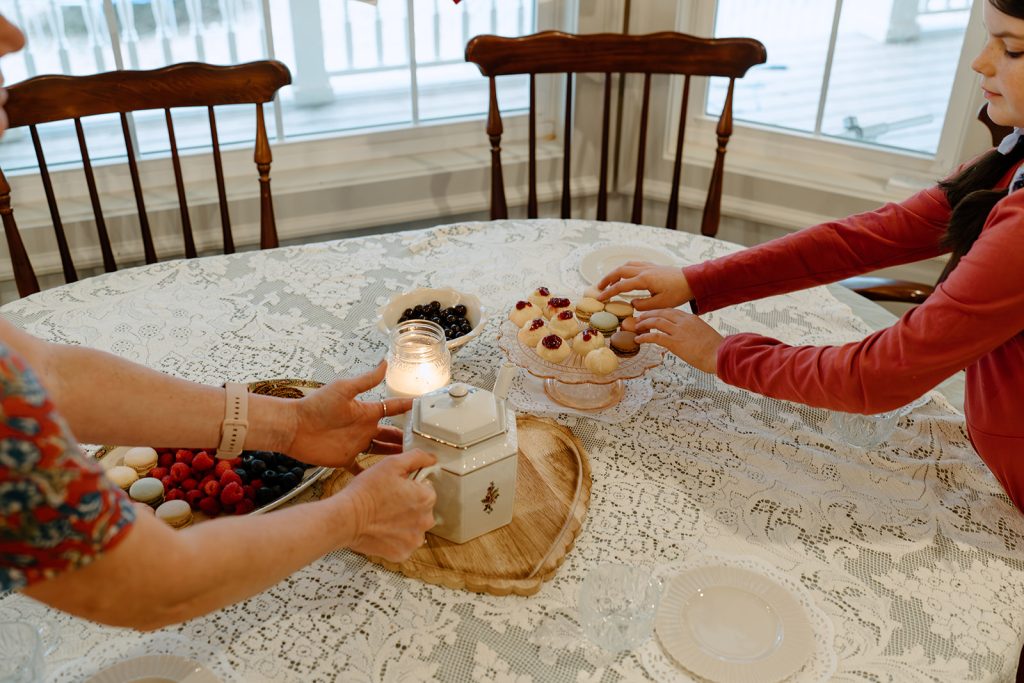
- Learn how to set the table. Encourage children to help with mealtimes by learning the proper way to set the table. See the free table setting guide below.
- Saying a prayer before a meal. Pause together and say a prayer before you eat, taking turns saying the prayer.
- Holding polite conversation during a meal. As you eat together, ask polite questions and give thoughtful responses. Help children with this by asking questions that require a thoughtful response instead of a yes or no answer, like, “What was the best part of your day today?” Or, “What is something new you read about today?” Practice listening as you speak together.
- How to sit at meals. Encourage children to sit in their chair during meals instead of getting up and down or roaming around while they or others are eating. Teach children how to sit up straight instead of leaning down towards the plate.
- Using a napkin during meal times. When you are seated, immediately unfold a napkin and put it over your lap, without shaking it or waving it around. During a meal, use a napkin to gently blot your lips.
- Using utensils, like a fork, knife, or spoon. Eat food with the appropriate utensil, like a fork, knife, or spoon. Little kids may need help as they develop fine motor skills, but they can learn that using utensils keeps their hands clean during meals.
- Not playing with food or drink. Teach children to act respectfully during meals by not playing with their food and drink. This helps maintain hygiene and cleanliness, is considerate of the person who prepared the meal, and helps children focus on chewing and eating.
- Chewing with mouth closed. Teach children how to take small bites and chew with their mouth closed.
- Keeping elbows off the table. When eating at a table, rest your hands in your lap if not eating, or rest your forearms on the table instead of propping yourself up with your elbows.
- Waiting at the table until everyone is finished. Sit at the table until everyone has finished eating, instead of leaving when you are done. Pay attention to others around you.
Polite behavior for kids when playing and interacting with others
- Understanding the Golden Rule. The gospels instruct on how to interact with others. Matthew 7:12 says to “do to others what you would have them do to you.” Acting politely is often not just, fair, or reciprocal. Sometimes being polite is acting how you would like to be treated yourself, even if it is not being reciprocated. It’s learning to put others ahead of yourself.
- Being a good guest. When you visit someone’s home, think about ways to be a good guest. Ask permission before getting things out, cleaning up after yourself, and tell the host “thank you” when it’s time to leave.
- Knock on closed doors and wait to be invited in. When you need to go into a room where the door is shut, knock before entering, and wait until you are called into the room before opening the door, respecting the privacy of others.
- Making eye contact when speaking to others. Teach children how to make eye contact with others when they speak. Practice this by encouraging them to make eye contact with you when you speak to them. Lower the stakes by making it fun, like asking kids, “Are my eyes still brown?” or making funny faces together. These are important moments of connection that translate to confidence and assertiveness when children are older.
- Learning how to greet others politely. When you greet someone new, teach children how to introduce themselves, saying, “Hi, my name is ____.” You can teach them how to offer a handshake, or add a detail, like something they love to do.
- Holding the door open for others. Teach children how to be courteous and open the door for others passing by, or help someone with the door when their hands are full. Teach kids how to look around them when approaching a door to see if they can hold the door open for anyone nearby.
- Sharing with others. Sharing is a gradual process that can largely depend on a child’s age and development. Still, coach children about sharing as a way to be considerate of others. If you have a treat at home, brainstorm together who else would like it or who to share it with. If a friend is coming over, discuss what the friend enjoys doing and how to be a good host and share your favorite toys with others.
- How to address adults in conversation. Teach a child how to address adults with proper titles like Mr., Miss, or Mrs. followed by the last name, unless an adult says otherwise.
Children’s books about manners, politeness, and virtues

Use children’s literature as a window into what politeness and manners look like. Here are some of our favorite books for introducing and teaching manners to kids.
- Madeline Says Merci: The Always-Be-Polite Book by John Bemelmans Marciano
- The Berenstain Bears Say Please and Thank You by Stan and Jan Berenstain
- The Berenstain Bears Forget Their Manners by Stan and Jan Berenstain
- Manners by Aliki
- Do Unto Otters: A Book About Manners by Laurie Keller
- Time to Say “Please”! by Mo Willems
- My Mouth is a Volcano by Julia Cook
- Rules of the Wild: An Unruly Book of Manners by Bridget Levin
- The Children’s Book of Virtues by William J. Bennett
- Everyday Graces: A Child’s Book of Good Manners by Karen Santorum
- Mrs. Pigglewiggle by Betty Macdonald
Table Setting Guide for Kids [Free printable PDF]

Teach children how to set the table with this simple table-setting guide for children. Download this free, printable PDF to give children a visual diagram of how to set the table.
Meredith Qualls has worked for Treehouse Schoolhouse since 2023, where she helps develop curriculum and writes about motherhood and home education. She was homeschooled in the 90s, has a master’s degree in journalism, and previously worked in traditional print newspapers.