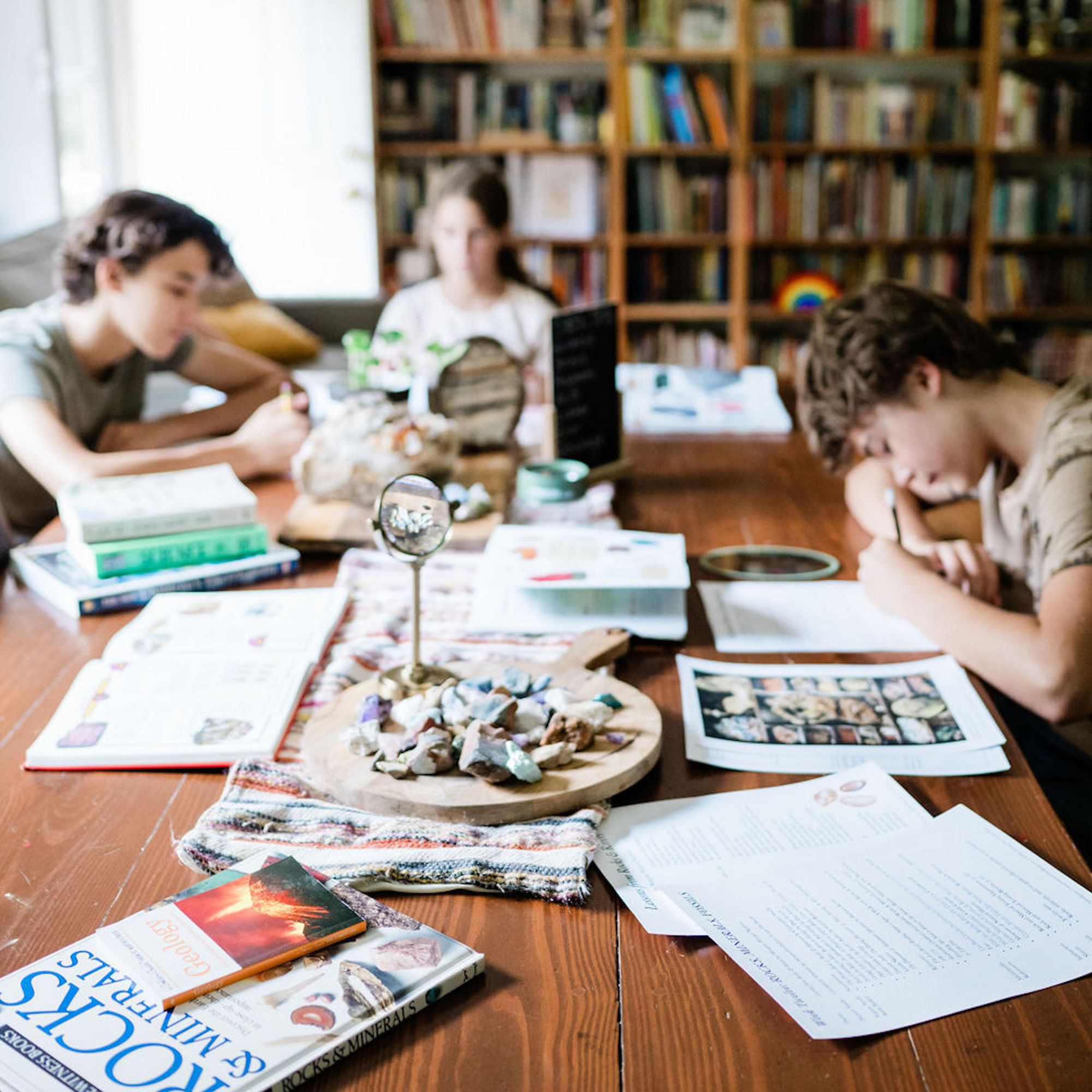
As a home educating mom, one of my goals is introducing my children to rich, quality literature and watch the world come alive as we read together. We do this by filling our home with living books and by prioritizing reading aloud in our homeschool.
As we have spent time reading together as a family over the years, the books we consume have become opportunities for all kinds of learning. The stories we read are a pillar of our homeschool curriculum, serving as a starting point for learning together.
In this blog post I am sharing how to build a custom homeschool literature curriculum by curating a selection of living books that children will love. With a foundation of books, read-alouds, and classic stories, reading together creates a springboard for learning and exploration through discussion, narration, creative writing, and more.
In this blog post:
- Using living books and reading aloud to create an immersive learning experience
- Using novels as building blocks for a literature curriculum
- How to use Treehouse Book Studies for different learning goals
- Developing writing opportunities to pair with reading
- Tips for choosing read-aloud books for children
- 10 favorite read-aloud choices for children and families
- Free reading list template [Printable PDF]
Using living books and reading aloud to create an immersive learning experience
The term “living book” comes from the writings of Charlotte Mason. Living books are not only books with rich vocabulary and beautiful language, but are books that help children make connections and engage their mind. Signs of a living book are books that are written in story-form, containing ideas rather than dry facts (like textbooks). They are also often stories where the author has firsthand experience or a deep passion for a subject. These stories are, many times, easy to remember, and the story lingers after you have finished reading. Living books are stories that contain valuable ideas and tales of inspiration.
When I am deciding what to read in the upcoming school year, I choose a selection of living books. If we are going to invest time and energy in reading and consuming stories, I want to read stories that build up my children’s character and imagination. I don’t just want to check off books and read for comprehension or reading level, but I want my children to walk away from a book with ideas, opinions, and more knowledge than they started with. I believe that by choosing a rich landscape of novels and stories, my children will have an educational experience that will form the people they are becoming.
Another key for our family is looking over our daily rhythm and making room for reading aloud for all ages. Reading aloud to children helps expose them to new vocabulary, strengthens listening comprehension and the habit of attention, and strengthens family bonds. It requires time and consistency, but is a habit you can build over time if you make the effort.
Using living books as building blocks for education

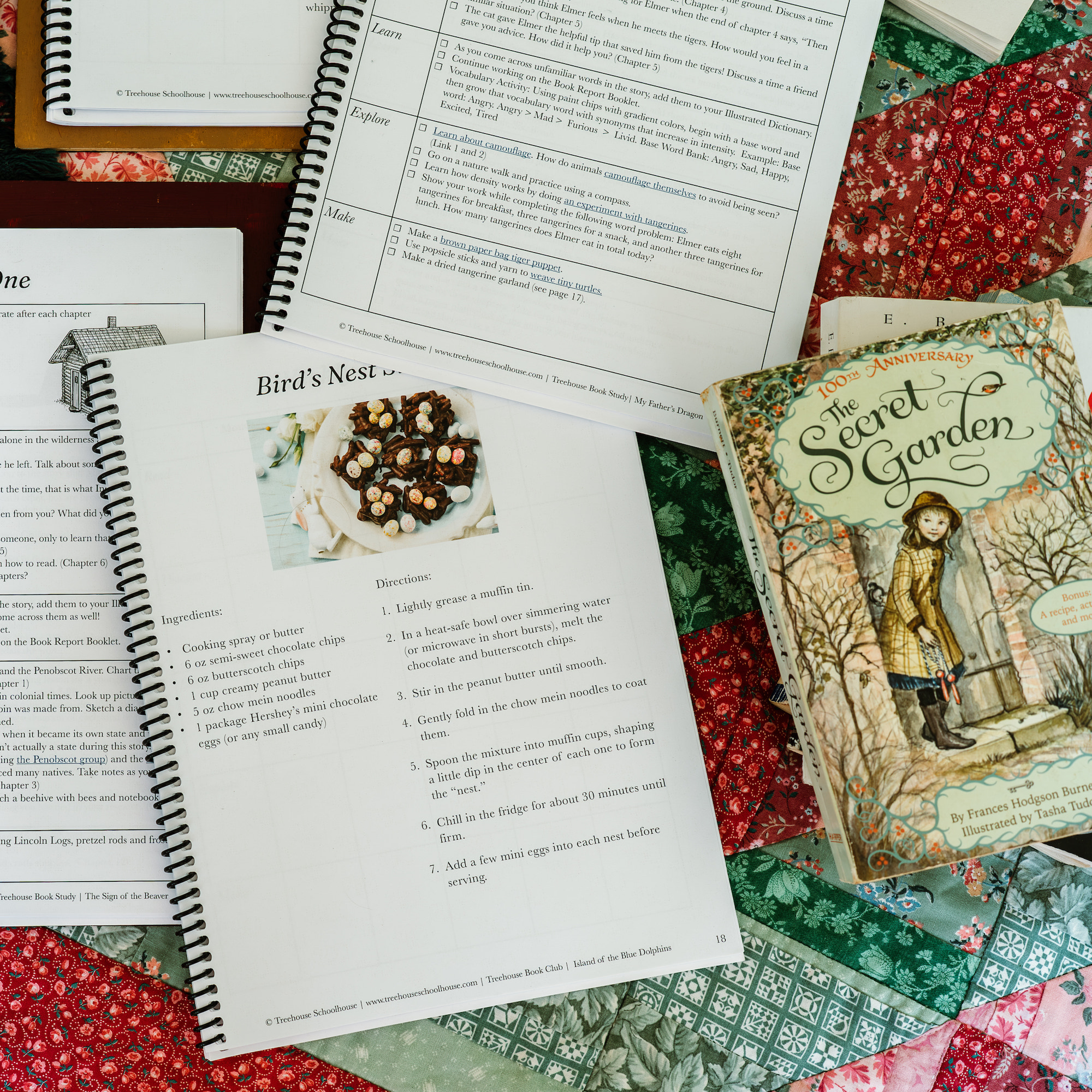
I designed Treehouse Book Studies as a way to make children’s novels easy to include in any homeschool curriculum. The guides break down each novel with a reading schedule and discussion questions for every story. They also include extended learning opportunities that connect with the story, so children can make connections with science and history, learn about the author, and more. These guides alsp offer hands-on projects and recipes that make the story come to life.
Choose classic stories like Charlotte’s Web by E.B. White, The Secret Garden by Frances Hodgson Burnett, or The Black Stallion by Walter Farley and use the book guides to structure learning, by reading aloud, discussing the text together, and continuing learning through writing assignments and fun activities. Modern selections like The Wild Robot by Peter Brown and My Father’s Dragon by Ruth Stiles Gannett are also fun choices to encourage children to engage with literature.
As you use the texts as a springboard for learning, there are plenty of ways to incorporate narration practices and copywork.
Each four-week book study provides:
- A weekly reading schedule, with a checklist for each chapter so you can track your progress.
- Thoughtful questions that move beyond reading comprehension and encourage children to think critically and connect the story to their own life experiences.
- Opportunities for further exploration, like learning about historical time periods, maps, inventions, and animals.
- Hands-on connections like baking, projects, and experiments that connect to the story.
- Book report template for children to summarize what they learned.
- Supplemental book list and video links to extend learning even further.
To use as a full literature curriculum, we recommend reading the assigned chapters aloud, completing most of the assigned activities, then doing an in-depth study of themes in the book that specifically interest your child by using additional resources like books, videos, research, and notebooking.
How to use Treehouse Book Studies for different learning goals
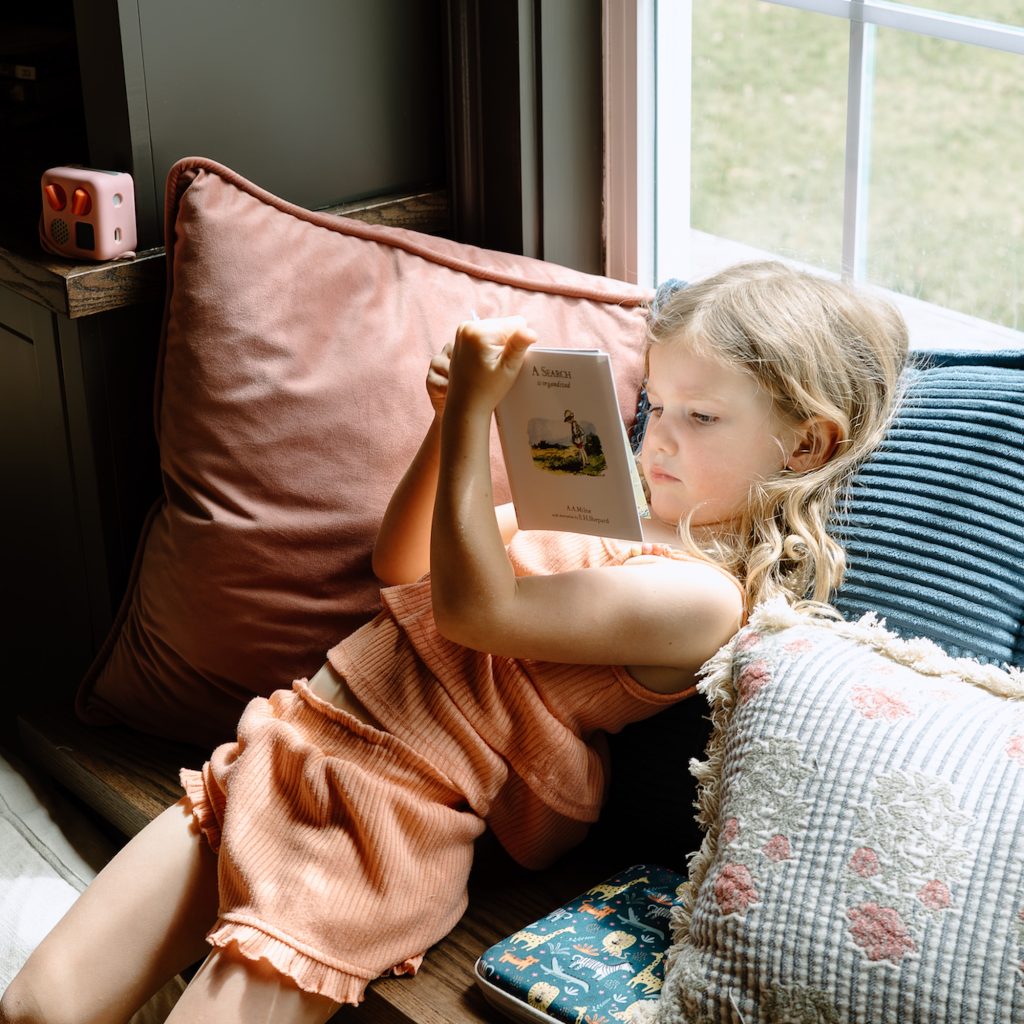
Here are some ideas for choosing Treehouse Book Studies as a core literature curriculum or for supplemental learning opportunities.
- Full homeschool literature curriculum – Use a complete book study collection or curate your choices to provide read alouds for the whole year. Read one book each month and use each story as an opportunity to dive deeper in history, science, language arts elements, and writing through narration, copywork, and notebooking.
- Supplemental learning for history or science – Pair a living book with a study in history or science. For example, read The Door in the Wall by Marguerite de Angeli to learn about the medieval times, or read Little House in the Big Woods by Laura Ingalls Wilder as you study pioneers and the westward expansion. Read The Boy Who Harnessed the Wind and learn about electricity and Africa.
- Morning Time read aloud – Start your homeschool day by reading aloud together and using the discussion questions to get conversation going.
- Community book club – Gather friends and read the book you choose independently. After finishing the book, host a book club gathering with themed snacks, projects, and presentations.
- Seasonal stories – As the seasons change throughout the year, read stories that reflect what is happening in the natural world around you. Enjoy a summer adventure in Summer of the Monkeys by Wilson Rawls, or see flowers bloom in spring as you read The Secret Garden. Read The Best Christmas Pageant Ever leading up to the holiday season.
- Independent reading – Treehouse Book Studies are also a great way to encourage older children to read independently. Use the reading schedule and discussion questions to progress through a book, then wrap up each selection by completing a book report.
Developing writing opportunities to pair with reading

As you spend time in quality books, we recommend using this as an opportunity for creative writing. Here are some ideas, based on your child’s age level.
- Vocabulary – As you read, have children make a list of new vocabulary words they encounter in the books you read. They could draw a picture for each word, or write out a simple definition.
- Copywork – Have children copy favorite quotes or passages from the stories you read, practicing handwriting skills as you read together.
- Simple creative writing assignments – Children can write an alternate ending, make a diary entry or a letter from the perspective of a character, or write a fictional newspaper article that retells a part of the story.
- Research and notebooking – Have children research an element of the story in books or on the internet. Have children notebook about what they learn, writing out facts or what they learn and pairing it with an illustration.
- Written narrations – Children can write a summary of what they hear read aloud in their own words, anywhere between one to two sentences to a full page with several paragraphs.
Tips for choosing read-aloud books for children

There is always something to learn in any good book you choose. As you research and choose the books you plan to read for the upcoming school year, here are some ideas for making sure your children will love the books you read together.
- Choose books suitable for children’s ages and learning levels. It is helpful to make sure that what you read will be engaging and appropriate for your child’s learning level. We have designed book studies as Primary, suitable for grades kindergarten to 3rd grade, and Intermediate, for older children in 4th-8th grades. When reading aloud, remember that you can read aloud to a child at a higher level then they can read independently, which exposes them to rich literature and new vocabulary.
- If mixing ages, consider alternating reading levels to keep children engaged. You could simply alternate between books for younger and older children each time you read, and pair additional activities to keep children interested. Younger children can color along, while older children can go deeper or participate in reading aloud themselves.
- Give older children a role and responsibility. Older kids can read aloud, help with projects, and plan and host a book club or presentations.
- Go deeper with themes for older children. As you read the story, select themes from the story your older children can learn more about. For example, as you read Charlotte’s Web, older children can learn about spiders or research and visit county fairs.
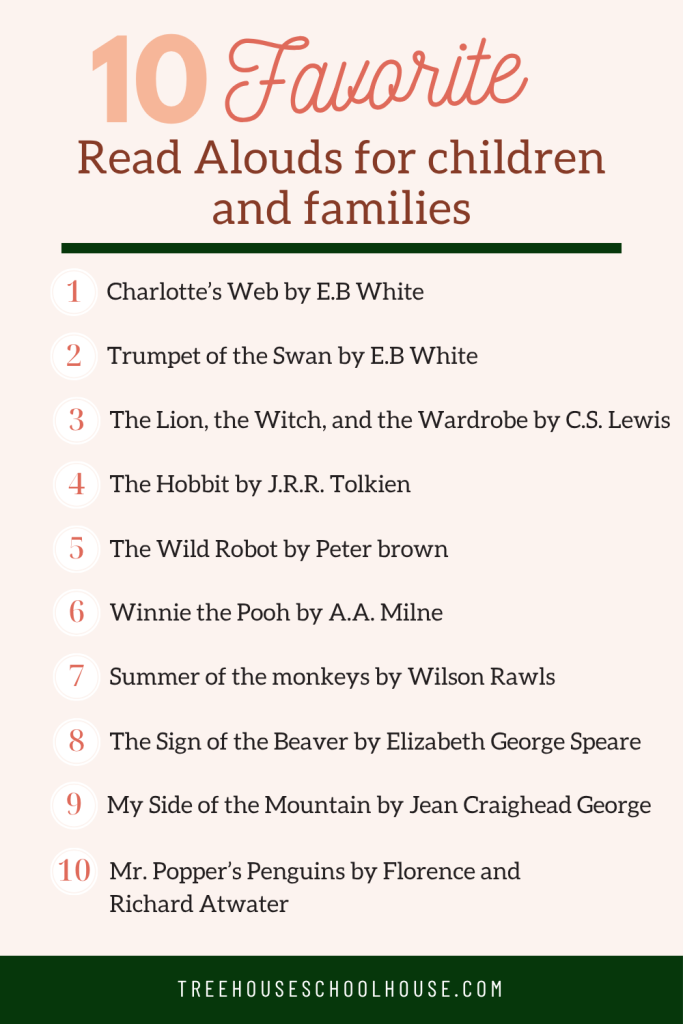
10 favorite read-aloud choices for children and families

Here are some of my all-time favorite read-aloud books to read with children:
- Charlotte’s Web by E.B. White
- The Trumpet of the Swan by E.B. White
- The Lion, the Witch, and the Wardrobe by C.S. Lewis
- The Hobbit by J.R.R. Tolkien
- The Wild Robot by Peter Brown
- Winnie the Pooh by A.A. Milne
- Summer of the Monkeys by Wilson Rawls
- The Sign of the Beaver by Elizabeth George Speare
- My Side of the Mountain by Jean Craighead George
- Mr. Popper’s Penguins by Florence and Richard Atwater
Free reading list template [Printable PDF]
Save and print this free read-aloud list to plan and create your custom homeschool literature curriculum this year.

What books are you planning to read this year in your homeschool? Share your ideas in the comments below.